Tag Archives: Education Reform

Credit Recovery Farce Generates Spectacular Graduation Rates

8 Jun

By Thomas Ultican 6/8/2017

A miracle has occurred. America’s high school graduation rates peaked at about 77% in 1970 and then drifted down for almost four decades to 69% in 2007. Astoundingly, even with increased graduation requirements rates have shot up.

Many school districts in California now require all students to meet course requirements for entering the University of California system to graduate from high School. That is a dramatic increase in academic rigor. Yet, in 2016, over 83% of California’s freshman cohort graduated on time. In 2012, 81% of the freshman cohort in America graduated on time. These record setting numbers are the result of knuckleheaded political policy, cheating and credit recovery.

What is Credit Recovery and Where did it Come from?

In the 1990’s politicians like Bill Clinton and Jeb Bush were pushing for standards in education and accountability measures. Jeb Bush’s infamous school grading system called for 25% of a high school’s grade to be based on graduation rates. Bill Clinton wrote in 1998,

“We have worked to raise academic standards, promote accountability, and provide greater competition and choice within the public schools, including support for a dramatic increase in charter schools.”

“We know that all students can learn to high standards, and that every school can succeed if it has clear instructional goals and high expectations for all of its students; ….”

Donald T. Campbell’s 1976 paper presented a theory about social change that is now widely revered as Campbell’s Law: “The more any quantitative social indicator is used for social decision-making, the more subject it will be to corruption pressures and the more apt it will be to distort and corrupt the social processes it is intended to monitor.”

Exactly as the Social Scientist, Campbell, postulated, this national push to increase the standards of school rigor and to use social indicators (graduation rates and high stakes testing) to evaluate schools has introduced distortion and corruption.

How were school leaders going to protect their institutions and their own jobs from the ravages of horribly shortsighted and uninformed education policy? The solution was obvious; teach to the test and find a way to raise graduation rates.

To the rescue, came both the Walton Family Foundation and the Bill and Melinda Gates Foundation along with many other lesser contributors. They perceived it was time for advancing the privatization of public education and accelerating the adoption of technology in education. Credit recovery was a perfect vehicle.

A mouthpiece for these foundations, the Education Commission of the States, explains:

“Credit recovery is an alternative to course repetition for students who have previously failed a course needed for high school graduation. Programs may be offered via computer software, online instruction (including through a state’s virtual high school or a local virtual school) or teacher-guided instruction (small group or one-on-one), and are typically targeted at the standards in which students were deficient, rather than all standards in the original course.

“Programs should be self-paced and competency-based ….”

Another organization significantly financed by Walton and Gates iNACOL (International Association for k-12 Online Learning) promotes a virulent form of computer based education known as CBE. I discussed CBE in a previous post: “CBE is basically outcome based education moved to digital space. Outcome based education was the new 1990’s name given to a previously failed strategy known as mastery education (AKA ‘seats and sheets’).” The fundamental theory of CBE is that education can be reduced to discrete pieces of knowledge. It’s bad theory.

iNACOL also weighed in on credit recovery:

“Our country has been trying to address the graduation crisis in many ways.”

“Today, one of the root issues is the older students who are missing a significant number of credits do not have the time to sit in class again, thus competency-based programs are a better option.”

Echoing the unsubstantiated “Nation at Risk” iNACOL does not see foolish policy or growing poverty leading to stagnate or falling graduation rates. It sees a CRISIS!

With credit recovery students are able to gain graduation credits in as short a time as a day. According to several teacher friends who have taught teacher led credit recovery, there is no real instruction, just filling in packets (“seats and sheets”). I have heard many students say, “I don’t care if I fail, I’ll do credit recovery.” Why not? It’s easier.

How Fraudulent is Online Credit Recovery?

At the high school where I taught this year, I overheard a pair of administrators speaking in hushed tones about the fraud going on in the learning center. In our district, there are twelve learning centers which are technically separate schools. They provide online credit recovery for students who have not earned enough credits. The discussion was about seeing students using smartphones to answer the test questions provided by Apex Learning. The fact that this behavior was being tolerated was what galled them.

As is made clear in a recent series of eight article about credit recovery published by Slate Magazine, cheating on credit recovery is not unique at all.

Zoë Kirsch wrote in her Slate article, The New Diploma Mills:

“Almost 90 percent of school districts use some form of credit recovery, according to a 2011 report from the National Center for Education Statistics (the center doesn’t distinguish between online and other forms). And data cited by the International Association for K-12 Online Learning, a trade group, shows that at least 75 percent of districts use some form of online learning. So, we can say this about online credit recovery: It’s pretty big.”

Kirch’s article also reports that in Nashville, graduation rates increased from 70 percent in 2007 to 81.6 percent in 2015 following the introduction of online credit recovery. Even more stunning, in Los Angeles the graduation rate grew from 54 percent to 75 percent in a single year when credit recovery was introduced in 2015.

A supervisor of credit recovery at East Gadsden High in Florida was informed that some students there were paying one another to do online coursework. When she reported it to the district, an administrator there told her to “leave it alone.” “There’s some things you can’t fix.”

The article “Fast. Isolating. Superficial.” by Stephen Smiley shares,

“She [Elizabeth Bieze, the guidance counselor who oversees the virtual lab at Sullivan High School Chicago] adds that it’s not atypical for students to recover credits for yearlong classes in under a week. ‘They do really well in the pretest, they get to skip a bunch of stuff, and they just take the final exam,’ she says. ‘It has helped our graduation rate immensely.’”

Stephen also found this:

“‘Anyone wanna do a math credit recovery for me I’ll pay you,’ read one tweet posted by a student in Erie, Pennsylvania, in August. ‘If anyone wants to go online and do my chemistry credit recovery I’d be more than happy to give you my username and password,’ wrote another student in Arkansas. Naturally, online learning companies like Edgenuity and Apex insist that most don’t actually follow through and that the chatter is mostly empty boasting.

“That may be so, but I didn’t have too much trouble finding students online who insisted they had cheated without being caught. One of them, Joseph, who is a 17-year-old senior at a Long Island high school in New York, said his online English class was uninspiring, so he paid a buddy $200 to complete it.”

Stephen also wrote a second article for Slate, “I Am an Online Credit Recovery Dropout.” In it he describes a personal experience of taking a few online courses. Stephen concluded,

“But I also came to appreciate what many students had told me about virtual learning: Compared with regular school, there’s less interaction with teachers, fewer opportunities for creative expression, and little chance to bounce around ideas with classmates. While online learning clearly has some strengths (programs can be tailored to individual needs, for instance), it’s hard to get away from an overarching conclusion: The experience as a whole can be pretty boring and lonely.”

Why is Credit Recovery Flourishing?

Francesca Berardi wrote “Take These Students, Please” about online credit recovery in Chicago. Surprising to me, it turns out that former basketball star Magic Johnson is a significant participant in the industry. Francesca notes,

“During Emanuel’s administration, Magic Johnson has become a major player in Chicago’s education world: Bridgescape operates five programs across the city, serving more than 850 students, and as the Chicago Tribune reported, in March 2015 another of Johnson’s companies, SodexoMAGIC, received an $80 million contract to take over janitorial services for several Chicago Public School buildings. Following the contract, Johnson donated $250,000 to Emanuel’s campaign for re-election.

“Not surprisingly, last September, Emanuel announced that in just five years the high school graduation rate had jumped from roughly 50 percent to 73.5 percent.”

‘’’The district is giving high school diplomas for programs that are nowhere near comparable to regular high schools,’ said Troy LaRaviere, president of the Chicago Principals & Administrators Association and a fierce critic of Emanuel’s administration.”

Zoë Kirsch and Stephen Smiley teamed up to write “Why Bad Online Courses Are Still Taught in Schools.” The article opens with this story from Florida:

“Last year, the Florida Department of Education rejected the company Online Education Ventures, which failed to provide descriptions of its virtual courses in science, social studies, and English (it provided descriptions of the math courses, but they didn’t meet state standards). A year earlier, the state disqualified Mosaica Online because the company didn’t show it could provide timely information about its courses. And it said no to Odysseyware, since it failed to outline student anti-discrimination policies or show how its products could meet the needs of students with disabilities.

“But here’s the rub: Those companies are still allowed to sell their products to schools in Florida. Public school districts can still use public money to educate students with discredited products like Online Education Ventures.’”

“The conservative American Legislative Exchange Council has made expanding online learning—unfettered and in all of its forms—one of its priorities. … ALEC has quietly but effectively helped mostly Republican lawmakers pass the kinds of laws the online learning companies want—laws that, for instance, require all graduating high school students to complete at least one virtual class.”

According to Zoe and Stephen, no states are doing a good job of regulating online learning and credit recovery. “As it happens, one of the most rigorous judges of online credit recovery classes is the NCAA. The NCAA’s standard is higher than what any state government requires for its students.”

Some Conclusions and Recommendations

Credit recovery has introduced a corruption into public education.

Online learning is only better than no other alternative. It is lifeless and dull. Some people claim there are ways to make it better, but I seriously doubt that it will ever match a classroom with a teacher to stimulate supervised dialog as a learning vehicle.

The push for credit recovery is a blatant scheme to impose privatized online learning.

Until this corruption has been eradicated, diplomas that are awarded based on credit recovery should have a reduced status to legitimately earned high school diplomas. That will at least reduce the incentive to “get it in credit recovery.”

Of all the increased academic requirements, the requirement for advanced mathematics to graduate from high schools is the most counterproductive. Most college graduates will never have a reason to make a binomial expansion or mathematically describe a conic section. Roll back these stupid requirements. Every student is not going to Berkeley.

Notes:

The five Slate Magazine articles I cited above are more on point for my article but these three articles cited below are also valuable reads.

Bottom of the Class By Francesca Berardi and Zoë Kirsch highlights some of the worst online companies.

Online Education Doesn’t Have to Be Isolating By Sarah Carr discusses some ways online learning can be done well.

Just Take It Again By Stephen Smiley describes how some of the online design makes it easy but not authentic.


Education Reform That Works

17 Apr

By Thomas Ultican 4/17/2017

The Teacher Powered Schools (TPS) movement has a history of success and is now in more than 100 schools. It won’t make anyone rich but it just might bring a new area of positive growth in the teaching and learning process.

It could be argued that TPS has been around since Socrates. More recently, Debra Meier’s efforts to democratize schools in New York and Boston along with her friend Ted Sizer’s thinking has set a foundation for today’s movement. The modern TPS movement stemming from the 1990’s accelerated in 2012 with the publication of Trusting Teachers with School Success by Kim Farris-Berg and Edward Dirkswager with Amy Junge.

By 1997, Debra Meier could open one of the first TPS schools, Mission Hill k-8 in Boston. Her glowing reputation led school officials who would normally have been quite skeptical to embrace her concept. A case study describes the school’s governance:

“A governing board, consisting of a council that represents parents, faculty, students and other community members, oversees the school to ensure the teacher team continues to meet the needs of students effectively but delegates decision-making authority to the teacher team. The teachers and the principal they selected collaborate on all decisions, including curriculum, staffing, and the school’s schedule. They involve all local education stakeholders in decisions regarding principal selection, determining the school’s mission, and approving staff-developed budget and human resources plans.”

Following 20 years of experience, a local New England news outlet reports,

“According to the Boston Public School District, 32% of students in the district will attend one of four types of teacher-powered or autonomous schools, like Mission Hill next year.”

In 2014 the Teacher Powered Schools initiative was launched. Their reported vision is:

“While the initiative recognizes the many other important efforts focused on teacher leadership and professionalism—for example, offering pathways for advancement without leaving the classroom, amplifying teachers’ voices, and fostering PLCs—its explicit focus is on empowering teacher teams to secure collective autonomy to design and run schools.”

The TPS initiative also provides a list of TPS schools and the following map of school locations.

School Map

 Teacher Powered Schools Have Diverse Supporters

 In a recent article about school choice, the founder of the Center for Teacher Quality, Barnett Berry wrote,

“But let me say, as many other scholars have as well, that the research is clear: ‘There is very little evidence that charter and traditional public schools differ meaningfully in their average impact on students’ standardized test performance.’”

He then commented on TPS:

“Now these are schools worth choosing—and all students should have the choice to be a part of them. Parents and students have choice in the TPS environment, and so do their teachers. In choosing Teacher-Powered Schools, we as a society put the public good back in public education.”

My friend Larry Lawrence instigated me writing this article when he sent me a link reporting on the 2017 TPS conference that he attended in LA. I forwarded the link on to my boss, the Superintendent of the Sweetwater Union High School District, Karen Janney.  She responded:

“I support the premise that TPS is learning and expanding with their work. I especially liked this paragraph:

“Teacher-Powered Schools center on eight practices that include a common purpose and vision, collaboration for the good of the whole school, ongoing learning, individualized student learning, holistic approach to discipline, multiple measures for student performance, teacher evaluation and improvement, and budget trade-offs to serve students.

“In fact, as a district, we are working towards many of those practices.”

Many people have commented on the book credited with accelerating the TPS movement by, Kim Farris-Berg and Edward Dirkswager with Amy Junge, Trusting Teachers with School Success. A few short snippet of these comments follow.

Linda Hammond-Darling, the famed Stanford researcher noted.

“While many school systems push authority upwards to administration and accountability for results downwards onto individual teachers, Trusting Teachers shows us what can happen when authority and accountability are brought together and teachers have a seat at every table.”

James A. Kelly, Founding President, National Board of Professional Teaching Standards observed,

“In this important book, the authors turn education reform upside-down. They propose that teachers be empowered to manage their own teaching and their student’s learning. Let’s put teachers in charge of teaching! The distinct contribution of this book is that it takes the reader into many highly successful schools in which “trusted” teachers already have professional responsibility for teaching and learning.

Michael Petrilli, Executive Vice President, Thomas B. Fordham Institute stated,

“We need ways to press the case for reform without alienating our great teachers, without turning them into the enemy, the problem, and the object of our disdain. This book describes one way to celebrate, engage and empower them.”

Adam Urbanski, President of the Rochester (NY) Teachers Association, Vice President of the American Federation of Teachers, and Founding Director of the Teacher Union Reform Network wrote:

“Unleashing the collective wisdom of teachers is the best hope for improving our public schools. This provocative, sensible and practical book offers concrete evidence that it can be done and, in fact, is being done. And now that we have already tried virtually everything else, let’s do the right thing and turn teacher-run schools from the exception into the norm.”

Education Publications are Noticing

A 2015 article in NEA Today by Mary Ellen Flannery describes the transition to a TPS structure by the teachers of the Reiche Community School in Portland, Maine. Flannery wrote,

“More than five years ago, when a well-liked principal moved along to another assignment, Reiche teachers and their union, the Portland Education Association, worked with district officials to put in place an alternative governance model.”

“Simply put, the teachers took over.”

Flannery declared,

“Although the governance structure may vary among the nation’s teacher-led schools, they all have teachers with a renewed sense of purpose and professional autonomy. ‘Every teacher has a voice here,’ says kindergarten teacher, Kevin Brewster, one of the original teacher-leaders at Reiche.”

Carrie Bakken is a program coordinator and teacher at the Avalon School in St. Paul, Minn., which she has worked at since it opened in 2001. Bakken published an article in edweek about the successes at her charter school opened with a TPS governance model. She asserts:

“With this kind of autonomy for teachers, Avalon School easily retains 95-100 percent of its teachers annually. This high rate of retention allows us to build ongoing relationships with one another, our students, and their families. It allows us to implement a strategic plan and continuously improve our learning program because we know the staff will be there to do the work.

“Best of all, this framework for governance seems to benefit students. Avalon has a higher percentage of students who are proficient on math and reading state tests than the average for St. Paul Public Schools, and each year 75-80 percent of our students go on to attend a post-secondary institution. Some other teacher-led schools around the country have experienced similar success.”

In a US News & World Report article, “A School Without Principals Yes Really,” Allie Bidwell also discusses the view of school principals. He conveys:

“Both Farrace and Gail Connelly, executive director of the National Association of Elementary School Principals, say that while they’re supportive of collaboration between principals and teachers, it’s too soon to tell whether teacher-led schools will be successful on a large scale. Effective principals, they say, know how to harness the talents of teachers within the school and provide more leadership opportunities for them – but it doesn’t happen in nearly enough schools.

“’From our perspective, it’s not a matter of either/or. It’s principals and teachers working in collaboration and leading today’s complex learning environment,’ Connelly says. ‘It takes both to really create the optimum learning environment that can help each and every child succeed.’”

“In Cincinnati, the Hughes STEM High School operates with a principal. But because the purpose of teacher-led schools is to promote teacher autonomy, all decisions are made by teachers in collaboration with the principal, who cannot veto what the teachers decide. The school has a district-approved principal as part of a collective bargaining agreement between the local school board and teachers’ union to ensure collective leadership.”

I did find a very strange article about how wonderful TPS is by Tom Van Der Arc. He praises the concept but nit-pics the term autonomous. Then for no apparent reason other than his need to sell privatizing schools and technology he writes:

”One of the exciting things about the shift to personal digital learning is the explosion of career options for learning professionals — more school models, more learning services, and more ways to contribute. In every other profession, there is a choice of working for a government services, a large private practice, a professional partnership, or as a sole practitioner. Teachers should have the same options.”

Why Isn’t TPS More Widely Embraced?

Perhaps a research paper out of the United Kingdom by Daniel Muijsa and Alma Harris points to the issue. They note that the UK is behind both the US and Australia when it comes to teacher leadership but see similar positive results emerging in the UK. The research found that high levels of engagement and involvement of staff in the developmental work of the school promoted high levels of self-esteem and a willingness among teachers to engage with new ideas. However, they reported some barriers to teacher leadership:

“The study found a wide variety of barriers to the development of teacher leadership. Three main categories emerged from the data. The first of these is the external educational context.”

“The proliferation of top-down initiatives emanating from central government was similarly viewed as stifling teacher initiative and leadership capabilities.”

“The lack of time for teachers to engage in activities outside of classroom teaching and administration appears to be a key inhibitor to teacher leadership, as it is to other educational initiatives.”

“Finally, the role of senior managers in some cases can be seen as a barrier particularly where not all senior managers are willing to relinquish control, where leadership from the head is seen as weak, or where senior managers are poor communicators.”

In February, I wrote “Education Reform Musing” in which I called for democratizing school governance. The TPS movement seems to accord exactly with my idea. And the charter schools that are embracing this philosophy appear to be making a positive contribution to public education in a way congruent with Albert Shanker’s vision.

Billionaires Push School Privatization

14 Mar

By Thomas Ultican 3/14/2017

President Donald Trump visited a private religious school in Florida on March 2, 2017, signaling once again that his education agenda will focus on school choice.

Trump DeVos Rubio in Florida

Photo by Alex Brandon of the AP taken from report in the Las Vegas Review-Journal.

The argument for privatization schemes like charter schools and vouchers is that public schools in many low-income neighborhoods are abhorrent failures. Worse yet, the poor families living there have no affordable education options and are trapped. The question is asked, “why don’t poor people have some of the same choices as wealthier people?”

A possible solution is proposed, “Instead of sending public dollars to ‘failing schools,’ vouchers could be given to parents so their children can attend private schools.” Another popular option is to use tax policy and monetary incentives to encourage privately operated charter schools. The claim is made that – because of market forces and reduction in both operating rules and oversight – charter schools will innovate and provide improved pedagogy. The traditional public schools which are encumbered by state regulations and teachers’ unions will learn from these charter school innovations and market forces will cause them to also improve.

Unfortunately, there are three base assumptions here that are wrong. While it is true that some schools have been so poorly resourced and politically damaged by both racism and corruption that they are an abomination, in general America’s public school system is amazingly great – not failing, great!

Secondly, voucher-fed private schools are not that good. Private schools that compare favorably with public schools are much more expensive than any proposed vouchers.

As for the charter school claims; they have not innovated, they have increase education costs and the lack of oversight has resulted in an endless stream of scandal. In addition, the improved pedagogy which has been touted in advertising is refuted by refereed studies.

President Trump proposed spending $20 billion supposedly by repurposing title I funds to promote “school choice.” That is a stunning number. It is equal to more than two-thirds of the spending on the Manhattan Project. The US spent about $1.9 billion on the atomic bomb development. That was estimated to be equivalent to $30 billion in 2013. Another estimate says $2 billion in 1945 dollars was equivalent to $26 billion in 2016. Mr. Trump is calling for a nearly Manhattan Project sized effort to privatize America’s public schools. Does he believe public schools in America are in that kind of crisis or is this just another feckless politician demagoging education for his own selfish purposes?

Mercedes Schneider’s book School Choice makes a powerful arguments for why “school choice” is not only an idea that is unsupported by evidence but will cause extensive damage to our world’s greatest democratic institution. She shared this quote from the longtime teachers’ union leader and one of the original supporters of charter schools, Albert Shankar.

“A pluralistic society cannot sustain a scheme in which the citizenry pays for a school but has no influence over how the school is run. … Public money is shared money, and it is to be used for the furtherance of shared values, in the interest of e pluribus unum. Charter schools and their like are definitely antithetical to this promise.”

Vouchers.

Russ Walsh teaches college reading at Rider University and publishes the blog, “Russ on Reading.” This March he wrote “School Vouchers: Welfare for the Rich, the Racist, and the Religious Right.” That’s certainly a novel take on the “3-Rs” of education. In this piece, Mr. Walsh explains vouchers:

“What are vouchers exactly? School vouchers come in many forms and since the general public is typically opposed to voucher schemes, politicians who favor them have come up with a variety of Orwellian doublespeak names for them like Opportunity Scholarships, Education Choice Scholarships, or the Education Savings Accounts. Another way states have found to get around calling vouchers vouchers is the scholarship tax credit. These schemes allow individuals and corporations to direct their tax monies to private institutions who then use the money for scholarships for students.”

Trump and DeVos went to a Catholic School in Orlando to praise and encourage Florida’s use of scholarship tax credits which appear to run afoul of the first amendment to the United States constitution’s establishment clause. It redirects public dollars to religious schools which does entangle church and state. The Americans United for Separation of Church and State say voucher programs undermine religious liberty.

In Florida, the tax credit voucher is called Florida corporate tax credits. A Florida League of Women Voters report states, “In 2006, the Florida Supreme Court ruled that vouchers paid by the treasury were unconstitutional. Florida corporate tax credits (FTC) became the vehicle to fund what initially were private school scholarships for children from disadvantaged families.”

This month a Texas Superintendent of Schools, John Kuhn, informed the Association of Texas Professional Educators about vouchers:

“Three different research studies published recently have found that voucher programs harm student learning—including one study sponsored by the Walton Family Foundation and the Fordham Institute, both proponents of vouchers. Students who use vouchers underperform their matched peers who stay in public schools.

“You heard me right. I’m not just saying that vouchers don’t help very much. I’m saying voucher programs result in students learning less than if the voucher programs didn’t exist. Giving a student a voucher to improve his education is like giving a struggling swimmer a boulder to help him swim. The Walton Foundation study said: ‘Students who use vouchers to attend private schools have fared worse academically compared to their closely matched peers attending public schools.’ A study of the voucher program in Louisiana found very negative results in both reading and math. Kids who started the voucher program at the 50th percentile in math dropped to the 26th percentile in a single year. Vouchers are so harmful to children that a Harvard professor called their negative effect ‘as large as any I’ve seen in the literature.’”

Evidence from Sweden, New Zealand, Chile and several American metropolitan areas has consistently shown that privatizing schools with vouchers not only does not improve education outcomes, it harms them. When the monies for voucher programs are removed from public education budgets, the opportunities for the 85% of our students attending public schools are reduced.

Privately Run Charter Schools

At the behest of the Los Angeles Unified School District’s teacher’s union MGT of America studied the costs associated with charter schools in LA. MGT reported, “these data indicate that LAUSD has a nearly $600 million impact from independent charter schools.” Running dual school systems increases costs. Therefore, the evidence for benefit from charter schools needs to be clear and convincing.

The National Education Policy Center at the University of Colorado recently published a compilation of refereed studies under the title Learning from the Federal Market-Based Reforms. A paper by Miron and Urschel says of charter school studies, “For example, all of the California studies either found mixed or positive results, while four out of the five Michigan studies and three out of the four Ohio studies produced negative results.”

In Learning, Miron and Urschel also noted:

“A third factor that overshadows the body of evidence on school choice is the predominance of partisan researchers and activist organizations that carry out the research. Especially in the areas of home schooling, vouchers, and charter schools, the bulk of studies that find positive impacts in favor of school choice have been conducted by advocacy groups.”

Two consistent features of modern education governance are that politicians and business men who have power enforce their own particular biases even though lacking both educational experience and knowledge. The second feature is education policy is not based on refereed peer reviewed research by professionals.

For decades, John Walton and the Walton Family Foundation promoted vouchers as the ideal fix for what Walton saw as needing fixed. In a Washington Post article Jeff Bryant wrote:

“Fully inculcated with Friedman’s philosophies, and motivated by the myth of school failure spread by the Reagan administration, the Waltons were ready for their education revolution to begin.”

After a series of defeats trying to promote vouchers, the foundation transitioned the privatization agenda to advancing charter schools. Bryant continued:

“According to a pro-union website, another member of the Walton family, Carrie Walton Penner, sits on the board of the foundation connected to the prominent KIPP charter school chain—on which the Walton Family Foundation has lavished many millions in donations—and is also a member of the California Charter Schools Association. Carrie’s husband, Greg Penner, is a director of the Charter Growth Fund, a ‘non-profit venture capital fund’ investing in charter schools.”

Search “charter school investment” and at least two pages of paid ads for charter school investment funds will appear. In March 2015, the Walton Family Foundation and the Bill and Melinda Gates Foundation co-sponsored an event in Manhattan called “Bonds and Blackboards: Investing in Charter Schools.” In the Business Insider report on this event, reporter Abby Jackson wrote:

“Hedge funds and other private businesses are particularly interested in the growth and success of charter schools. The growth of charter networks around the US offer new revenue streams for investing, and the sector is quickly growing. Funding for charter schools is further incentivized by generous tax credits for investments to charter schools in underserved areas.”

An article by the Education Law Center’s Wendy Lecker states,

“As noted in a 1996 Detroit Metro Times article, while the DeVos’ ultimate aim was to abolish public education and steer public funds to parochial schools, they knew not to be blatant about that goal. Thus, they chose a vehicle that blurred the lines between public and private schools- a “gateway drug” to privatizing public education: charter schools.”

Here in California we have a plethora of billionaires and other wealthy people working to expand charter school penetration including; Bill Gates, Reed Hastings, Eli Broad, Doris Fischer, Carrie Walton Penner and the list continues.

America’s Public Schools Rock

As I wrote in a 2014 post, the declaration that America’s public education system is failing has a long history. Diane Ravitch reported the following quote from Jim Arnold & Peter Smagorinsky on her blog.

“Admiral Rickover published “American Education, a National Failure” in 1963, and in 1959 LIFE magazine published “Crisis in Education” that noted the Russians beat us into space with Sputnik because “the standards of education are shockingly low.” In 1955 Why Johnny Can’t Read became a best seller, and in 1942 the NY Times noted only 6% of college freshmen could name the 13 original colonies and 75% did not know who was President during the Civil War. The US Navy in 1940 tested new pilots on their mastery of 4th grade math and found that 60% of the HS graduates failed. In 1889 the top 3% of US high school students went to college, and 84% of all American colleges reported remedial courses in core subjects were required for incoming freshmen.”

By the middle of the 20th century, cities and villages throughout the USA had developed an impressive educational infrastructure. With the intent of giving every child in America the opportunity for 12 years of free education, this country was the world’s only country not using high stakes testing to deny the academic path to more than a third of its students. The physical infrastructure of our public schools was of high quality and schools were staffed with well-trained experienced educators.

This system that is the foundation – to the greatest economy in the world, the most Nobel Prize winners and democratic government – has passed the exam of life. It is clearly the best education system in the world. To diminish and undermine it is foolhardy. Arrogant greed-blinded people are trying to steal our legacy.

The Education Method and Organization

24 Feb

By Thomas Ultican 2/24/2017

It was wonderful that day I met Larry Lawrence at a Chicago Hotel frequented by Al Capone (The Drake Hotel). We were in Chicago for the National Public Education conference. I soon discovered two things: Larry only lives thirty miles up the beach from me in San Diego, County and he knows a lot about education. Larry participated in some of the key developments in the history of education methodology. Saturday, we met for lunch and I am still over-stimulated.

This is the third time we have met at the Ki Restaurant in Cardiff overlooking the Pacific Ocean. All three times, Larry has come prepared with notes including an informal agenda. This time, I was pleased that he wanted to begin by talking about a proposed fundamental reorganization of school which decentralizes power and democratizes operations. I had made such a proposal in my latest article which Larry had read. This fit well with his thinking that was influenced among other things by his time at UCLA’s lab school working with John Goodlad and Madelyn Hunter.

The Math Wars

Dr. Lawrence’s professional experience began with “new math.” 1956 was Larry’s third year at Occidental. He had finished the advance Calculus course and decided to register for a class called “Modern Algebra.” After his first day in class, he started studying the class materials and came across a concept he had never seen before, “one to one correspondence”. That concept is now considered an essential understanding for preschool aged children but in 1956 he searched fruitlessly throughout his dorm for anyone who knew what it meant.

Larry spoke about the experience,

“This illustrates the absolute mechanical nature of my math education to that point. This is something I have carried with me throughout my teaching career. How even the concepts that we might consider simple, may have no meaning for our students when they have no context for understanding.”

In 1958, Larry moved on to Teacher College, Columbia University to study math education under the tutelage of Professor Howard Fehr. An obituary in the New York Times said of Professor Fehr:

“Dr. Howard F. Fehr, professor emeritus of mathematics education at Columbia University Teachers College and a founder of new math in the 1960’s, died yesterday at his home in Manhattan after a long illness. He was 80 years old.

“Dr. Fehr, who retired from teaching in 1967 but continued in educational work, was a prolific author and an internationally known educator whose textbooks were used around the world. As the principal author in 1961 of a 246-page report titled ‘New Thinking in School Mathematics,’ Dr. Fehr helped introduce into American classrooms a concept of study and teaching that departed radically from traditional methods.”

Larry recalls Dr. Fehr’s class, “His ‘basic’ course laid out the fundamentals of the ‘new math’ – number systems, characteristics of a field, relations, functions, etc.”

After Teachers College (1959), Larry returned to his old high school, Morningside High in Inglewood, where he created one of the first high school calculus courses in California. In the summers of 1962 and 63, he attended a six weeks training course at the University of Illinois which was a program on how to use the math materials developed by Max Beberman and Herbert Vaugh.

Ralph A. Raimi states that “Max Beberman is generally regarded as the father of the New Math, his teaching and his curriculum project having achieved nationwide fame long before the 1957 Sputnik raised mathematics education to the level of a national priority.” Raimi also reports, “His thesis director at Columbia was Howard Fehr, famous then and later as an authority on the teaching of school mathematics, and a man who directed the PhD theses of many future professors of mathematics education.”

One of the problems for “new math” was it was often rushed into schools before materials were properly vetted or teachers were properly trained. The Stanford Mathematical Study Group (SMSG) under the direction of Edward G. Begle started producing curricular materials in 1958. Unfortunately this SMSG material became derided as “some math some garbage.”

“New math” also gets conflated with the progressive pedagogy. According to E. D. Hirsch, William Heard Kilpatrick was “the most influential introducer of progressive ideas into American schools of education.” (The Schools We Need: Why We Don’t Have Them, Double Day, 1996)

David R. Klein wrote A Brief History of American K-12 Mathematics Education in the 20th Century for Math Cognition. In it he wrote of Kilpatrick’s contribution to the math wars,

“Reflecting mainstream views of progressive education, Kilpatrick rejected the notion that the study of mathematics contributed to mental discipline. His view was that subjects should be taught to students based on their direct practical value, or if students independently wanted to learn those subjects. This point of view toward education comported well with the pedagogical methods endorsed by progressive education. Limiting education primarily to utilitarian skills sharply limited academic content, and this helped to justify the slow pace of student centered, discovery learning; the centerpiece of progressivism. Kilpatrick proposed that the study of algebra and geometry in high school be discontinued ‘except as an intellectual luxury.’”

Klein added,

“Meanwhile in 1920, the National Council of Teachers of Mathematics (NCTM) was founded, largely at the instigation of the MAA [Math Association of America]. The first NCTM president, C. M. Austin, made it clear that the organization would “keep the values and interests of mathematics before the educational world” and he urged that ‘curriculum studies and reforms and adjustments come from the teachers of mathematics rather than from the educational reformers.’”

The math wars were thus engaged in the early twentieth century. By the dawn of the 21st century it appeared that the NCTM ideology had won the battle. Teaching math became based on teaching a set of discrete skills. However, today, much of the Common Core math teaching philosophy appears aligned with the progressive ideas of Dewey and Kilpatrick. Common Core also embraces the principles espoused by the proponents of “new math.” The “new math” was not really aligned with either side in the math wars but was more about teaching a cognitive understanding or foundation for learning mathematics and developing teaching methods.

Concerning the “new math,” Larry notes, “While it was a struggle for most teachers in the early years, the concepts have become part of the math curriculum of today.”

The influences on Professor Lawrence (Goodlad, Hunter, Fehr, Beberman, etc.) were experienced classroom teachers, developers of pedagogy and leaders in university teachers’ education departments. They were all exactly the kind of people that founders of the no-excuses charter school chains like John King, Doug Lemov, Mike Feinberg, Dave Levin and others disregarded. Instead, they turned to the economist Erik Hanushek for their guidance on good pedagogy.

Organizing Schools

In my article “Education Reform Musing” I proposed a democratized approach to school organization. Instead of a centralizing power in a principle, I advocated elevating the position of department head to lead circular development and establishing committees comprised of administrators, teachers, parents and students to set policies and resolve disputes. Larry was intrigued by this idea and wanted to discuss how it might fit into the structure that John Goodlad had introduced.

In 1959, the year before he became director of the lab school at UCLA, Goodlad wrote The Non-graded Elementary School. Amy Diniz of the University of Toronto comments:

“In the Non Graded Elementary School, Goodlad argued that the rigid graded education system is not designed to accommodate the realities of child development, including children’s abilities to develop skills at different rates to different levels. (Goodlad, 1963) Goodlad suggests that one limiting assumption embedded in the graded school structure is that children’s achievement patterns in different areas of study are going to be the same. However, in reality, most children progress quickly in certain subject areas while struggling in others. As Goodlad’s research demonstrates, it is very common to have a child in grade two have literacy skills of a grade three but math skills of a grade two. With a graded structure that assumes that a child will progress through each area of study at the same pace, a child is given no freedom to develop at the pace that is optimal for his/her needs.

“A second assumption in a graded system is that all students will learn the necessary skills within a year and then be ready to progress to the next predetermined level. In graded systems, students are all placed on an identical learning cycle with no room for diversity of learning patterns. (Kidd, 1973) Goodlad recognizes that under the graded system, the only options teachers have to adjust for students’ different learning capacities and rates are to either promote or hold back a student. However, there is ample evidence to suggest that both early promotion and non-promotion of a student are not strategies conducive for learning and development (Goodlad, 1963).”

I have taught remedial algebra at the high school level and have personally observed students learning math skills and concepts. Unfortunately, they were not learning fast enough to meet the state imposed standards, so, I was forced to give them failing grades. Worse than the graded system is the standardized system. Instead of meeting students where they are, we harm them because the standards do not match their cognitive development. School in America has long been a sorting system that separates the winners from the losers based on a meritocracy with elements of classism and racism coloring the decisions. Even if it were not flawed, the false perception that students achieve the same mental development at the same age convinces many students that they are not as valuable as others.

At lunch Professor Lawrence sketched out a possible alternative. Instead of age 5 kindergarten, age 6 first grade, age 7 second grade and so on, he postulated the possibility of leaning cohorts.

Cohort 1 for ages 5 to 8

Cohort 2 for ages 7 to 10

Cohort 3 for ages 9 to 12

Cohort 4 for ages 11 to 14

Cohort 5 for ages 13 to 16

Cohort 6 for ages 15 to 18

The overlapping age grouping is on purpose to allow teachers flexibility in moving students to new cohorts. The Diniz article describes Goodlad’s vision for this new structure:

“Two elements of Goodlad’s non-graded system include a longitudinal concept of curriculum and planned flexibility in grouping. Firstly, curriculum is centered on continual and sequential learning, with behavior and content running vertically through the curriculum (Goodlad, 1963). Longitudinal learning emphasizes that all skills learned are in fact base components of more complex skills to be learned in the future (Goodlad, 1963). Secondly, grouping is organized around achievement groups, interest groups, work-study groups or a combination of the three with some groupings being heterogeneous in skills (social sciences) and other groups being homogeneous in skill levels (reading).”

Developing a practical method for implementing Goodlab’s ideas was professor Lawrence’s job when in 1966 he joined the UCLA lab school which came under the purview of the UCLA Graduate School of Education. Lawrence says, “My task was to work within my team of teachers to develop a math program that would address the needs of our multiage, team-teaching organization. For the next few years, I explored a wide variety of programs that included SMSG materials and several others that began to be published in the late 60’s and early 70’s.”

John Goodlab was at the University of California, Los Angeles (UCLA) from 1960-1983, where he served as director of the Laboratory School and as dean of the Graduate School of Education (ranked first in America the last seven years of his tenure).

It is unfortunate that education reform became the domain of unqualified billionaires with no pedagogical understanding. It is time to take back our public school system. It is time to reengage with professionals. Privatizing public education is related to greed and foolishness. No excuse charters are related to abuse, segregation and arrogance. People who reject professionals for their own uninformed views are a menace to society. Let us build on the work of professionals like John Goodlab, Madilyn Hunter, Howard Fehr, Max Beberman and Larry Lawrence.

Education Reform Musing

14 Feb

By Thomas Ultican 2/14/2017

I have done a lot of whining about “corporate education reform” and the “test and punish” theory of education reform and “standards based” top down education. I am in full agreement with the conclusion Kristina Rizga reached after her four years’ study of Mission High in San Francisco, “The more time I spent in classrooms, the more I began to realize that most remedies that politicians and education reform experts were promoting as solutions for fixing schools were wrong.”

However, I am tired of being Debbie Downer. So, I will share my thoughts on a positive path of improvement for education in America.

Democracy and Local Control

Never let foreigners decide how and what should be taught in your kid’s school. By foreigners, I mean anyone that has never been in the school and lives more than 50 miles away.

Reed Hastings of Netflix was such a heartfelt liberal that he even joined the Peace Corps. He taught mathematics in Africa. Yet, in 2000, this once liberal crusader used his vast wealth to lift the cap on charter schools in California. Today he may be even more infamous for telling the California Charter Schools Association that elected school boards are anachronisms and should be replaced by non-profits running charter schools.

This is the problem with the uber-wealthy and their political assets controlling education. As statistics expert Gene Glass wrote “success in business has proven to them that their circle of competence knows no bounds.” It is my firm belief that the wisdom of the masses expressed through democratic processes is far superior to the dictates of any one of us including political titans and the billionaires.

In 1891, at the NEA gathering in Toronto Canada, Francis W. Parker of Chicago representing the Cook County Normal School declared:

“The soul seeking peace and comfort under the dominance and permanence of fixed ideals shrinks with dismay from the inevitable blunders, stupidity, ignorance and calamities that invariably accompany all democratic growth. The short road of centralization seems to reach in a day that which takes years to accomplish under the patient waiting for that slow dawning of intelligence which leads to right action on the part of democratic communities.

“Our foreign critics mistake variety and honest individual striving for chaos. That which has its birth in the desires and intelligence of the people, and is applied by the will of the people, becomes an organic, permanent factor in the progress of civilization of that people. It is rooted and grounded upon the people-“Vox POTTI. Vox dei.” But that which is imposed upon a people by any authority below heaven breaks into atoms when the intelligence and power of a people can reach and control it.

Centralized power may be a necessity for infancy, but manhood sheds it off for the strong wings of freedom.

In 1916, John Dewey wrote in his book Education and Democracy,

“An aim must, then, be flexible; it must be capable of alteration to meet circumstances. An end established externally to the process of action is always rigid. Being inserted or imposed from without, it is not supposed to have a working relationship to the concrete conditions of the situation.”

It is not just writers from Mother Jones or 19th and early 20th century American educators who warn of the deleterious effects associated with centralized power and ridged standards. The famed Japanese Buddhist philosopher and educator, Daisaku Ikeda writes in his book Soka Education:

“I have in the past called for the principle of the separation of powers to be expanded to give education a status and independence equal to that accorded the executive, legislative and judicial branches of government. Because education is a profound endeavor that shapes the individuals of future generations, it should be completely independent of political interference.”

Throughout his long illustrious career Mr. Ikeda has developed friendships and established what Peter Greene calls “thinky tanks.” In the book mentioned above, Ikeda quotes Columbia University’s Professor Robert Thurman’s answer to a question he received at the Ikeda founded Boston Research Center for the 21st Century. He was asked how he views the role of education in society. Thurman replied, “I think the question should rather be; what is the role of society in education? Because in my view education is the purpose of human life?”

The former Rector of the National University of Cordoba, Argentina, Francisco J. Delich is a friend who Ikeda wrote about in his book, Unforgettable Friends. Ikeda imparted:

“Having been driven from the lectern by the government in the past [1976-1983], Dr. Delich is very deeply and personally aware of the evil of allowing government to control education. He wants to build a society in which political leaders respect educators. Education, he believes, is the very foundation of the nation.”

Rizga, Parker, Dewey, Ikeda, Thurman and Delich contravene the thinking of the billionaire class who believe schools should be centrally commanded like the monopolistic enterprises by which they were enriched. People of great moral purpose believe in democratic processes. They understand it is impossible for capitals of power to satisfactorily meet the educational needs of any community by imposition. Democratic processes based locally is the true foundation for developing education. In America, the heart of that development is the board managed public school.

Democratize Schools

 At the school, the power of principals should be reduced and the power teacher department leaders increased. Instead of running schools like a factory with a central figure in charge, schools should be run by committees made up of educators, students, community members and administrators. Many schools in California already have a faculty advisory committees made up of teachers and administrators. They also have school site councils consisting of students, parents and teachers. These groups should run the school.

Today, the only path for advancement available to educators is to leave the classroom and become an administrator. Instead of losing our best teachers to management, pay department heads more and utilize their expertise to improve teaching.

It is unrealistic to expect any one individual (the principal) to be an expert in all disciplines. Make the department chairs the curriculum experts. Add requirements to their position like a master’s degree and ten years of experience. The selection of the department head should remain the purview of the department staff.

Administrators should run school functions like facilities, registration, discipline enforcement, etc. The policies that they administer would be developed by the faculty advisory committee and the school site council.

In other words, let’s democratize our schools and respect all voices including students. District managers should be just that. They should be there to take care of budgets and personnel matters. Schools should not be subservient to districts. Quite the opposite; the district is there to serve the school. We need to get rid of the American ideology that posits a fabled superstar leader. Rather we need to embrace democratic action.

Curriculum

The concept of standards based education was motivated by the undeniable fact that good curriculum is a requirement for outstanding education. Unfortunately, this is the path to authoritarian top down control with its associated negative outcomes. I have written about some of these negative outcomes here.

Today, many states have adopted two sets of terrible education standards which I wrote about here, here, here and here. In a nutshell, standards do not really fit the needs of any schools and they are enforced by authoritarian means based on pseudo-science.

Standards based testing is totally useless for measuring anything other than the economic health of the community being tested. Standards based test cannot evaluate schools, teaching or student learning. As soon as high stakes are tied to them, they become a complete fraud.

We have the best trained teaching force in the history of America. Our teachers are fully capable of designing the curriculum for their schools. Strong department teacher leaders working collaboratively will produce much better curriculum tailored to that community for less money. Because the teachers who developed the curriculum believe in it and are personally invested in its success, they will do a better job of delivering it.

Reality Versus Marketing

Betsy DeVos who is completely unqualified by experience or training has just been confirmed as Secretary of Education. However, this is nothing new. Arne Duncan was also confirmed as Secretary of Education and he was completely unqualified by experience or training. Bill Gates, Eli Broad and the Walmart heirs wield great influence over our present increasingly autocratic education system and none of them have the kind of experience or training that their level of influence requires. This is our present reality.

Bill Gates has made silly claims like experience, advanced degrees and class size are not that important to teaching and learning. Just yesterday, I read this post, “The Rise of Crony Appointees and the Inexpert Ruling Class” by Professor Paul Thomas of Furman University, Greenville SC. He observed that “Education and education policy have been a playground for Innovators! who have no historical context or real experience in day-to-day teaching and learning.”

Public education is not a business. It’s an environment in which human beings grow intellectually, physically and socially. There is no product and it’s not really a service. Education is unique and trying to fit it into a business box may have seemed like a reasonable idea, but it didn’t work. Business leaders make poor education leaders because they do not have education expertise.

The truth is that expertise based on training and experience are crucial for any endeavor. A deep problem in some charter school chains is they were founded by people who rejected education expertise, scholarship and training. I give details about these schools in this post. There are many possible motives for our current odd propensity as a society to reject professionalism in education and pursue fool’s gold, but whatever the excuse we are harming America.

Yes there are failing schools in America. The cause for that failure are racial segregation, poverty, misguided political policies, racism and graft especially by politicians. The schools in Oklahoma City that John Thompson described fell into their miserable state because of top down mandates and lack of funding. Schools in Newark were the victim of decades of graft.

The failure of all of these schools would have been avoided if professional educators and parents were the dominant voices in the operation of schools.

The cost of testing and technology has drained enormous (unknowable?) amounts of money out of America’s classrooms. In his massive study of the rise and fall of civilizations, the great historian Arnold Toynbee observed in his A Study of History, “The bread of universal education is no sooner cast upon the waters than a shoal of sharks arises from the depths and devours the children’s bread under the educator’s very eyes.”

We are spending enough money to have splendid houses of learning from coast to coast but education monies are being squandered by politicians and business elites. Squandered on impractical or even harmful ideas like “personalized learning” (a kid at a screen running a program provided by Reed Hastings) or “blended learning” (fraudulent schools in the strip mall giving graduation credits for spending time at a computer) and endless testing. The last thing kids in the 21st century need is more screen time.

To create truly great schools, democratize them, limit technology and use teacher generated assessments.  Stop the money drain and use those resources and good sense to:

  1. Reduce class sizes
  2. Increase teacher pay and teacher education requirements
  3. Value experience
  4. Respect and unleash the vast amount of talent on the staff of every school in America.
  5. Believe in democracy.

Speaking Up for Diane Ravitch

17 Jan

By Thomas Ultican 1/17/2017

January 7th this year, Diane Ravitch posted “STOP: Our Government Wants to Create a National Database about Everyone, Including YOUR Children.” As with many of Diane’s posts, she was amplifying the work of someone else. This time it was a post by Cheri Kiesecker at the “Missouri Education Watchdog.” It provided evidence about the dangerous loss of privacy facing American society – especially students. It highlighted the big money in datamining. I forwarded Diane’s post through Facebook and Twitter. Soon, that post was shared again on Facebook where it drew more than fifty mostly derogatory comments. Not about datamining or profiteering but about Diane Ravitch.

Attacking Public Educations Best Ally

The person who shared from my Facebook page wrote, “I stopped sharing any of Diane Ravitch’s posts but I had to share this one from Gretchen Logue ‘s blog from October 2016.” One comment read, “I stopped reading her blathering a while ago. To think she didn’t understanding what was being done until the latter part of 2016 is simply horrifying, her being a ‘leader’ in the education advocacy arena.” Another commenter impugned her integrity writing, “Diane has also promoted groups on her website that her sons company has major investments in… salesforce being one – and what do you think it’s mission is? Expansion of Digital learning.”

It seems that Diane’s mostly youthful and idealistic detractors charge her with not understanding that competency based education (CBE) is an existential threat to public schools and the teaching profession. I find this disquieting because I absolutely love what I see from some of these detractors. I see their passion for good, their skilled intelligence and their selfless dedication. I wonder why can’t they see that Diane Ravitch is their best and most important ally?

Outcome based education was one of those great education fads of the 1990’s and it was a total dud. Digital badging and students “learning” from software packages developed by Reed Hastings’ company are repugnant ideas. It is an attempt at profiting from education on the cheap. Is it possible that even wealthy corporate sponsors cannot continuously sell bad ideas? Abraham Lincoln is credited with saying, “You can fool some of the people all of the time and all of the people some of the time, but you can’t fool all of the people all of the time.”

Possibly Diane Ravitch judges the privatization movement supported by standardized testing, charters and vouchers as a more imminent threat to universal public education? Diane and I are not close friends but I have met her a couple times and enjoyed enough one on one dialog to know that she does not miss much. It is unlikely that she is not aware of the CBE threat. It is likely she has not developed the same sense of urgency for the issue as some of her detractors.

OLYMPUS DIGITAL CAMERA

OLYMPUS DIGITAL CAMERA

The trombone playing educator and philosopher from rural Pennsylvania, Peter Greene, gave voice to my feelings about attacks like this on Diane Ravitch:

“This is (one of) my problems with Movements– too often things descend into an argument about which people are pure enough, right enough, aligned enough, to deserve our loyalty or fealty. The Reformsters have had their ongoing sturm and drang about maintaining the coalition between left and right. On the public-school side, there are frequent arguments about whether or not certain figures deserve the respect they have, or should be cast out into the darkness because they haven’t taken the right position on A or X.

“I have never understood these arguments, these quests for purity. First of all, you know who sees the world exactly the same way I do? Nobody. Second, you know who in this world I give my unquestioning fealty and allegiance, whose word I will absolutely accept and follow, no questions asked? Nobody. You know who I expect to follow me without question and agree with whatever I have to say without debate? Also nobody. You see the pattern.”

Corporate Reformers and Fellow Travelers Take Aim

In December 2011, Kevin Carey who works for Education Sector, a think tank in Washington, wrote a lengthy biography and critique of Ravitch for the New Republic. The article paints a somewhat negative picture of Diane but it makes some interesting points. In discussing her becoming the face of the anti-corporate reform movement Carey theorizes:

“Ravitch was the perfect person to lead the resistance. Her identity as an academic gave her an implied expertise and impartiality; her government service gave her credibility. Added to this was the assumed integrity of the convert. In November 2010, she penned an influential critique of Waiting for Superman in The New York Review of Books, providing an intellectual blueprint for left-leaning critics of education reform. Jon Stewart invited her on “The Daily Show.” From there, it was a direct path to the “Save Our Schools” rally outside the White House. The die-hard reform opponents needed Diane Ravitch, and, in her own way, Diane Ravitch needed them, too.”

Diane routinely appears as a guest opinion writer in the most important newspapers and magazines in the country: The New Yorker, the New York Times, the LA Times, the Washington Post, etc. No other supporter of public education has near that access, but reformers like Bill Gates, Eli Broad, Arne Duncan, Michelle Rhee, Campbell Brown and many more have unfettered media access for their message.

Carey made two more points in his refutation of Ravitch that I found resonant with my own experience. Carey noted:

“MANY OF Ravitch’s former conservative allies declined to be interviewed for this article. She is, by all accounts, a warm friend who inspires strong loyalty and affection. She maintains a wry, level tone when speaking in public. And, although I had published a critical review of Death and Life, she graciously agreed to meet with me, and we had an amiable conversation over a two-hour lunch at an outdoor café.”

Carey’s article also reports on Diane’s important role in the conservative education reform community:

“In 1983, the Reagan administration published an iconic report titled A Nation at Risk, denouncing U.S. schools for lax academic standards. Ravitch was deeply skeptical of what she saw as the unstructured, relativistic ideas of progressives. She and Checker Finn, a conservative thinker (and, later, a Reagan official), formed the Educational Excellence Network to promote standards-based reform.

“Ravitch’s role in conservative education reform was not as a generator of ideas; others developed the framework of standards and market competition. Rather, she served as a kind of scribe who could communicate the movement’s agenda with clarity. Her arguments were mostly unconcerned with evidence—there was little at the time, since reforms like vouchers were largely untried.”

Carey concludes with his best attempt to demean and put Ravitch in her place:

“The most consistent thing about Ravitch has been her desire to be heard. In many ways, she has never left the cramped, argumentative office of The New Leader in the 1960s. Her genius was in the construction of a public identity of partial affiliation—a university-based historian who never wrote an academic dissertation, a former government official whose career in public service lasted less than two years, an overseer of the national testing program with no particular expertise in testing, and a champion of public school teachers who has never taught in a public school. She enjoys the credibility of the sober analyst while employing all the tools of the polemicist.”

Carey’s efforts to undermine Ravitch’s credibility are mild when compared with the tough piece written by Sol Stern of the Manhattan Institute in City Journal. Stern’s attack is a throwback to McCarthyism:

“Another tenet of the far Left is that progressives should have “no enemies on the left,” and Ravitch apparently agrees. Thus, she has praised the former Weather Underground terrorist and radical educator William Ayers for his contributions to the anticorporate insurgency. (She concedes that Ayers made some political “mistakes” in the sixties.) Ravitch has also had kind words for leftist education activist and onetime Ayers ally Mike Klonsky. On her blog, she recounted visiting two universities in Chicago in 2010, with Klonsky as her host. “For me, the fallen-away conservative, it was a trip getting to know Mike, because he had long ago been a leader of the SDS, which was a radical group in the 1960s that I did not admire. So meeting him and discovering that he and his wife Susan were thoughtful, caring, and kind people was an experience in itself.” Ravitch apparently didn’t know, or preferred not to disclose, that Klonsky broke with Ayers’s Weather Underground faction to create a Maoist-oriented party in the U.S. and then spent several years in China during the horrific Cultural Revolution, attending state dinners with the Great Helmsman.”

One of the strangest attacks on Ravitch comes from Jim Horn, Professor of Educational Leadership at Cambridge College, Cambridge, MA., who has a blog, “School Matters.” Horn implies that Ravitch does not attack CBE and personalized learning as hard as he thinks she should because she is corrupt. This past August, Horn wrote:

“One has to wonder if she is aware that her son’s company could profit handsomely from some of those millions in federal seed money for turning children into alienated computer-compliant drones.

“What is clear is that the Ravitch team is always alert for any comment at her blog that could indicate Ravitch’s lack of understanding of an issue or any comment that would question her real commitment to the public education system that she claims to support.”

It is true that Ravitch’s son Joseph appears to be a successful banker. He left Goldman-Saks to form the Raine Group a few years ago and they appear to be doing well per this NY Times article. They are not focused on school profiteering but it would be difficult for an investment banking group not to have investments in a company that doesn’t have some connection to education technology, consulting, or publishing.

It is hard to fathom Horn’s dislike of Ravitch. Mercedes Schneider wrote about Horn taking a strange post charging Ravitch with being complicit in union busting to attack.

“When Horn read Carroll’s post and realized it provided an opening for him to attack Diane Ravitch, I wonder if he wet himself from glee. He launches right into Ravitch and her being paid by Pearson to speak at the National Association of School Psychologists (NASP) convention in 2012 and of her receiving “her hefty speaking fee” as though Ravitch had been bought by Pearson. Horn assumes as much since he was unable to locate Ravitch’s speech online (his only link in his post other than a quote from The Hunger Games).

“Horn really did not want Ravitch to be paid by Pearson to speak. But she was, and she admitted it and added that she was “thrilled to be paid by Pearson to tell thousands of psychologists how lousy the standardized tests are.”

“Sounds fine to me. You see, I read Ravitch’s speech.

“The tone of Horn’s writing is such that one knows he wants Ravitch to be guilty of something. Surely her accepting “a fat payout” from Pearson to speak at NASP is evidence of the corruption he just knows is at her core, right?”

Diane Ravitch is Giving Voice to Educators

It was through Diane Ravitch’s blog that I learned of Jennifer Berkshire, Mercedes Schneider, Peter Greene, Jonathan Pelto, Carol Buris and a host of others. Any blogger who has had Diane link to their article knows about the “Ravitch bump.” With her large audience, Diane is amplifying wonderful voices who are fighting to save mandatory universal free public education.

Diane joined with Anthony Cody, Julian Vasquez Helieg and others to form the Network for Public Education (NPE). It was at the Chicago 2015 NPE convention that Mercedes Schneider told me how Diane reached out to her, convinced her to write a book and helped her find a publisher. Since then, Mercedes has written three important scholarly works detailing the big money interests with political power harming public education (Chronicle of Echoes, Common Core Dilemma, School Choice).

Diane has credited Debra Meier with convincing her that she was wrong about everything. Also, Ravitch notes John Maynard Keynes’s apocryphal quote: ‘When the facts change, I change my mind. What do you do, sir?’ When Ravitch first supported education reform ideas like standards and vouchers, there was no data. In her seminal book The Death and Life of the Great American School System Diane explained, “The more uneasy I grew with the agenda of choice and accountability, the more I realized that I am too ‘conservative’ to embrace an agenda whose end result is entirely speculative and uncertain.”

I am convinced that Diane is a lot more right than wrong. I did not agree with her about the Every Student Succeeds Act and I saw no reason to believe that Hillary Clinton would be anything but a misguided enemy of good public schools.

Yet, I still see Diane Ravitch as the greatest asset supporters of public education have.

“Say it Ain’t So” NEA and AFT

6 Jan

By Thomas Ultican 1/6/2017

In 1919, the biggest baseball star in Chicago and possibly all of America was “Shoeless Joe” Jackson. After “Shoeless Joe” and seven other members of the Chicago White Sox were convicted of fixing the 1919 World Series, the Chicago Daily News headline – “Say it ain’t so, Joe” – was the anguished plea from fans and especially hero-worshipping boys. Today, when I look at America’s teachers’ unions, I feel similar emotions to the ones those disappointed boys must have felt.

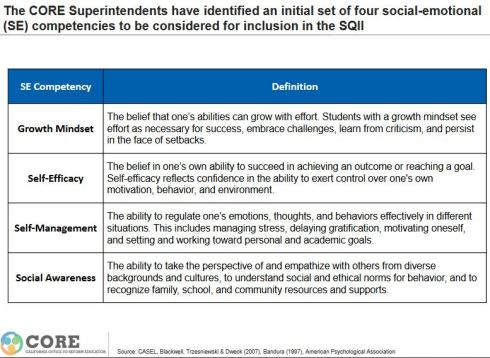
The leadership of both the American Federation of Teachers (AFT) and the National Education Association (NEA) are not protecting educators and public schools. They campaigned for and support the new education law ESSA. They lend their name to advance Competency Based Education (CBE). They promote Social Emotional Learning (SEL). In the last election, both unions immediately endorsed a candidate with a greater than two-decade record of promoting policies undermining professional educators and privatizing public schools.

The California Teachers Association (affiliate of NEA) publishes, California Educator. There are two main thrusts in the December 2016 issue; implementation of Social Emotional Learning (SEL) and promotion of STEM (Science Technology Engineering and Math) education.

NGSS like its sibling CCSS codifies terrible education theory that arose at the behest of a corporate leader, Louis Gerstner (RJR-Nabisco CEO). (To be fair Gerstner did not just sell cigarettes; he also worked at IBM.)

Selling Social Emotional Learning

I have positive opinions of Buddhist philosophy, however, western fads like mindfulness, where the psychological underpinnings of the Buddhist principles are not well understood, annoy me. Here is a quote from the December California Educator:

“The gentle sound of chimes is followed by the teacher’s voice asking students to focus on being in the here and now at Pioneer Elementary School in Union City.

“Neena Barreto is helping transitional kindergartners regulate their own nervous systems through practicing the art of mindfulness.”

In another short piece about Michelle Cauley, we are told:

“Cauley, one of six SEL facilitators with Los Angeles Unified School District, teaches children how to deal with their emotions by using calming techniques such as deep breathing and counting to 10. She provides professional development to educators in the Second Step SEL program, which offers K-8 lesson plans training.”

The Second Step SEL program is a product of the Committee for Children. They describe themselves:

“Committee for Children is a global nonprofit dedicated to fostering the safety and well-being of children through social-emotional learning and development. We are the world’s largest provider of research-based education programs that have helped over 9 million children in 26,000 schools develop vital social-emotional skills to avoid violence, bullying, and sexual abuse. From Iowa to Iraq, Chile to Chicago, we are helping children around the globe stay safe, respect themselves and others, succeed in school today, and build a better world tomorrow.”

Califronia Educator quotes Cauley,

“Kids should be getting these skills at home, but they’re not. Now students are teaching these skills to their families.”

All of this may seem positive, warm and fuzzy, but this last quote is problematic. Is there a darker side of SEL which includes inappropriate intrusion of government into family life and child rearing? A wise old saying alerts us that “the road to hell is paved with good intentions.”

Joy Pullman, managing editor of The Federalist, comments on SEL Boosters:

“The federal government has pushed states to create initiatives like this by demanding in the new federal law that replaces No Child Left Behind, called the Every Student Succeeds Act, that states include “non-academic measures” in school ratings. Despite this, all the leading researchers in this nascent field say the sorts of quasi-psychological measures are not at all reliable enough to be used to rate schools, states, or individual children. That’s not stopping boosters, however (it rarely does).”

One of those boosters is the California Office to Reform Education or CORE. I have written about this faux government agency. It is financed by – the usual we know better than any professional educators “non-profits.” CORE districts has made social emotional learning 40% of school evaluation. The following graphic is taken from their pilot SEL document sent to participants.

core-districts-sel

Jane Robbins is an attorney and a senior fellow with the American Principles Project in Washington, DC.  Writing in Townhall She states:

“According to the monolithic progressive-education establishment in this country, SEL is the next big thing to fix the problems with public education. The same was true of outcome-based education, and Common Core, and fads infinitum. But this fad isn’t just ineffective, it’s dangerous. Parents should demand a halt to pseudo-psychology – and a restoration of their autonomy in raising their children.”

The big Kahuna in the SEL movement is CASEL (Collaborative for Academic, Social, and Emotional Learning). In 2010 CASEL asked Joseph Durlak, PhD, Professor emeritus of Psychology, Loyola University Chicago, to conduct of study of SEL. His investigation was the first large scale study of SEL and it showed impressive results. The main funding for the study came from William T. Grant Foundation and the Lucile Packard Foundation for Children’s Health. The summary of claims:

“This article presents findings from a meta-analysis of 213 school-based, universal social and emotional learning (SEL) programs involving 270,034 kindergarten through high school students. Compared to controls, SEL participants demonstrated significantly improved social and emotional skills, attitudes, behavior, and academic performance that reflected an 11-percentile-point gain in achievement.”

This study was a meta-analysis of data collected between 1955 and 2007. There are three main bias problems with meta-analysis studies. Number one is the obvious problem of a researcher shading the data, the second common problem is a good meta-analysis of badly designed studies will still result in bad statistics. The third – and I suspect most relevant here – is the file drawer problem characterized by negative or non-significant results being tucked away in a cabinet.

In September 2011, Berkley’s Julie Suttie reported about Durlak’s paper in the journal Greater Good. Professor Suttie wrote:

“While these results are encouraging to SEL researchers and practitioners, not all large-scale studies have provided such hearty endorsements of SEL lately. Last fall, the Institute of Education Sciences (IES), the research arm of the U.S. Department of Education, released a report that evaluated seven different SEL programs, including Positive Action, and the results were underwhelming.

“In the study, for each SEL program, a research team compared a group of five to seven schools running that program with other schools in the same district not employing the program. When the researchers looked at their results, they saw no significant differences in social and emotional literacy between the schools that received SEL training and those that didn’t, and no increases in academic achievement or decreases in problematic behavior. In other words, the SEL programs appeared to be duds.”

The December California Educator makes the NEA commitment to SEL obvious and the AFT provides free lesson plans for teaching SEL. The teachers’ unions are backing another Bill Gates promoted set of top down standards to be forced on public schools. To quote the Turko Files, “It’s just not right!”

STEM is and Always was a Fraud

In the 1990’s, I was working in Silicon Valley. The papers were full of reports about the shortage of American trained engineers. Our Democratic congresswomen, Zoe Lofgren promised to work with Democratic President, Bill Clinton to open the doors to foreign talent – to expand the H1B visa program.

In 1993, just the year before Zoe began her congressional campaign to save Silicon Valley, every company interviewing engineering graduates at San Diego State University cancelled the interviews. By 1995, in the San Jose area, engineers were rapidly changing jobs as companies tried to steal each other’s secrets and talent. One of the main motives for promoting the fraudulent H1B visa program was not as much driving salaries down as it was the fact that engineers working on those visas could not change companies.

The biggest justification for the H1B visa program was that we were not training enough math, science and engineering professionals. The reality I saw was people who could have easily applied their skill set in a different area that had a need – were laid off. New hires from India or China were given those open positions.

California Educator does not question the assumptions about needing to inspire more students into STEM (Science, Technology, Engineering, and Math) it just asserts “STEM education is taking off.” The union organ then regales us with real-life examples of STEM teaching heroes and heroines.

We read, “For Camie Walker’s elementary students, engineering makes math and science relevant.” Camie is quoted as saying “To me, engineering is the path-way between math and science and language arts, so students can make connections to what they are learning in ways they never could before.”

We are also assured that “Her STEM program incorporates Next Generation Science Standards and Common Core.”

Another piece in California Educator starts, “This year, Jason Diodati’s upper-level engineering students are building battling drones.” The article continues, ‘“They’ll have to rebuild the ones that get destroyed,’ says Diodati, who teaches physics and engineering at Templeton High School in Templeton, near San Luis Obispo.”

Neither Walker or Diodati are teaching engineering. They are teaching project based science. Engineering is a branch of applied physics that people cannot study until they develop advanced mathematics and science skills. Generally, people do not study engineering until their second year at a university and not in real depth until their third year.

I like the concept of teaching project based math and science, but mislabeling it engineering to placate businessmen in engineering companies has doomed the NGSS science standards. These standards have kindergarten engineering standards that are somehow supposed to be unique from kindergarten science standards. Standards based mechanized education is horrible education theory and horrible unnecessarily and confusing science standards are a disaster.

The Institute of Electrical and Electronics Engineers magazine, Spectrum proclaimed “The STEM Crisis Is a Myth.” They counselled “Forget the dire predictions of a looming shortfall of scientists, technologists, engineers, and mathematicians.

Writing for the James G. Martin Center for Academic Renewal, Jay Schalin observed,

“Everybody knows that the best way to get ahead today is to get a college degree.  Even better is to major in one of the STEM (science, technology, engineering, and math) subjects, where the bulk of the jobs of the present and future lie. Politicians, business leaders, and academics all herald the high demand for scientists and engineers.

“But they are, for the most part, wrong. The real facts suggest that, in many STEM specialties, there is a labor glut, not a shortage.”

“The apparent misinformation continues to this day. Microsoft founder Bill Gates has been particularly vocal about supposed shortages of skilled labor in the computer industry.”

Walter Hickey writing at the Business Insider reputed,

“We clearly don’t have a STEM shortage. If we did, rudimentary economics would kick in and show either low unemployment for new majors or a rising price of computer science labor. People wouldn’t say they’re out of the industry because of no jobs.”

Michael S. Teitelbaum wrote a powerful piece on this issue for Atlantic magazine titled “The Myth of the Science and Engineering Shortage.” He reported:

“A compelling body of research is now available, from many leading academic researchers and from respected research organizations such as the National Bureau of Economic Research, the RAND Corporation, and the Urban Institute. No one has been able to find any evidence indicating current widespread labor market shortages or hiring difficulties in science and engineering occupations that require bachelors degrees or higher, although some are forecasting high growth in occupations that require post-high school training but not a bachelors degree. All have concluded that U.S. higher education produces far more science and engineering graduates annually than there are S&E job openings—the only disagreement is whether it is 100 percent or 200 percent more.”

If the NEA and the AFT are going to be our public voice, they have got to stop promoting corporate education reform. Stop promoting SEL standards, Common Core State Standards, NGSS science standards, STEM education fraud, Competency Based Education and the federal education law ESSA that benefits everyone but students, teachers and taxpayers. Teachers unions must fight these corporate inspired raids on education funding and their effort to de-professionalize teaching.

Education Discernments for 2017

28 Dec

By Thomas Ultican 12/28/2016

The education journalist Kristina Rizga spent four years embedded at Mission High School in San Francisco and apprehended this key insight concerning modern education reform: “The more time I spent in classrooms, the more I began to realize that most remedies that politicians and education reform experts were promoting as solutions for fixing schools were wrong.” (Mission High page ix)

California Adopts Reckless Corporate Education Standards

Standards based education is bad education theory. Bad standards are a disaster. I wrote a 2015 post about the NGSS science standards concluding:

 “Like the CCSS the NGSS is an untested new theory of education being foisted on communities throughout America by un-American means. These were not great ideas that attained ‘an agreement through conviction.’ There is nothing about this heavy handed corporate intrusion into the life of American communities that promises greater good. It is harmful, disruptive and expensive.”

 Louis Gerstner (RJR Nabisco and IBM – CEO) instigated the NGSS standards. They are so poorly written that California adopted them and then started a rewrite.

A group of billionaires influence California’s education policy; Bill Gates, Eli Broad, Reed (school boards suck) Hastings, Carrie Walton Penner, Doris Fisher and others. At their insistence, the state adopted both the nationally-flailing common core state standards (CCSS), and the unworkable next generation science standards (NGSS).

These two sets of standards are examples of bad top down education policies imposed on schools by the super-rich and associated politicos.

‘Profitization’ Movement is Destroying Good Public Education

In a brilliant article, psychometrics expert, Gene V Glass stated, “A democratically run public education system in America is under siege. It is being attacked by greedy, union-hating corporations and billionaire boys whose success in business has proven to them that their circle of competence knows no bounds.”

Up until recently, there has been a relentless effort to evaluate schools and teachers based upon standardized test scores. George Bush’s No Child Left Behind act made the testing of math and English almost the sole evaluative measure for schools. This misguided ideology was used to demonize and destroy many wonderful schools in poor communities.

I wrote about Ciedie Aech’s wonderfully sarcastic book, Why You Always Got to be Trippin? The following quote from Ciedie illuminates the unjust treatment schools in the wrong zip-code faced when judged by testing incapable of measuring school quality or student growth.

“Why was it, the question kept rising up over the years. Well, why was it that those schools most quickly and aggressively labeled as ‘drop-out factories’ – schools slated for closure or an endless chain of reforms, schools forced through the fatal destabilization of restructure and redesign, schools branded publicly as being underused failures, schools negatively marked with the highly publicized letter grade of an F – well, why was it that such a large percent of these schools (shoot, pretty much all of them) had traditionally served as a home to non-dominant-culture, non-privileged-class, minority students?”

 “Personalized Learning” Leads to Big Bucks

This year it became clear that the big profits in education were no longer in standardized testing. The real money ‘reformsters’ were lusting after was in charter schools especially cyber charters; charter school real-estate deals; and competency based education (CBE). Fortunately for profiteering entrepreneurs, the United States Congress passed a rewrite of the federal education law calling it Every Student Succeeds Act (ESSA).

I wrote to my congressman saying, ESSA is worse than NCLB. It provides money to accelerate privatizing public education, incentivizes CBE and even continues the baseless standardized testing mandates. And it has provisions for financial companies to get into taxpayer pockets via social impact bonds. ESSA takes care of everyone but students and taxpayers.

In a recent post, I noted:

“When congress passed the new education law (ESSA), the United States Department of Education was transformed into the nation’s leading education technology sales force. The Secretary of Education became a shill for a group of corporations and their ‘non-profit’ foundations working to sell ‘blended learning’; ‘competency based education’; ‘personalized learning’; ‘linked learning’; etc. These initiatives have at least four things in common; they all profit technology companies; they all are unproven; they all promote unhealthy education practices; and they overturn a student’s right to privacy.”

Competency based education is actually a failed idea from the 1990’s but this time it supposed to work because it is delivered by a computer. One of America’s leading experts on CBE and the destruction it promises for America’s public schools is Emily Talmage. She writes:

“Knowledgeworks recently described the new learning system as an ‘ecosystem,’ in which the role of the traditional teacher will soon be obsolete.

“With major investments from Wall Street, leaders in the online learning, ed-tech, and student loan industries, and even celebrity billionaires like Mark Zuckerberg of Facebook and Reed Hastings of Netflix, the transformation has recently been picking up speed. Meanwhile, political groups on both the left and right are moving the system forward by lobbying for ‘personalized,’ competency-based policies and ‘innovative’ assessment systems.”

It is an education policy that only a toxic mix of hubris and greed could spawn.

Real education requires a life to life communion between teacher and student. Daisaku Ikeda, the founder of Soka Schools, touches on this subject in his book Soka Education, “Recognizing each student as a unique personality and transmitting something through contacts between that personality and the personality of the instructor is more than a way of implanting knowledge: it is the essence of education.” Socrates likened this to being “kindled by a leaping spark” between teacher and student. Low cost on-line learning is spiritless, amoral and dead.

The author and practicing educator, Mercedes Schneider shares, “The current technological challenge for classroom teachers is not teaching students how to use technology. It’s weening kids from phones and other such personalized technology long enough for them to learn to interact with a world that is not accessed by swiping a touch screen or typing with their thumbs.”

Schools are spending huge amounts of money on electronic tablets and laptop computers to institute profit incentivized “personalized” education theories. Conversely, I recommend eliminating all student screen time until high school. In high school, I would only have students use technology for writing reports, science experiments and essays. The last thing 21st century students need is more screen time and they deserve to have their privacy protected and not hoovered up by data mining corporations.

Jack Schneider writing in the Atlantic magazine asked some provocative questions:

“Thus, despite the fact that there is often little evidence in support of utopian schemes like ‘personalized online learning,’ which would use software to create a custom curriculum for each student, or ‘value-added measures’ of teachers, which would determine educator effectiveness by running student test scores through an algorithm, many people are willing to suspend disbelief. Why? Because they have been convinced that the alternative—a status quo in precipitous decline—is worse. But what if the schools aren’t in a downward spiral? What if, instead, things are slowly but steadily improving? In that light, disruption—a buzzword if ever there was one—doesn’t sound like such a great idea.”

He went on in the article to show that public schools have indeed continued to progress.

There Are Failing Schools and They Need Repair

Why did so many parents in poor urban communities embrace charter schools? The fact is some of their schools were horrid and had been that way for as long as they could remember. When someone said, they would spend some money on the schools, parents jumped at the chance to improve their child’s school.

I heard this story at the National Public Education conference in Raleigh North Carolina. A mother from New Orleans gave her personal school experience. She said that before Katrina, the schools in the poorer sections of New Orleans were an abomination. It was normal for middle schools to have 55 children in classes, with no fans or air conditioning.

In her book School Choice, Mercedes Schneider, a product of New Orleans’ education, confirmed “Not only were the schools segregated, but more tragically, the parish refused to construct new schools for the growing black student population. Not just separate schools for whites and blacks but not of equal quality by design.”

John Thompson’s A Teacher’s Tale presents convincing evidence that taking disciplinary control policies away from local administrators and teachers in his Oklahoma high school directly contributed to violence, terrible attendance and safety issues. He describes packs of out of control gang affiliated students roaming hallways instead of attending classes, while site administrators were not allowed by state bureaucracies to take the kind of effective action needed to create a positive and safe learning environment.

On the ridiculous theory that public education needs disruption to improve, John writes, “Inner city schools need more disruption like we need another gang war.”

Failing schools are not failing because of teachers’ unions, tenure laws or bad teachers. They are failing because of bad education policy dictated by politicians and businessmen. They are failing because of racism and prejudice which are the main motivators for school choice. And they are failing because of corruption.

Dale Russakoff’s book The Prize details the epic fail of Mark Zuckerberg’s $100,000,000 gift which was matched by another $100,000,000 from several other philanthropic organizations and individuals. Intended to fix the poorly performing schools of Newark, New Jersey, it failed by every conceivable benchmark. It’s a story of feckless politicians, arrogant reformers and amazing teachers. It tells of the unmitigated degradation of the urban center of a once great American city and the difficulties facing Newark’s educators charged with the impossible task of righting that urban decline in their classrooms.

The real prize in Newark was the public education budget which corrupt politicians used to feather their own nest.

As Detroit so glaringly demonstrates, charter schools although not intrinsically bad schools, are a danger to public education. Peter Greene the educator and commentator explains:

“One of the great lies of the charter-choice movement is that you can run multiple school districts for the price of one.

“A school district of, say, 2,000 students can lose 75 students and with them about $750,000 dollars of revenue, and somehow that district of 1,925 students can operate for three quarter of a million dollars less. And how does the district deal with that loss of revenue? By closing a building – because the more school buildings you operate, the more it costs.”

A study this year in Los Angeles reported that charter schools are draining $600 million a year from the Los Angeles Unified School District. Because of fixed costs, schools must reduce services and increase class sizes to remain fiscally viable. If the privatized system becomes too large too fast, the public system will collapse. And the privatized system needs the board run school system to take the students they don’t want.

We have overwhelming evidence that charter schools are generally not as good as board run schools on almost all measures including the misleading standardized testing results. We know charters increase segregation; we know charter fraud is rampant; we know charters close when business goes bad and we know they drive education costs up. It is time for common sense to prevail.

2017

With the coming of Trump and Betsy Devos, everything I read leads me to believe that the federal government will continue and accelerate the failed Bush/Obama education policies. However, it will be out in the open because there are no fake progressives in this group to hide behind. Americans of all stripes do not want their public education system parceled out and sold. Most conservative like most liberals believe in public education. They do not want their schools taken over by faceless corporations and distant bureaucracies.

A national consensus on the need to protect America’s truly great public education system is probable.

Education profiteers will over-reach in 2017 and we will make significant strides toward winning back local control of our schools.

Sweetwater Schools Embrace “Corporate Education Reform”

22 Nov

By Thomas Ultican 11/22/2016

At November’s monthly Mar Vista High School staff meeting, the CORE Districts accountability protocol was formally presented. In June, the Sweetwater Union High School District’s (SUHSD) board agreed to a $39,200 per year fee for CORE Districts membership. By accepting the CORE agenda, SUHSD receives data services; digital tools; professional development and an opportunity to partner with the Policy Analysis for California Education (PACE) Research Collaborative. This act aligns SUHSD with the “corporate education reform” agenda; including top down control.

CORE Districts is Another Faux Government Agency

The NCLB version of the Elementary and Secondary Education Act of 1965 demanded that by 2014 one-hundred percent of all students would be judged proficient in mathematics and English based on standardized testing. Then Secretary of Education, Arne Duncan used this non-sense provision of the failed law in legally suspect ways – waivers – to bribe schools into accepting several federal mandates. Included in his list of demands was using standardized test scores to evaluate teachers, a practice that is both expensive and has been thoroughly debunked going back as far as 1999. When California refused Duncan’s evaluation demand, its waiver application was rejected.

CORE Districts first gained attention when six renegade districts financed by corporate dollars made a deal with Arne Duncan for an NCLB sanctions waiver. John Deasy, the soon to be failed superintendent of Los Angeles Unified Schools and five other school district superintendents made a legally questionable side deal bypassing state officials.

The vehicle used to justify the district direct waivers was the deceptively named California Office of Reform Education (CORE), a non-profit with no official governmental status.

In 2015, American Institutes for Research (AIR), wrote a fifty plus page report on CORE that captures the names of the players and the history of CORE. AIR is a large provider of testing materials for k-12 education so it is not surprising that the report is favorable to the pro-assessment CORE. AIR details that CORE predates the 2013 waivers which garnered nationwide attention and recounts:

“By the time CORE officially began in fall 2010, two established venues had helped build relationships among participating district leaders through which they communicated regularly about their work. The first venue was the Urban Education Dialogue (UED), a forum of large urban district superintendents designed to foster dialogue about the challenges and opportunities associated with running K–12 school systems in California. Six of the superintendents who eventually brought their districts into CORE regularly attended the semiannual UED meetings. Through these interactions, those leaders developed an understanding of one another’s situations and general approaches to district leadership. They also built a set of personal relationships with peers who faced similar challenges and had similar priorities.”

The report also shows how deeply involved some of the original CORE district leaders were with forces sympathetic with privatizing public schools and using data to drive instruction from positions of power. Praise from Eli Broad and McKinsey & Company is damning. “To be praised by fools—that is the greatest shame.” (Nichiren in 1272)

“Long Beach USD had already earned a reputation for excellence: The district received the second ever Broad Prize in 2003 as the nation’s best urban school system. In 2010, McKinsey & Company also identified it as one of the world’s 20 most improved school systems.”

A key force behind the CORE development was the Stuart Foundation which provided $700,000 in 2010 and $800,000 in 2011 to continue the collaboration that started over the failed Race to the Top application. That continuation became the CORE. At about the same time one of the minority owners of the San Francisco Giants, Phil Halperin formed California Education Partners which became the administrative and fundraising arm of the CORE.

Darwin Bond-Graham wrote about Halperin in Counterpunch:

“Among the minority owners of the Giants are some Democrats also. Giants owner Philip Halperin runs the Silver Giving Foundation, a philanthropy he created with money he amassed while working as a partner in the Weston Presidio private equity firm. Halperin’s official biography on the Stanford Freeman Spogli Institute for International Studies web site (where he sits on the advisory board trustee) says that at Weston he was, ‘focused on information technology, consumer branding, telecommunications and media,’ and that he ‘previously worked at Lehman Brothers and Montgomery Securities.’”

 The funders of California Education Partners, PACE and CORE are a nearly identical group which includes:

 The James Irvine Foundation

The William and Flora Hewlett Foundation

Walter and Elise Haas Fund

D. Bechtel Jr. Foundation

Stuart Foundation

The Evelyn and Walter Haas, Jr. Fund

The Walter S. Johnson Foundation

The Bill and Melinda Gates Foundation

The Silver Giving Foundation

 David and Lucile Packard Foundation

A little quick not so thorough research shows that since 2010 the Gates foundation has contributed over $7 million; Bechtel $500,000; Irvine $1.1 million; Hewlett $1.6 million; Stuart $1.5 million.

All this spending has two agendas; implementing common core and establishing the infrastructure of Competency Based Education (CBE). CBE in short means education on the cheap by putting children in front of screens and supervising them with minimally trained people. Sweetwater has the technology in place to take this path.

The Basis of The CORE Districts School Improvement Plan

Corporate education reformers disdain input form working educators. Instead, they are constantly on a quest to find a “silver bullet” that can be monetized. The CORE found a guru in Ontario, Canada named Michael Fullen. From John Fensterwald’s writing in Edsource:

“In January [2013] and last fall, two delegations of California educators that included Torlakson, Chief Deputy Superintendent Richard Zeiger, California Commission on Teacher Credentialing Executive Director Mary Sandy, Vogel, Levine and a half-dozen superintendents and CEOs of charter management organizations made sojourns to Toronto, funded by the San Francisco-based Stuart Foundation. There they observed classrooms and met with Fullan, teachers and provincial leaders about Ontario’s strategy of school improvement.”

 Later the same article continues:

“Fullan reviewed CORE’s waiver application, which cites his writing and says that CORE’s “alternative accountability model and day-to-day work” is motivated by the “changed culture and positive and lasting improvements” in Ontario. The waiver expresses confidence that the same philosophy – paying attention to data but using it as a basis to improve, not as a cudgel to declare failure – would work in California.”

It is notable that the waiver Duncan bestowed on the CORE districts was based on Fullen’s ideas with its multiple accountability measures, but did not include teacher evaluations by testing.

Fensterwald added, “McKinsey & Company named Ontario, along with Long Beach Unified and Aspire Public Schools in California, among the 20 most effective school systems in the world.” While on the 2009 international test, Programme for International Student Assessment, or PISA, the Ontario schools did indeed score almost as high as the best readers in the world (Finland), their math scores did not. In addition, as Fensterwald notes, “scores in science on the Trends in International Mathematics and Science Study (TIMSS) have declined over the past decade.”

This recalls the advice I often heard from the Vice-President of Engineering at Sunward Technologies, “if there is a problem, sell it as a feature.”

Social Emotional Learning (SEL) and Data Mining

 The CORE website states:

“The CORE Districts are the first in the nation to include the measurement of social and emotional factors in a system of school improvement and accountability – our School Quality Improvement Index. We have done so because we believe they offer schools and educators more and better information that furthers understanding of students and what they need to learn and succeed. This information can be used to inform and shape strategies to help students succeed in school and prepare them for success in college, careers and life.”

 The following graphic depicts the CORE index for accountability that weights SEL at 40%.

 core-index-graphic

Social emotional skills training is the hottest new fad in education. It seems so logical; if we can just teach Shaniqua and Jesus to behave properly with grit, they will manifest so much more of their potential. How could anyone object to educators teaching and tracking social behavior?

The Brookings Institute which has been solidly pro-corporate-education-reform, has produced one of the few extant studies of SEL practices. Their study is based on data from CORE Districts produced in 2014. Although, generally positive about the approach, they call for more study:

“In sum, our preliminary analysis of the data from CORE’s field test provides a broadly encouraging view of the potential for self-reports of social-emotional skills as an input into its system for evaluating school performance. That said, the view it provides is also quite limited. It says nothing about how self-report measures of social-emotional skills would perform in a high-stakes setting – or even with the very modest weight that will be attached to them this year within CORE. Nor can we say anything about how CORE’s focus on social-emotional learning will alter teacher practice and, ultimately, student achievement. The results presented above are best thought of as a baseline for future analysis of these issues – and many more.”

Jane Robins recent article in Townhall is called “The Latest Big Education Fad, Social-Emotional Learning, Is As Bad As It Sounds.” She cautions:

“Suppose the government decides a child will be a more acceptable student, citizen, and worker bee if he learns to acquiesce to the “consensus” of the group, regardless of his own moral standards, or if she learns to accept that all commands of the government must be obeyed. The student may fulfill the standard by developing the correct attitudes, but under whose authority does the government presume to instill attitudes that may conflict with parents’ desires?”

Robins describes the dangers of psychological damage for children if this kind of behavior modification is attempted by inadequately trained people. Then she addresses the most worrisome aspect of all; the loss of privacy for children that is almost certain in the age of data-mining:

“Dr. Effrem and Dr. Thompson both warn also about the extraordinary threat to student privacy that implementation of SEL standards would present. With states building longitudinal student databases that track children from cradle to career, it’s inevitable that data collected from observing and analyzing children’s emotional states will be preserved . . . forever. And because USED has gutted federal student-privacy law to allow sharing of personally identifiable information on students with almost anyone the government wants, that data is likely to be widely disclosed – without parental consent.”

 California’s Teacher’s Unions Oppose CORE

A letter to the state school board from the president of the California Teachers Association, Eric C. Heins and the presidents of each of the CORE district’s union locals, laid out several points of contention with CORE. They observed that the new federal law eliminated all waivers as of August 1, 2016 and called upon the state of California not to grant a state waiver to the CORE. The letter states:

“The Presidents whose signatures are added to mine on this letter represent the educators who work in those CORE districts. Their Associations have never endorsed and do not now support the extension of the CORE waivers. Further, these education leaders strongly believe the CORE waiver is a serious impediment to the collective education change efforts in California. As educators, we are committed to improving the conditions of teaching and learning, advancing the cause of quality public education, and ensuring that the dignity and civil rights of all children are protected. At a time when we are working hard in California to implement positive changes that safeguard the quality public education all students deserve, this top-down waiver system which excludes teacher input and collaboration is counterproductive and divisive. The CORE waiver process does not reflect the work of a broad-based diverse group of individuals with a genuine stake in their school. The stakeholders are cut-out of the development and execution of viable education reform implementation strategies.”

Approximately a million students attend what are now the 10 districts affiliated with CORE. However, 5-million students still attend non-CORE schools. These schools along with the state of California are still in the process of developing the new federally mandated state accountability system.

In contrast to the CORE’s top-down approach, California’s State Superintendent of Instruction, Tom Torlakson has established a 30-member Accountability and Continuous Improvement Task Force. Torlakson’s task force comprises a broad range of voices including labor, academia, parent groups and educators that are engaged in the development. History informs us that this democratic approach to governance will produce a more lasting and superior product.

Sweetwater Schools Embrace “Corporate Education Reform”

I believe Sweetwater Union High School District to be a model of what is possible in education. The model has been created by a wonderful culture of teachers and parents working together often despite political corruption and malfeasance. Today, Sweetwater has a clean board and an enthusiastic well trained educator at the helm. However, the district has succumbed to the sirens song of corporate education reform.

We have spent untold amounts of money on technology. We purchased I-pads for 20,000 students and are now replacing the I-pads with laptops. It is as if we believe putting children in front of screens is more important than smaller class sizes.

We have every kind of education software program imaginable including a useless education management package called Canvas. Canvas has a terrible front end which few teachers use by choice, but Canvas was designed to host online classes and facilitating blended learning. It fits perfectly with the corporate push to replace teachers with technicians and low skilled monitors. It is the path to enervated education.

This year every teacher in the district was given a tee-shirt that says “Sweetwater Union High School District – Putting Students First.” Exactly the kind of corporate sloganeering employed by Michelle Rhee and Eva Moskowitz. The pressure to ware these shirts at staff meetings is demeaning for professional educators but classic corporate think.

What makes this district great is that we care about kids and we put fully certificated teachers in all our classrooms. We maintain order and we know our students. We provide a safe healthy environment. Stop the raid on our resources and get out of bed with “corporate reformers” before permanent damage is done. CORE districts, social emotional learning and standards written by the testing industry (CCSS) are antithetical to good pedagogy.

Twitter: @tultican

Education and the Commercial Mindset

21 Oct

By Thomas Ultican 10/21/2016

Samuel E. Abrams has created a masterpiece of research and reason illuminating the successes and failures of the forces favoring privatization of public education. His new book published by Harvard University Press is Education and the Commercial Mindset.

Starting with Chris Whittle and his infamous Channel One on TV and the ill-fated Edison Education, Abrams documents the triumphs and failures of profit based education. He shares the thinking and biographies of key characters working to privatize education and includes voices warning about the unsavory consequences of this agenda; not only in America, but worldwide.

Evidence of Valuable Education Reform Policies

My big take-away from this book was solidified in the last two chapters that discussed privatization efforts in Europe and South America. It explains why both Chile and Sweden have begun undoing their privatized systems. Abrams wrote:

“Much as many Chileans at the same time were protesting their nation’s long-standing system of for-profit school management, initiated in 1981, Swedish critics started to raise their voices in opposition. The Chilean adversaries would soon prevail, with President Michele Bachelet declaring in January 2015 that her government would phase out for-profit school management.

“Basic to the UR [the Swedish Educational Broadcasting Company] series was a crisis of faith in Swedish education known as ‘PISA shock.’ Of all OECD nations, only Sweden had seen scores on the triennial Program for International Student Assessment (PISA) successively drop with each administration of the exam since its introduction in 2000.” (Page 275)

The one country in Scandinavia that plotted its own course, Finland, has a very similar population distribution as its neighbors yet on PISA its scores are significantly better. Finland also achieved about the same result differential when compared to the United States. Here is a chart I reproduced from the book (Page 287):

pisa-results-graphic

To address a chronic teacher shortage – especially in science classes – Norway, Denmark and Sweden have all introduced Teach for America type programs. Now there is a Teach for Norway, a Teach for Denmark and a Teach for Sweden. On the contrary, Finland sets itself ”apart from not only Sweden but also Denmark and Norway as the only Nordic nation requiring all teachers to have a master’s degree before taking over a classroom.” (Page 280) The Finn’s significantly boosted teacher pay to equality with other professions and reduced class sizes. There is no teacher shortage in Finland.

Where Norway, Sweden and Denmark have embraced standardized testing of certain critical classes like language and mathematics, Finland has chosen to monitor its schools using sampling techniques similar to the NEAP testing in the United States. In addition, Finland samples all classes including music and art.

The Finns also have a different attitude toward who should be leading education than their Nordic neighbors or the United States. Abrams reports, “Of the many officials I interviewed at the Finnish Ministry of Education and Culture, the FNBE, FINEEC, and the Helsinki Department of Education, all had been teachers for at least four years and several had taught more than ten.” (Page 289)

If the intention is great education and not merely profiting from tax payers or creating education on the cheap, then the Finish results indicate three important policy principles to consider:

1) Put highly trained well paid teachers in every classroom.

2) Respect the professional judgment of educators and have them lead education.

3) Significantly reduce class sizes.

For Profit Education and Modern Reform Efforts

In the spring of 1991, George Bush announced his America 2000 education agenda and the New America Schools Development Corporation (NASDC). NASDC was defined as “a private-sector research and development fund of at least $150 million to generate innovation in education.” (Page 20) Alcoa CEO Paul O’Neill was named as its first chairman. The Regan administration published “A Nation at Risk”, which was written by leaders in the business community and NASDC was clearly a business community driven entity charged with fixing America’s “failing” public schools. Abrams described the committee:

“O’Neill was soon after replaced by Thomas Kean, president of Drew University and former Republican governor of New Jersey. Kean’s fifteen fellow board members comprised some of most powerful people in American business, including Louis Gerstner, chairman of RJR Nabisco; Frank Shrontz, chairman of Boeing; Lee Raymond, president of Exxon; James R. Jones, chairman and CEO of the American Stock Exchange; John Ong, chairman of BF Goodrich; and Paul Tagliabue, commissioner of the National Football League. Their mission was to lead the way in breaking the mold of conventional schooling.” (page 21)

America had turned its back on professional educators and put its faith in these powerful CEO’s to remediate all that was believed plaguing public schools. A few years latter Diane Ravitch would derisively label this CEO led reform effort “corporate education reform.”

Concurrent with Bush’s America 2000, Chris Whittle had sold his Channel One and was putting together a for profit education organization called the Edison Project. Whittle was the consummate salesman. “In a coup that made the front page of the New York Times on May 26, 1992, Whittle lured Benno Schmidt from the presidency of Yale University and thereby brought the Edison Project national attention and clout overnight.” (Page 27) As Abrams documents, Whittle and Schmidt made grandiose claims regarding the future of the Edison Project:

“Despite this lack of experience in K-12 education, Schmidt, along Whittle, spoke with conviction about what ailed it and what should be done. They contended that no cause in the United States was as pressing as K-12 education and no remedy as promising as for-profit management. In the front-page article in the New York Times announcing Schmidt’s decision to leave Yale to lead Edison, Schmidt and Whittle forecasted that Edison could have a revolutionary impact. Whittle placed the company’s mission in the context of the Cold War and employed the language of historical inevitability: ‘You have to have a West Berlin for East Berlin to fall, and what we’re really doing here is building West Berlin.’ Schmidt added: ‘The reason this hasn’t been done before is that this thing is a matter of D-Day dimensions. Only someone with a high tolerance for risk would even be willing to contemplate it.’ Schmidt predicted, ‘If this venture succeeds, there’s nothing that could be done, aside from changing human nature that could be more constructive for our society.’” (Page 28)

Toward Edison’s Failure

Abrams obviously spent a lot of time not only researching but visiting various facilities and interviewing key actors in the story of privatized education in America. It is fascinating to learn how many of the leaders in the Edison Project have continued the quest to privatize America’s schools. I think two episodes involving Edison are particularly illustrative of privatized failure; one in Baltimore and the other in Philadelphia.

Citizens in middle and working class neighborhoods were not interested in replacing their public schools with for profit schools. However, blighted neighborhoods like those in Baltimore which became the locations for HBO’s The Wire, were fertile markets for Edison. In March of 2000, the Maryland School Board identified seven Baltimore primary schools that were not performing well and they selected Edison to run four of those elementary schools. The other three schools continued under the supervision of the local school district.

The bottom line was Edison came in with some really good people and made many facilities upgrades, but the three schools that stayed in the public system outperformed the Edison schools on language arts and math testing. When the only metric for good education is testing data, it signaled the eventual end for Edison in Baltimore.

In 2000, Tom Ridge paid Edison $2.7 million dollars to study Philadelphia’s schools and make recommendations. Abrams writes about the reaction to this contract:

“Even Brandon Dobell, an analyst at Credit Suisse First Boston who was bullish on Edison, expressed disapproval of the arrangement. Along with Howard M. Block, an analyst at Bank of America Securities, Dobell took the consulting contract to mean that Edison would end up running a cluster of the city’s schools and, on that account, forecasted greater earning potential for the company. A report Dobell coauthored termed the contract ‘a strong endorsement for the Edison value proposition – perhaps the strongest we have seen thus far in Edison’s lifetime.’ Indeed, Edison’s stock spiked 6 percent on the day of the announcement of the contract. Yet Dobell saw the conflict of interest inherent in commissioning a study from a company that stood likely to recommend its own services. ‘This contract is a bit strange,’ Dobell said to a reporter for the Philadelphia Inquirer. ‘It is kind of like putting a fox in charge of the henhouse.’” (Page 104)

Eventually, after much political upheaval, Edison was awarded 23 Philadelphia schools. While Abrams details many issues faced by Edison, it was the intractable problems plaguing public schools; poverty, lack of funding and bad education policy dictated from above that were beyond Edison’s ability to conquer.

I am reminded of a story I heard from a New Orleans resident about why parents there initially embraced the charter movement. As a young woman, going to underfunded schools in the black community, she had been in middle school classes with 55 students. Furthermore, the administration would only allow teachers to run the classroom fan for 10 minutes every hour. It was oppressively hot and students would watch the clock like a hawk so they got the fan on immediately when it was time. After Katrina, political leaders said they were going to put money into schools in her neighborhood. That was new and sounded good.

Pennsylvania finances its schools almost exclusively with property taxes. In urban Philadelphia, property values are low and poverty is high. In 2000-2001, Philadelphia spent $7,944 per student on schools. The five school districts along the Main Line of the region’s commuter rail system, which services suburbanites living northwest of Philadelphia spent $11,421 per student. Even though Edison got some extra funding they could not overcome this double whammy that has also vexed the public schools system. Education on the cheap, does not work; especially in blighted neighborhoods.

In 2013, Edison ceased to exist. The bulk of EdisonLearning was sold to a supplementary educational services company in Camden, New Jersey, called Catapult Learning.

Abrams also does a thorough job of documenting the rise of the charter school industry, especially the no-excuses charters. It is fascinating to see how many young executives at Edison became key leaders in the charter school industry or went to work for foundations like the Fisher Foundation which support charter schools.

Both the for profit education initiative and charter school development were led by people with no deep education experience or theoretical knowledge. For example the famous KIPP charter school chain was started by two “Teach for a Minute Boys” with no education background and only two years elementary school teaching experience.

Abrams presents convincing arguments that KIPP and other no-excuses charter systems cannot possibly be scaled up to educate all American children. These systems have a history of burning out teachers and they rely on public schools to take in the children they expel or council out.

For people interested in public education, Education and the Commercial Mindset is an important asset. The privatization movement has been fueled by a misunderstanding of effect and cause. Public schools were struggling, not due to misguided pedagogy or “bad teachers”, but from bad policy and an unwillingness to adequately fund education in poor communities. The top down and misguided federally driven remedies and for profit cannibalism have only made the problem worse.

Twitter: @tultican