By Thomas Ultican 10/13/2026
At NPE Houston, a woman from Ohio gave me the book Right Down the Drain. It is a product of the Department of Education graduate school at Miami University Oxford, Ohio. In 2023, the state created the EdChoice Expansion Voucher Program which takes more than $1 billion a year away from public education with no audits. I have visited Ohio a few times and really liked what I saw but do not believe it is immune to corruption. Having no oversight for a billion dollars of taxpayer money is bizarre. As Education Professor Thomas Poetter wrote, “… the EdChoice Expansion Voucher Program feels to us like throwing Public money right down the drain?” (Right Down the Drain [RDTD] page 13)
President Ulysses S. Gr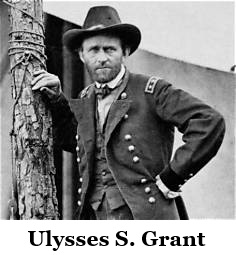 ant saw the Common Schools as a tool to enhance democracy. In his 1875 address to the Army of Tennessee, He stated, “Encourage free schools, and resolve that not one dollar of money appropriated for their support, no matter how raised, shall be appropriated to the support of any sectarian school.” He concluded:
“Leave the matter of religion to the family circle, the church, and the private school, supported entirely by private contribution. Keep the Church and State forever separate. With these safeguards I believe that battles which create us ‘The Army of Tennessee,’ will not have been fought in vain.”
Grant Ignored in Ohio
Curiously, Grant was a Republican born in Ohio. Strikingly, the Ohio GOP of today completely rejects Grant’s admonition. In 1995, Republicans in Ohio’s legislature passed the Cleveland Scholarship and Tutoring Program. A coalition of parents and teachers sued to stop the program because among other reasons it allowed for taxpayer money going to religious institutions. This turned into a protracted legal struggle that saw victories for both sides. Finally, on June 27, 2002, the United States Supreme Court in a 5-4 decision declared that vouchers were constitutional. This opened the door for sectarian institutions to receive taxpayer money.
2023 saw Matt Huffman, one of the most powerful politician in Ohio, push through the billion dollar a year EdChoice Expansion Voucher Program. Huffman comes from the small isolated and shrinking old city of Lima, Ohio. An illustration of his political power is for the first time since the 19th century this politician was able to serve first as president of the Ohio senate and then became speaker of the house with no interruption between positions. The change was forced on him by term limits.
EdChoice’s adoption is an example of authoritarian government in action. Ohio is deeply gerrymandered and even though vouchers are very unpopular, residents will never be given the opportunity to vote against them.
The top 100 schools receiving the most cash for vouchers in Ohio are religious institutions. (RDTD page 51) In fact, 90% of Ohio voucher money is going to religious schools. (RDTD page 75) Even if Ohioans are not Catholic or Hindu, they are sending tax dollars to those institutions. So, the modern Ohio GOP supports sectarian schools and is unconcerned with the separation of church and state.
Maybe we should send taxpayer funds to religious schools but shouldn’t the public have some say in this?
What is the GOP Motive?
In 1955, economist Milton Friedman wrote an essay calling for the creation of a voucher system in America. The political establishment including President Eisenhower, the GOP and Democrats ignored what they perceived as a crackpot. It was Ronald Reagan who gave Friedman credibility in the 1980s which for the first time gave the voucher movement legs. In the early 2000’s, Friedman told the American Legislative Exchange Council that parents should pay for educating of their own children. Today, voucher zealots following Friedman’s lead are working to end taxpayer supported public education. (RDTD page 67) This appears to be the Ohio GOP motive.
Vouchers are a state-designed mechanism for channeling public dollars to private education providers. For the GOP, it is important that this money is provided without state oversight. For example, in June, Democrats put forward the Take the Dough, We Gotta Know Act that calls for state audits and monitoring enrollment, capacity, student demographics, tuition, services offered, and accreditation. This bill is probably already dead because House Speaker Huffman has contended that the fact parents enroll their kids in private schools constitutes accountability, and he is concerned that the bill might infringe on a private business. (RDTD page 77)

A Privatization Outcome
In their essay, Elijah L. Fenwick-Sanders and Anthony W. Rose state:
“When large amounts of public money are permitted to flow through private systems with limited transparency, the risk of corruption increases.”
“Public trust requires more than good intentions. It requires rules, records, audits, transparency and consequences.” (RDTD pages 84 and 85)
If a school does not want public audits, public reporting, nondiscrimination requirements, academic transparency or fiscal oversight it can opt not to accept public funds. That is a reasonable choice.
Support or opposition to vouchers is not a Left-Right situation. Many conservatives support public schools and some liberals support privatization. Emma Errang, who grew up in traditionally conservative Kentucky, bolstered this point in her essay when writing about the 2024 constitutional amendment vote that would have allowed school privatization in her state:
“The coalition against Amendment 2 was not liberal or conservative, nor was it Democrat or Republican. It included progressive voters like me and conservative voters like my father, who believe that choosing private education is a right but not something that should be funded at the expense of public education.” ( page 128)
Conclusion
I side with President Grant when he advised, “Encourage free schools, and resolve that not one dollar of money appropriated for their support, no matter how raised, shall be appropriated to the support of any sectarian school.” I would go a step farther and say that all private schools, not just those from religious institutions, be on their own and receive no taxpayer funding. Of course, the public has the right to support private schools if it desires, but that choice has the potential to undermine public schools and that would be a tragedy.
Reagan’s fraudulent A Nation at Risk report claimed, “We report to the American people that while we can take justifiable pride in what our schools and colleges have historically accomplished and contributed to the United States and the well-being of its people, the educational foundations of our society are presently being eroded by a rising tide of mediocrity that threatens our very future as a Nation and a people.” SAT scores were cited to defend this statement. Seven years later, the Sandia Laboratories in New Mexico found that using proper statistical techniques all groups disaggregated by race and gender showed improved scores in 1983. This is where the ongoing attack on public schools began in earnest and it was based on a fraud.
In America, public education has been a great bulwark for democracy. It is a shared democratic obligation that must be defended from greedy entrepreneurs and misguided social theorists.


Leave a Reply