Tag Archives: Peter Greene

Crazy-Pants Makes Crazy Prediction

19 Nov

By Thomas Ultican 11/18/2025

A propaganda rag, ‘The 74’, reported, “[R]esearch from Stanford estimates learning loss over the past decade has cost our country over $90 trillion in future growth.” The article was written by Eric Hanushek, a Stanford University economist, and Christy Hovanetz, an education researcher from Jeb Bush’s pro-school choice and pro-education technology organization, ExcelinEd. Unsurprisingly, the article linked above is a paper Hanushek wrote. Crazy-pants Eric has a long history of using his own papers to support new research which is typically long on assertions and short on convincing analysis.

Last year, he claimed COVID-19 “learning-loss” could cost America $31 trillion in future economic development. Hanushek’s latest paper asserts, “The present value of future lost growth would be approximately three times current GDP (which is $30 trillion).” The justification for this new assertion is more than uncertain. The new paper refers to a model from his 2011 paper written with Ludger Woessmann­ for the Organization of Economic Co-operation and Development. That paper was long on Arithmetic with several assumptions short on common sense. In his latest paper and this article, he is claiming that a small drop in the National Assessment of Education Progress (NAEP) scores added to what he calls “Covid learning loss” will cost America $90 trillion in future growth.

Eric Hanushek first gained notoriety with his 1981 paper, claiming “there is no relationship between expenditures and the achievement of students and that such traditional remedies as reducing class sizes or hiring better trained teachers are unlikely to improve matters.” This claim attracted conservative billionaires but had little relationship with reality. When providing solutions in ‘The 74’, Hanushek and Hovenetz contradict his 1981 paper writing:

“First, states need to invest in effective personnel. They can do this by incentivizing strong teaching and by supporting strong teaching through professional development in evidence-based practices such as use of high-quality instructional materials and assessment data to inform instruction.”

A few decades ago, a friend gifted me the book “An Incomplete Education” by Judy Jones and William Wilson. After my 1987 edition, Jones and Wilson have updated the book and republished several times. I fondly remembered their description of economists:

“Economists are fond of saying, with Thomas Carlyle, that economics is ‘the dismal science.’ As with much that economists say, this statement is half true. It is dismal.”

“Where once rulers relied on oracles to predict the future, today they use economists. Virtually every elected official, every political candidate, has a favorite economist to forecast economic benefits pinned to that official or candidate’s views.” (Incomplete Page 120)

It just so-happens that Eric Hanushek is an MIT trained economist who is good at creating reports that conform to the beliefs of conservative billionaires. His work is scientific propaganda masquerading as academic excellence.

Notices from Hanushek and Hovanetz

“No single event over the postwar period has had an impact on our educational system that comes close to that of the pandemic.” This statement from their article is hyperbole not fact.

The impact of vouchers in Washington DC and Ohio were worse than COVID-19. In his book, The Privateers, Josh Cowen shared that the losses due to COVID-19 were around -0.25 standard deviations while losses in DC due to vouchers were around -0.40 standard deviations and in Ohio they were as high as -0.50 standard deviations. (Privateers Page 6) However, these were not nationwide results. Unfortunately, we don’t have much information about the mumps, measles, flu and polio epidemics of the 1950s but there is every reason to believe their impact was close to that of the COVID-19 epidemic.

The authors hold up Mississippi, Tennessee and Louisiana as examples to emulate stating:

“Some states made noteworthy progress on NAEP this year: Mississippi, Louisiana and Tennessee. Each has a track record of high expectations and strong accountability.

“These states use an A–F school rating system that puts reading and math achievement front and center. They measure what matters — proficiency and growth — and they report results in a way families and educators can understand. Transparency and rigor are fueling their progress.”

The A—F school ratings system is worthless because it only measures parent income. As Diane Ravitch wrote on her blog:

“The highest rated schools have students with the highest income. The lowest rated schools have students with the lowest income.”

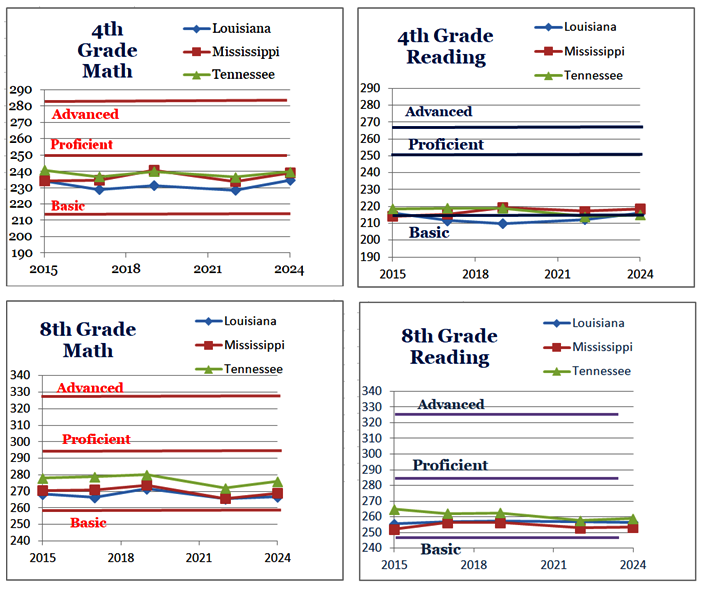
I wondered what Hanushek and friend were alluding to, so I graphed the average NAEP data for 4th and 8th grade reading and math since 2015 to see if it provided a clue.
NAEP Data for Louisiana, Mississippi and Tennessee

I added a bar indicating the NAEP cut scores for the 2024 NAEP designations of basic, proficient and advanced as a reference. It is well known that NAEP’s proficiency level is set well above grade level which means 70% of students not being rated proficient is not a bad score. Furthermore, writing in Forbes, Peter Greene shared, “An NCES report back in 2007 showed that while NAEP considers “basic” students not college ready, 50% of those basic students had gone on to earn a degree.”

The data graphed here indicates to me that all three states have solid public education programs. It is noteworthy that in reading their 4th graders only averaged basic but by 8th grade their average results were above basic. However, all three states are among the bottom 15 scoring states in the US and as we would expect are in the bottom 15 states in family income. What I do not see is why they are held out by Hanushek and Hovanetz as exemplars.

Concluding Remarks

The first blogger to label Eric Hanushek crazy-pants was Peter Greene. I have found Peter’s creativity worth stealing.

Let’s be clear, there is no such thing as learning loss involving students. This is a complete misnomer. Students may not achieve some state provided targets but they are always learning; maybe not what we want them to learn but always learning.

Eric Hanushek is a huckster for conservative billionaires. This latest claim is beyond farcical. Claiming to have knowledge of economic development in 40 years is fantasy and then tying that fantasy to NAEP testing data is bizarre. His $90 trillion claim for loss of future economic development would embarrass a carnival barker.

Hanushek is the guy who thinks education can be measured in days of learning which means that students learn in a near linear fashion. They absolutely do not but even this bogus claim would seem prescient when compared to this latest assertion.

Standardized testing only correlates with family income. To evaluate education based on this fictitious instrument is fraudulent. By extension, this makes economist Eric Hanushek a con artist.

New NAEP Scores No Reason to Panic

4 Feb

By Thomas Ultican 2/4/2025

Billed as the Nations Report Card, the National Assessment of Education Progress (NAEP) just released data from the 2024 testing window. The first NAEP assessments occurred in 1969 and in 1996 school testing in all states became mandatory every two years. Almost since the beginning, the testing results have been treated as a crisis moment. This year, both math and reading data came in lower than pre-pandemic levels. To the reform group, Education Trust, this is a time for action but it seems more likely that less action might be in order. The last two decades of education reform have been a harmful disaster. So prudence in our response is a better course.

The problem with all this data is summed up nicely by Peter Greene:

“As long time readers know …, I’m not one to get excited about scores on the Big Standardized Test, despite the claims that it will tell us How Schools Are Doing. There are lots of reasons to suspect that America’s Gold Standard of Testing is not all the gold standardy. And there is one serious lesson to be learned, which is that having all this cold hard data doesn’t actually change a damned thing— everyone just “interprets” it to support whatever it is they wanted to do anyway.

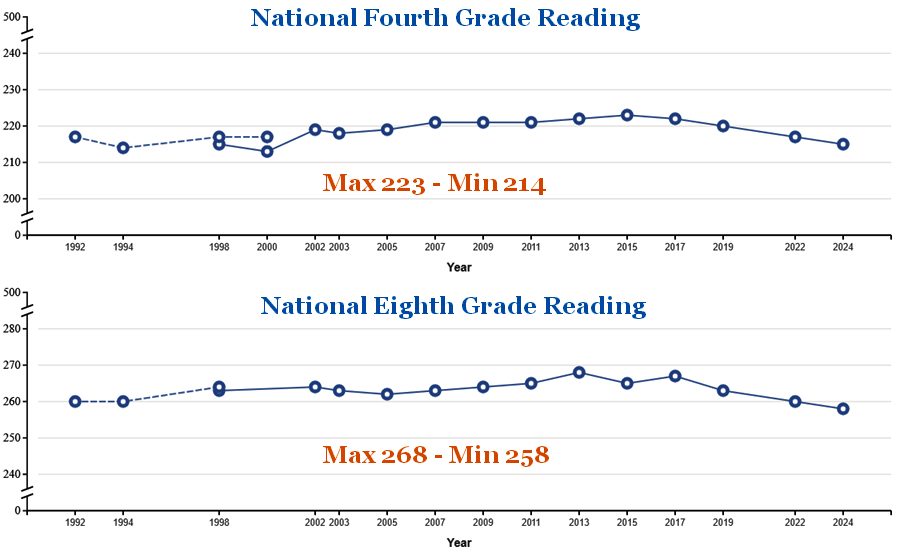
Plots of the average testing results covering math and reading for the past 32-years do not inspire much insight even if you believe in standardized testing.

The plots above were created from NAEP Data. Since 1992, both sets, which are plotted on a 500 point scale, wiggled up and down within a 10 point range.

In 2020, COVID-19 happened and this year’s 4th graders joined in-school classes a year or more late. The 8th graders missed at least their 5th grade in-school classes and some of them missed significantly more. During that year or more out of school, a tendency for truancy developed. So it is not surprising that their testing scores are not stellar, but they are still within the 10-point historical range.

Reading Scores Down

Peggy Carr, Commissioner of the National Center for Education Statistics (NCES) said, “Student achievement has not returned to pre-pandemic levels, reading scores continue to decline, and our lowest performing students are reading at historically low levels.”

For the past decade, there has been a major dispute over how to teach reading in the United States. Dozens of states have overhauled their reading instruction to adopt so called science of reading (SoR) methods. These changes came about largely due to a well financed corporate driven campaign that has drowned out literary experts.

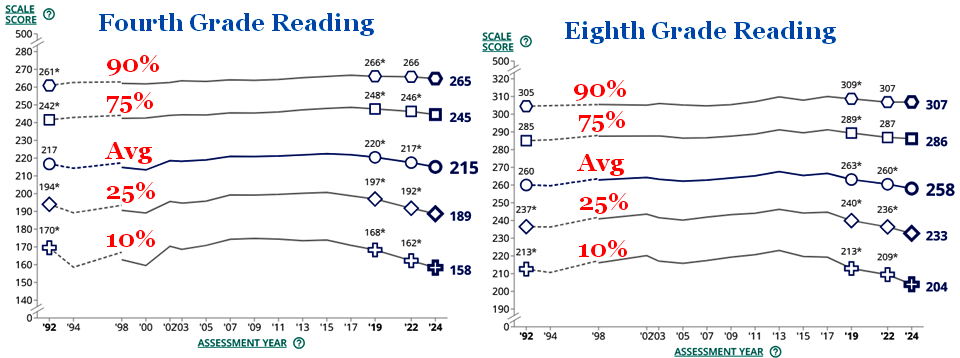
NAEP created charts based on reading data disaggregated by scoring percentiles are shown below.

In both the 4th grade and 8th grade charts reading scores started declining about 2015 and have fallen every testing window since. At about the same time, balanced literacy, which was the nation’s most popular method for teaching reading, started being replaced by SoR. The correlation between SoR and the dip in reading scores is obvious but may be misleading. Chalkbeat reports,And while federal education officials are usually reticent to explain what caused a particular increase or decrease in scores, Carr cautioned that the near-universal dips in reading should not be taken as evidence that reading reforms have not worked.”

I have believed for some time that SoR is less about good teaching and more about profits, so it is tempting to discount Dr. Carr’s warning. Standardized testing has serious limitations and it would be hypocritical to discount it only when I did not like the results and then hale the outcomes that I liked.

However, the NAEP data since 2017 certainly provides NO support for SoR.

Math Staying Steady

The 2024 math results for fourth-grade improve by 3% over 2022 but were still 2% lower than the pre-pandemic 2019 testing. Eighth-graders treaded water in 2024 with scores that were not significantly different from 2022 and were 8% lower than 2019.

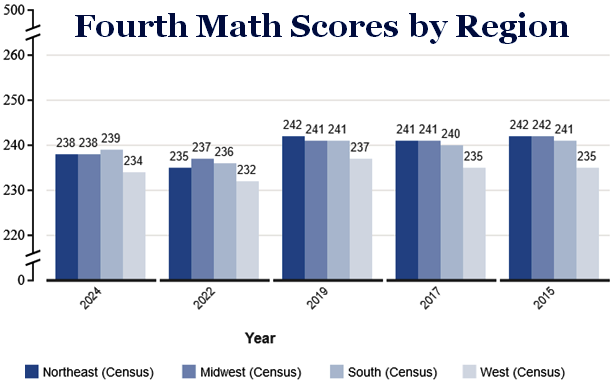
NAEP allows researchers to break down scores by region. I created this bar graph of fourth grade math for the last five testing windows. The South, Midwest and Northeast had almost identical scores while the west lagged by 4-6 percent. Would we all like to see better scores? of course. On the other hand, there is nothing here that looks dire. In 2022, there was a small drop in scores and in 2024 about half of the drop was overcome.

Absenteeism is probably holding back score recovery in both math and reading. It is generally considered that when a student misses more than 10% of the school year they are chronically absent. National Public Radio (NPR) has reported, the rates of chronic absenteeism doubled during the pandemic. NAEP also asked students, during this last testing cycle, how many days they had missed in the previous month. NPR notes that, “Across the board, lower-performing students were more likely to report missing five or more days of school in the previous month, compared with higher-performing students.”

Some Final Observations

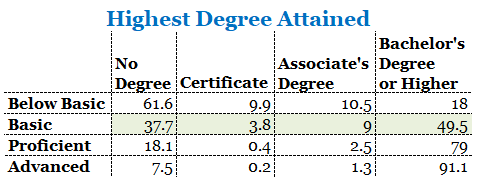
 In 2007, NCES performed a study on what happened to the 1992 NAEP participants. They were interested in how the four attainment level, Below Basic, Basic, Proficient and Advanced, matched student outcomes.

The key results are shown in the table above. It looks like the levels have misleading names. Half of the students in the Basic group achieved a bachelor’s degree or higher. This means that they were college ready and academically proficient. The NAEP labels are aligned too high; therefore misleading.

In 2019, Diane Ravitch commented on that year’s NAEP data: “After a generation of disruptive reforms—No Child Left Behind and Race to the Top, VAM and Common Core—after a decade or more of disinvestment in education, after years of bashing and demoralizing teachers, the National Assessment of Educational Progress (NAEP) for 2019 shows the results:

‘“Over the past decade, there has been no progress in either mathematics or reading performance, and the lowest-performing students are doing worse,”’ said Peggy Carr, the associate commissioner of the National Center for Education Statistics, which administers the NAEP. ‘“In fact, over the long term in reading, the lowest-performing students—those readers who struggle the most—have made no progress from the first NAEP administration almost 30 years ago.”’

SoR became the billionaire reform de jure in 2019. No Child Left Behind, Race to the Top, VAM and Common Core had come to be seen as either failures or frauds. Profiteers hoped the new SoR strategy would lead to privatizing and controlling all aspects of education and they made great efforts to promote it. Will the 2024 NAEP results be the beginning of the end for their greedy dreams?

Whatever the case, Ravitch’s 2019 NAEP analysis still holds true. The 2024 NAEP results are nothing to celebrate but certainly are not a crisis. After all, they are based on standardized testing that is not capable of measuring learning or teaching. Family wealth is about the only thing to which NAEP data correlates.

Polikoff Makes NCLB Type Accountability Call

17 Sep

By Thomas Ultican 9/17/2024

Article by Professor Morgan Polikoff, University of Southern California’s Rossier School of Education, is a throwback to the No Child Left Behind era. The piece’s purpose was to advertise a new report he worked on with the Center for Reinventing Public Education (CRPE). The teaser for his article at The 74 says, “Given the importance of public education and the need for student data, how can states justify doing such a lousy job at informing parents?” Because of COVID learning loss, he says state education report cards need big improvements.

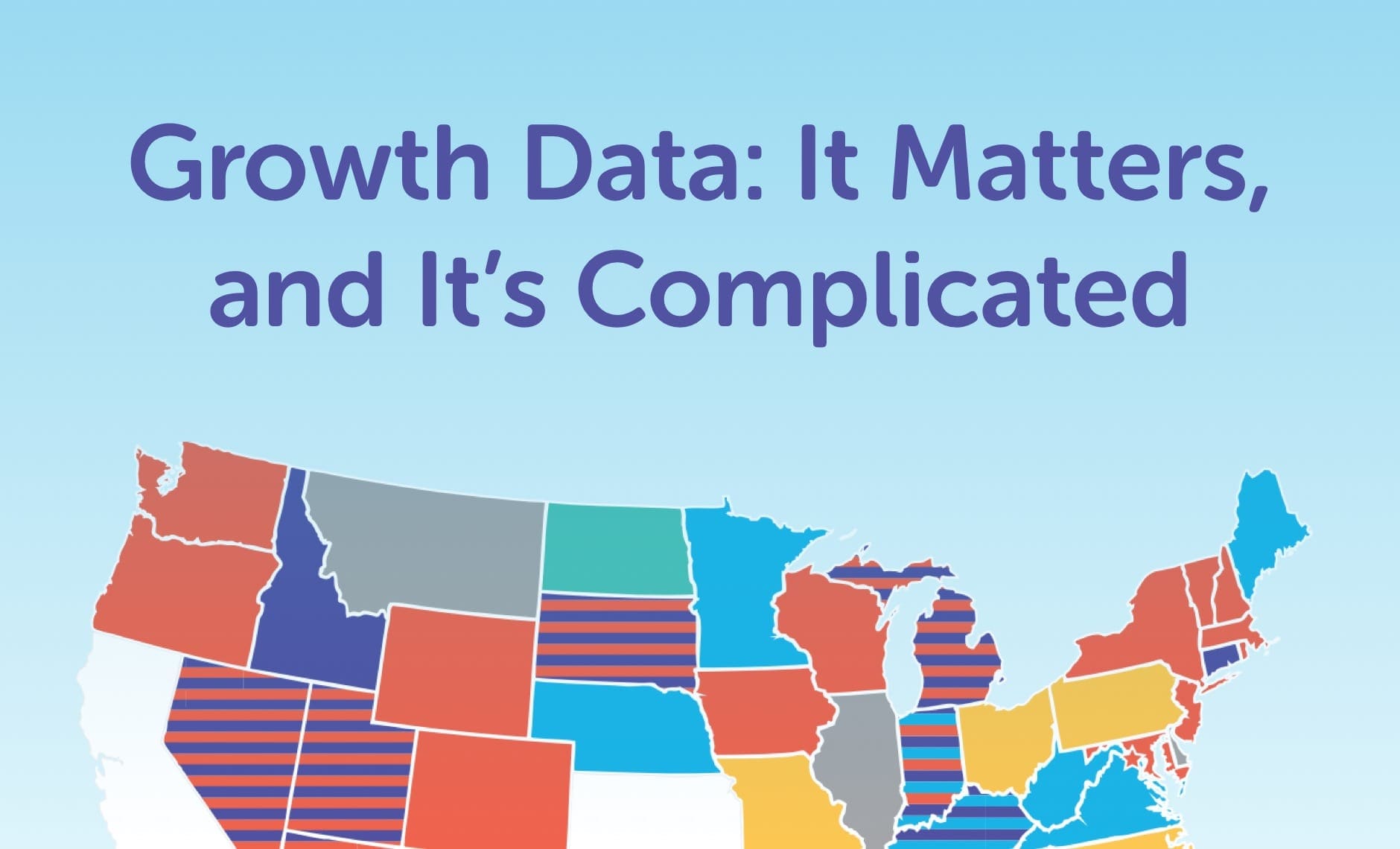
Is leaning loss a real thing? Probably not but let’s ignore that argument for now. Polikoff shared, “I’m on the board of the Data Quality Campaign and I’ve written extensively (and favorably) about the role of accountability in promoting educational improvement.” Additionally, the 2023 Data Quality Campaign “Show Me the Data Report” says, “13 [states] did not include growth data from the 2021–22 school year, and 4 states did not include growth data at all.”

Virtually everything Polikoff shares is billionaire funded baloney.

Center for Reinventing Public Education

In 1993, Political Science Professor, Paul T. Hill, established the Center for Reinventing Public Education (CRPE).

Professor Hill, a Non-Resident Senior Fellow at the Brookings Institute, was a member of Brookings’ cadre of researchers convinced that American public education was failing. Furthermore, they shared a general agreement that market based business principles were central to fixing schools and declared teachers unions and governance by locally elected school boards must be overturned.

CRPE was fortunate to be in Seattle, Washington where the world’s richest man, Bill Gates, decided to implement his opinions concerning education. The fact that he was so rich appeared to be his only qualification for what became an outsized influence over public education. CRPE became one of his tools.

Doing School Choice Right” was a CRPE project funded by the Lynde and Harry Bradley Foundation, Annie E. Casey Foundation, and Bill & Melinda Gates Foundation. CPRE listed two salient goals for their study:

  • “Create models for how school districts can oversee public schools in multiple ways—including direct operation, chartering, contracting, and licensing private schools to admit voucher students. This study is conducted in partnership with the National Charter School Research Project.”
  • “Examine issues involved in moving toward pupil-based funding, particularly technical, legal, and regulatory barriers.”

Out of this study, the “portfolio school” management model was created. In October 2009, CRPE published Portfolio School Districts for Big Cities: An Interim Report.” It became popular with billionaire school reformers and in 2018 was a central purpose for Jon Arnold and Reed Hastings to establish The City Fund.

By 2019, CRPE quit sharing who it funders are. In 2018, their listed funders were:

  • The Bill & Melinda Gates Foundation
  • Carnegie Corporation of New York
  • Laura and John Arnold Foundation
  • Michael and Susan Dell Foundation
  • US Department of Education
  • Walton Family Foundation  

Data Quality Campaign

Kati Haycock the founder of Education Trust became leader of the Data Quality Campaign (DQC). Ed Trust was a central player in foisting Common Core State Standards on America. Haycock had a lot of experience working around education but like most reformers had no actual teaching experience. Mercedes Schneider’s book Common Core Dilemma details how DQC was created and for what purpose (Pages 44-56).

DQC is described as a national collaborative effort to improve accountability and the use of data. It is an effort by technocrats to control the way standardized testing data is collected and used to improve student achievement. Originally conceived by the National Governors Association, it was assigned to Haycock and Education Trust.

The big unrecognized problem for DQC is that Standardized testing is useless. Student data does not indicate learning, teacher effectiveness or school quality. A correlation study of how testing data is affected by various factors assigns r-values of between 1 and 0. A value of 1 means 100% correlated and a value of 0 means not correlated at all. When correlation studies are done with standardized testing data there is only one factor that has an r-value greater the 0.3 (weakly correlated) and that is family wealth which has an r-value of 0.9.

Teacher quality, class size, urban or rural, race, gender, curriculum design, music availability, art availability and so on all effect education outcomes but these effects are swamped by family wealth. Noel Wilson’s famous 1997 peer-reviewed article, Educational Standards and the Problem of Error fundamentally states that the error involved in educational testing is so great validity is compromised. This paper has been ignored but never debunked.

In other words, family wealth so overwhelms all other effects, standardized testing becomes meaningless.

In the No Child Left Behind era, testing data was used as proof that public schools were failing. Of course, 100% of those so called “failing schools” were in poor zip codes.

DQC calls for mandating ten pieces of data tied to standardized testing, includes unique student identifiers, a teacher identifier system to match teachers to students and the ability to match student records between the P–12 and postsecondary systems. Students, parents and teachers would need to trust them and give up all pretenses of privacy.

These unprofessional and misguided organizations continue to operate because billionaires support them. As of 2022, the Bill & Melinda Gates Foundation (ISN: 56-2618866) has financed Ed Trust and DQC with more than $114,000,000 while other billionaires have also kicked in money.

Growth Models

When professor Polikoff calls for growth data he is referring to growth models.

Policy Analysis for California Education (PACE) and California Office of Reform Education (CORE) sound like official governmental organizations but they are not. Billionaires created these institutions. In 2019, PACE was determined to sell California on growth models. Morgan Polikoff, produced a policy brief stating:

“Based on the existing literature and an examination of California’s own goals for the Dashboard and the continuous improvement system, the state should adopt a student-level growth model as soon as possible. Forty-eight states have already done so; there is no reason for California to hang back with Kansas while other states use growth data to improve their schools.”

Jesse Rothstein, professor of public policy and economics at University of California, Berkeley, ran a verification test and found, “these models indicate large ‘effects’ of 5th grade teachers on 4th grade test score gains.”

There are fundamentally three types of growth models. The gain-model is the least mathematically manipulated model with the least amount of assumptions required. The residual-gain model requires significantly more manipulation and the multivariate model is the most complex, manipulated and opaque of them all. None of the three models have been decisively shown to provide accurate analysis but strong evidence has emerged that they do not.

All of these models face the same insurmountable problem when modeling testing data, garbage in leads to garbage out.

Conclusions

Polikoff excoriates state education reporting sites for being difficult to navigate and not being standardized.

The education writer, Peter Greene, wrote about Polikoff’s report:

“It’s that same childlike faith that transparency and data will drive the education marketplace towards excellence, which is doomed because A) excellence in education defies transparent data collection (BS Test results are not it) and B) that’s not how the marketplace works, anyway.”

“I’m not sure there is any audience for these sites at all. It’s the kind of thing I think of as a library publication–something that puts down information that needs to be stored somewhere, because it’s important and the odd researcher or historian may want it at some point.”

Billionaires believe in testing because it is an avenue for them to centralize power and exert greater control over public education. Growth models, which are opaque and force us to accept mathematics experts like Polikoff, are fueled by bad data. It is part of a two decades long technocratic attack on public schools.

America rose to power in the world because of democratic principles and public education. Selfish and short sighted interests are working to destroy both.

My First NPE Conference Revisited

2 Oct

By Thomas Ultican 10/2/2023

I traveled from San Diego to Chicago’s famous Drake Hotel for the Network for Public Education (NPE) conference in 2015. Karen Lewis, President of the Chicago Teachers’ Union and her union hosted the event and leaders of the National teachers unions, Lily Eskelsen García from the National Education Association and Randi Weingarten of the American Federation of Teachers were present.

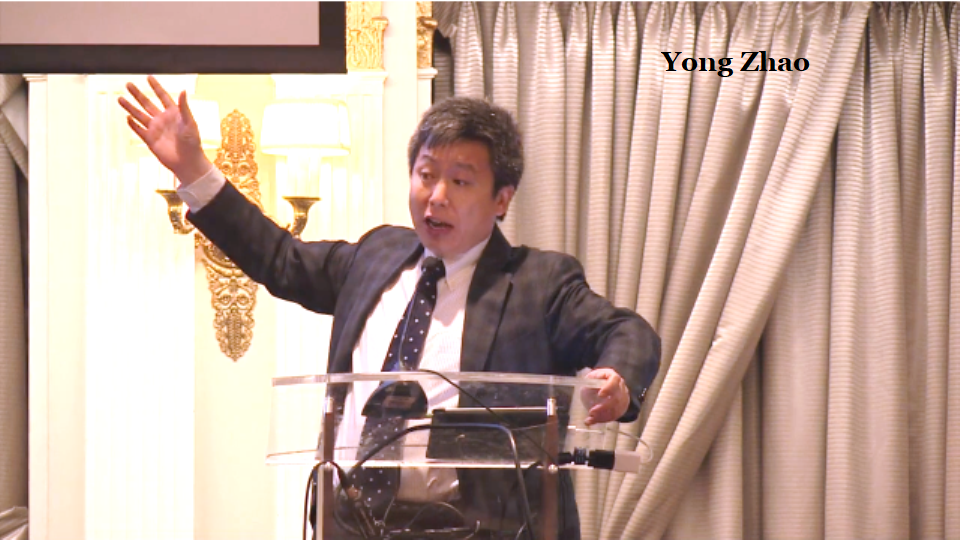
Scholar author, Yong Zhao, was the day-one keynote speaker.

At the hotel early Friday evening, Anthony Cody, co-founder of NPE, standing on the entry stairs, greeted new arrivals. This tall man had developed a reputation as a renowned champion for public education. Steve Singer from Pennsylvania and T.C. Weber from Tennessee arrived right after me and I knew it was going to be special.

Karen Lewis was fresh-off leading a stunning victory by the Chicago teachers’ union. She had been planning to run for Mayor of Chicago but unfortunately was diagnosed with brain cancer. With her amazingly big heart, for the next several years, we communicated by telephone. It was stunning how she always had time for me even when sick. I miss her.

Day One

Next morning at breakfast, I met Professor Larry Lawrence, a lifelong education professional and friend of public education who just happens to live 20-miles up old Highway 101 from me. We became quite close. I wrote about Larry in my post, Breakfast with Professor Lawrence, laying out some of his awesome contributions to public education.

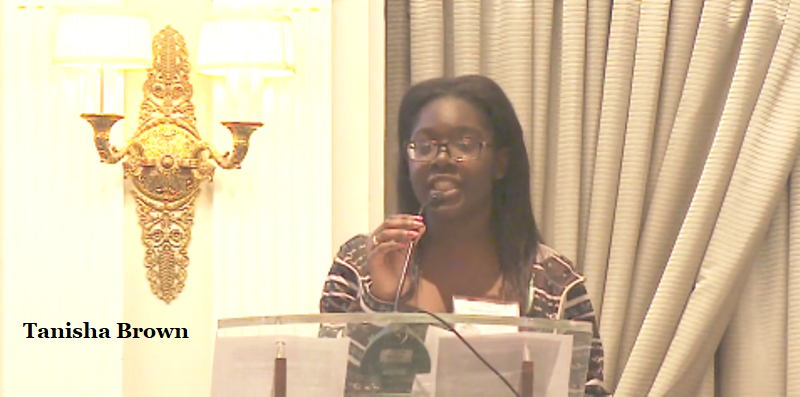
The first session kicked off with addresses by Chicago’s Jitu Brown and Newark student union leader, Tanisha Brown.

Jitu heads Journey for Justice and would become nationally recognized when he led a 34-day hunger strike, saving Chicago’s Dyett High School from Mayor Rahm Emanuel’s chopping block. He shared that once, a man from Chicago, claiming to be a community organizer, dipped his toe in the ocean and when it was cold, moved on. It was Barak Obama.

Tanisha Brown was part of a student movement to save Newark’s schools from being privatized and from, the authoritarian control of a former TFA member, Cami Anderson.

These two speakers got the conference off to a rousing start.

During graduate school at UCSD in 2001, I spent a lot of time looking at various reforms. Then, it meant improving education, not privatization. The work of Deborah Meyer particularly stood out. Her small class-size and student-centered efforts in both New York City and Boston were inspirational. Getting to meet her at this conference in Chicago was a special treat. She and her niece talked with me for almost an hour. NPE is one of the few places this could happen.

On the way to lunch, I encountered Annie Tan, a special education teacher, then working in Chicago. The tables were round and could seat more than 10 people. We found a table right next to the stage. It turned out that four people at our table were going to be holding the lunch-time discussion: Jennifer Berkshire, Julian Vasquez Heilig, Peter Greene and Jose Vilson.

Today, almost everyone in the fight to save public education knows Jennifer Berkshire but up until 2015, she was hiding her identity under the pseudonym, Edu-Shyster. Julian Vasquez Heilig is now the head of education at the University of Kentucky; then, he was a department chief at Sacramento State University in California. Peter Greene was a teacher blogger from rural Pennsylvania and known to some of us as the author of Crumuducation. Jose Vilson was a teacher blogger from New York City, with a large following. 

Also at the table was Adell Cothorne, the Noyes Elementary school principal, famous for exposing Michelle Rhee’s DC cheating scandal.

I will always appreciate Annie Tan, leading me up to that table. It was interesting that Peter Greene, his wife, Jose Vilson and I all play the trombone. Everyone knows that trombone players are the coolest members of the band.

The main event was a presentation by Professor Yong Zhao. Everybody was impressed and highly entertained. He had just published Who’s Afraid of the Big Bad Dragon?: Why China Has the Best (and Worst) Education System in the World. His book and presentation thoroughly discredit standards and standards-based testing.

Zhao is a funny guy. In 2015, readiness was a big education issue for the billionaire boys club … readiness for college, high school and even kindergarten, were written about in all big money education publications.

He said kindergarten readiness should mean “kindergartens are ready for children.” What he wanted for his children was “out of my basement readiness” and shared a personal experience of being in a Los Angeles elevator with Kim Kardashian, observing she had “out of my basement readiness”!

Union Leaders

In 2015, Bill Gates spent lavishly to control the direction of public education, giving large handouts to education journalists, education schools and teachers unions, in support of his proposal for the national Common Core State Standards. Activists at the Chicago meeting wanted the teachers unions not to accept Gates money, the underlying issue facing Lily Eskelsen García and Randi Weingarten as they took the stage in the main room for a Q & A session moderated by Diane Ravitch.

Both García and Weingarten were excellent presenters, consummate professionals, who did not disappoint. Most of the hour, Ravitch asked questions about topics, like teacher tenure and the scurrilous attack on classroom teachers. Answers from both union leaders received big positive responses.

The last question of the day was about the unions taking donations from Bill Gates. García and Weingarten both swore that their unions would no longer accept his gifts. This was not entirely true but did lead to that outcome eventually.

I personally got a chance to speak with García about diversity, saying in southern Idaho where I grew up, it might have a larger percentage of Mormons than Utah. She joked that in the Salt Lake school district, where she taught, diversity meant there were some Presbyterians in the class. Lily was genuine and warm.

Some Thoughts on NPE

Be careful about your travel itinerary… had to leave before the conference ended to catch the flight home, not realizing how much time was needed to get to the airport … will not make that mistake again.

The next NPE conference will be my sixth. That first one in Chicago awakened me to the crucial efforts Diane Ravitch, Carol Burris and the NPE board are making.

NPE is our most important organization in America fighting to preserve public education, the foundation of democracy. When we meet in Washington DC October 28 and 29, some of America’s most brilliant educators and leaders will be sharing information and firming up plans for our country. I hope you can be there.

Remember, the way public education fares directly affects how American democracy fares.