
By Thomas Ultican 4/21/2025
The night NPE2025 in Columbus ended; I ate dinner with two ladies from Pittsburgh. They informed me about Student Outcome Focused Governance (SOFG) which I had ignored but they were right to be concerned. It is one of those things like No Child Left Behind or Race to the Top that sounds so good but is really bad. Similar to these schemes, it uses standardized testing to undermine democratic control.
SOFG was created by The Council of the Great City Schools. Specifically, it was the brainchild of their director of Governance A. J. Crabill. Harvard University has created a training course to teach board members how to implement it.
The SOFG idea is school boards should be solely focused on student outcomes. They are supposed to create 3 to 5 SMART goals for improving student outcomes. SMART is an acronym that has been around in education circles for a few decades meaning specific, measurable, attainable, results-focused and time-bound. The measurable part of this is normally based on testing.
Here is an SOFG framework example SMART goal, “The percentage of free and reduced lunch-eligible students in kindergarten through 2nd grade who are reading/writing on or above grade level on the school system’s summative assessment will increase from W% on X to Y% by Z.”
The superintendent is the professional in the school who is to run all things and deal with non-student outcome items like school safety, transportation, maintenance, discipline and more. He is also tasked with achieving the boards 3 to 5 SMART goals. If something is not strictly student outcome focused, the board should not waste their time on it. That is the superintendent’s job.
The former Senior Campaign Manager of Democracy for America, Robert Cruickshank, reported on how SOFG is working in Seattle. His 2023 article begins:
“Parents and students from Franklin High School in Southeast Seattle packed the Seattle Public Schools (SPS) board of directors meeting on Wednesday, June 21, urging the board and the district to save the school’s beloved mock trial program from budget cuts. A few weeks earlier, families from nearby Washington Middle School had filled the room to oppose cuts to the school’s jazz band. Both schools are majority BIPOC; nearly a third of their students are Black.
“The board did not vote to save either program. Instead, board directors deferred to administrators, referencing the Student Outcome Focused Governance (SOFG) model as part of their discussion.”
Amazingly, mock trial programs and jazz band are not viewed as having anything to do with student outcomes. Therefore, instead of being able to petition elected representative on the school board, the parent’s only recourse was the superintendent who had already decided to cut these two programs.
This past October, Uriah Ward, a school board member from Saint Paul, Minnesota, went to SOFG training in Texas. Writing in Medium he noted, “SOFG is anti-democratic.” He went on to say:
“One of us asked if we could create a goal about making schools safer for students. We were told no, because school safety is not a student outcome.
“Under Monitoring & Accountability, boards are supposed to spend no less than 50% of their time monitoring student outcomes, and are only allowed to evaluate the performance of the superintendent based on whether or not they have met the student outcomes goals.
“School safety isn’t a student outcome. Culturally-welcoming schools aren’t a student outcome. Small class sizes aren’t a student outcome. Healthy school lunches aren’t a student outcome. So many things that our community will ask us for are not considered student outcomes.
“The unelected district employees are the ultimate authority on all things outside of the 3–5 student outcomes goals. Even then, administrators are given complete autonomy to figure out how to meet those goals, with school board input or direction being banned.”
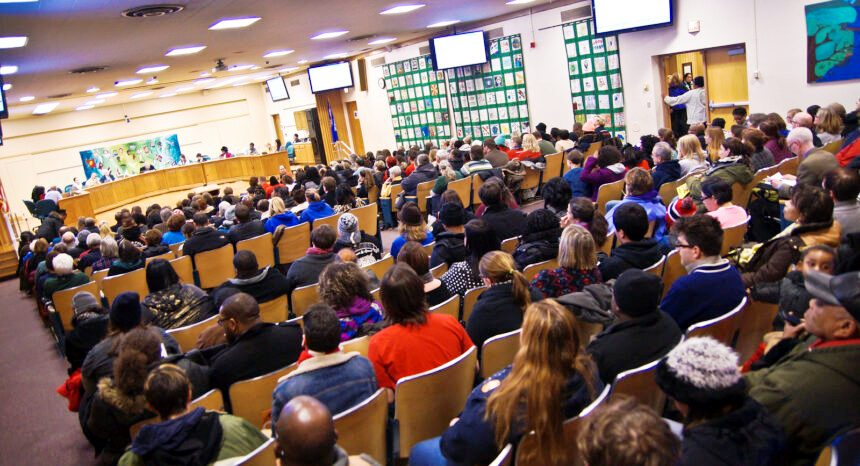
School Board in Action
The Genesis of the SOFG Model
The Council of the Great City Schools has tremendous influence with America’s urban school districts. Since its founding in 1956, the Council has grown from ten urban school districts to 78. It is a 501 C3 non-profit [TIN: 36-2481232] that has an unusual structure. Most non-profits have between 5 and 20 members on their boards; Great City Schools has 153 on its board. The member urban schools districts typically have a least two voting members on the board.
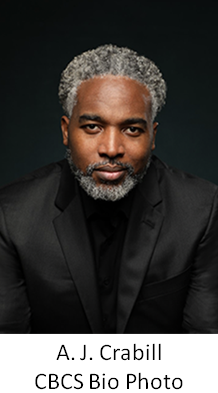
A. J. Crabill, The Council of the Great City Schools director of governance, is credited with developing the SOFG scheme. He also travels extensively training school boards to use it.
Interestingly, Crabill does not have a college education. Born in Kansas City, Missouri in 1979, Crabill spent time in and out of foster care.
In 2008, he won a seat on the Kansas City school board. The schools were in danger of losing accreditation and needed a superintendent. In 2009, Crabill and his board hired new Broad Superintendents Academy graduate John Covington to run the schools. During the first year of leadership by Covington and Crabill, they solved a looming budget deficit by closing 29 schools and laying-off 285 teachers.
In 2011, Covington resigned and the Kansas City School District lost its accreditation. He went to Detroit while many people in Kansas City blamed Crabill for Covington leaving. They claimed he had been too involved in district operations. It was not until 2016 that the Kansas City Star reported Covington did not want to leave Kansas City but Eli Broad called saying, “John, I need you to go to Detroit.” Two days later, on Aug. 26, 2011, Covington was introduced as the first superintendent of Michigan’s new Education Achievement Authority.
While serving on the school board, Crabill’s name was Airick Leonard West but in 2016 he changed it to Airick Journey Crabill. The new surname came from his childhood foster parents.
That same year, Crabill left Kansas City to work for Mike Morath and the Texas Education Agency (TEA) as a deputy commissioner. When the Austin ISD needed help understanding the new Lone Star Governance (LSG) system they hired Ashley Paz. The Austin Chronicle reports:
“Paz was trained by one of the people most involved in the formation of LSG – a former TEA deputy commissioner, A.J. Crabill. The agency’s boss, Mike Morath, hired Crabill in 2016 to help create and administer Lone Star Governance. He was an LSG coach for years, and in 2020 he became a conservator sent by the TEA to deal with the DeSoto school district, south of Dallas.”
Crabill states on his website, “School systems do not exist to have great buildings, have happy parents, have balanced budgets, have satisfied teachers, provide student lunches, provide employment in the county/city, or anything else.” It seems to me that great schools need all those things.
Crabill recently suggested there ought to be “automatic recalls if student scores drop dramatically.” He is pushing the NCLB test and punish scheme. The big difference, it is delivered by a private institution and not a government entity.
Of course there is a billionaire behind The Council of the Great City Schools and A.J. Crabill. Bill Gates [TIN 56-2618866] has sent them more than $3 million in 2021 – 2023. This is almost half their recent grant dollars.
Opinion
In many ways, America’s school boards are the training ground and foundation for democratic ideals. Student Outcome Focused Governance is an anti-democratic attack on that structure. I recently checked the San Diego Unified School Districts web site and found to my dismay that they are supporting SOFG.
Please join me in opposing this outrageously bad public policy.

 tultican
Recent Comments