Tag Archives: Russlynn Ali

Pitch AI Education?

9 Jan

By Thomas Ultican 1/9/2024

The Walton family (Tax Id: 13-3441466), Jonathon Sackler (Tax Id: 13-4119735), Lynn Schusterman (Tax Id: 73-1312965) and other billionaires fund The 74 Media, Inc. It has become a primary method for propagating their agenda. In December, The 74 published 7 Artificial Intelligence Trends That Could Reshape Education in 2024.” For serious educators, AI is a set of computer algorithms, making cheating easy. It is another tool for a dumbed-down, easier to control and more profitable education system.

Late Steve Jobs’ billionaire wife, Laurene Powell Jobs, founded the Emerson Collective. In 2015, Emerson Collective bought Amplify, a kids-at-screens education initiative that Rupert Murdoch gave up on. The same year, Jobs and Russlynn Ali founded XQ Institute and its XQ Super Schools project soon followed. In 2017, they put on a one-hour show, XQ Super Schools Live, simultaneously on four networks, ABC, CBS, NBC, and Fox. Talent featured included Ringo Starr, Tom Hanks, Samuel L. Jackson, Justin Timberlake, and Jennifer Hudson.

Jobs set out to use wealth to impose her views on reforming public education.

Her plans did not resonate deeply with the public so today she seems to be using wealth to push education technology and Amplify. The AI article linked was written by Edward Montalvo, XQ institute’s senior education writer. He writes:

‘“The future of AI in education is not just about adopting new technologies; it’s about reshaping our approach to teaching and learning in a way that is as dynamic and diverse as the students we serve,’ XQ Institute Senior Advisor Laurence Holt said. … Through AI, we can also transcend the limitations of the Carnegie Unit — a century-old system in which a high school diploma is based on how much time students spend in specific subject classes.

“Changing that rigid system is our mission at XQ.”

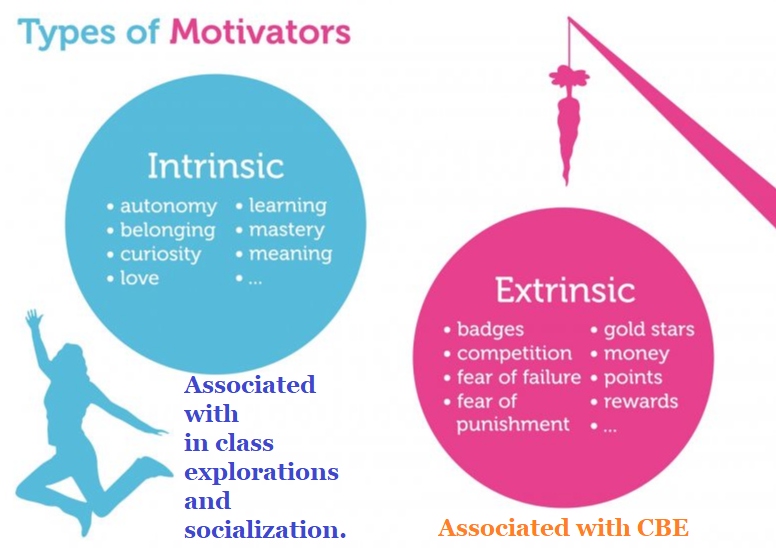
The article, linked by Montalvo, appeared in the September 11, 2023 issue of The 74, co-written by XQ’s Russlynn Ali and Carnegie’s Timothy Knowles. Ending the Carnegie Unit is crucial for the scheme to put children in front of computers earning badges. It is the only way to implement competency-based education (CBE), at a low price.

The fact that CBE and its forerunners have a 50-year history of failure seems not to be an issue.

Montalvo’s article was a sales job for AI products. He noted that an XQ Super School, PSI High in Sanford Florida, was engaging with AI. PSI tells us, “The program’s mastery-based grading system also helps ensure that students are fully prepared for college, career, and beyond.” Abandoning traditional education, they have replaced it with rubrics. There is no information about student performance 6-months down the road. How can AP courses be offered without traditional education? Yet, PSI says they are excited about AI.

AI has value but for pedagogy, it is limited. Educator and blogger, Mercedes Schneider, shared, “As a teacher for many decades, I find increasingly more of my time consumed with devising means to ensure students complete my assignments without the easy-cheat, sustain-my-own-ignorance that AI enables in today’s students – and, it seems, an increasing number of (especially remote) professionals who may be using the corner-chopping ability AI offers to even hold multiple full-time positions.

Dystopian Future is Possible

Jobs, XQ and Carnegie are far from the only forces out to blow up our current education system by pushing for a technology-based takeover. Many deep-pocketed fans promote education technology. The new push to eliminate the Carnegie unit is coming from a below-the-surface movement to digitize education. Global Silicon Valley (GSV) has taken leadership of an effort to program life with crypto-world tools.

GSV is a venture capital firm founded in 2010 by Michael Moe, a private company with a radical libertarian ideology. Moe and colleagues published American Revolution 2.0; How Education Innovation is Going to Revitalize America and Transform the U.S. Economy. This manifesto calls for turning kindergarten through university and beyond into a tokenized existence. Graduation from kindergarten gets a token, hospitalization gets a token, immunization gets a token, earn a C in reading gets a token and so on, will be forever saved in a blockchain.

This is a roadmap to “Big Brother.”

American Revolution 2.0 Page 292

At the April 2023 ASU+GSV conference in San Diego, Educational Testing Service (ETS) and Carnegie Foundation announced they are partnering to create assessments for CBE. Besides resting on a 50-year history of failure, the big obstacle for CBE is that testing has not proven reliable. This is the issue that Amit Savak of ETS and Tim Knowles of Carnegie are promising to solve. It is a key to the digitized education scheme becoming viable.

Much of the motivation for this thinking is a belief that the preeminent purpose of education is employment readiness. Philosophy, literature, art etc. are only meaningful for children of the wealthy. The new push for CBE and ending the Carnegie Unit is a move toward skill-based education, wasting no time on useless “frills.”

It is easy to cheat with digitally-enhanced systems. Derek Newton, writing for Forbes, observed, “But because of the credit hour system, which is designed to measure classroom instruction time, it’s still relatively hard to cheat your way to a full college degree.”

A good example of Newton’s point is high school credit recovery. America’s high school graduation rates peaked at about 77% in 1970 and then drifted down for almost four decades to 69% in 2007. Credit recovery at a computer screen was introduced in 2007. After that students were completing semester-long courses in as little as one day and cheating became rampant. In 2012, 81% of the freshman cohort in America graduated on time, an all-time record.

Roman Sterns, founder and executive director of Scaling Student Success, is all in for credentialing. He says the present high school transcript is a relic of the past, describes a new transcript type and excitedly reports:

“Fortunately, a version of this new kind of transcript has been developed and is being piloted now by schools affiliated with the Mastery Transcript Consortium (MTC). Launched in March 2017, membership has grown to over 300 schools. Most are independent schools, both in the U.S. and overseas, but increasingly public schools are opting in.”

EdSurge reports:

“In the area of lifelong learning, the Learning Economy Foundation (LEF) aims to create a decentralized, blockchain-based network where skills and credentials are stored within a digital identity that follows the learner. Recently, LEF partnered with LEGO Foundation to create a gamified learning experience, called SuperSkills!, where elementary school students can select adventures and collect gifts as a result of learning core skills.”

Crypto technology has created an environment where storing information about everyone in a blockchain is possible and the data can never be erased or corrected. This new edtech tool is described in Greg Nadeau’s slide presentation Internet of Education 3.0.” He is a crypto enthusiast but some of his slides troublingly point to a new tyranny of information.

Opinion

Between the Civil War and Bill Clinton’s presidency, American public education made slow, consistent improvement. With President Clinton’s standards, the momentum dropped and stopped with the advent of No Child Left Behind. Reagan era’s “A Nation at Risk” was the model for education reform, directed by non-educators. With the movement for “school choice,” vultures started circling over public education, looking for opportunities. Clearly, public education can be improved but success requires professional educators to lead, not politicians, entrepreneurs and amateurs.

The direction charted by GSV, XQ and the Carnegie Foundation is more than foolish … it is dangerous. An institution responsible for the developing the world’s oldest functioning democracy is being turned into a tool for repression.

Greedy, Mindless fools must be stopped!

Carnegie vs Carnegie Unit

9 Dec

By Thomas Ultican 12/9/2023

Current president of Carnegie Foundation, Tim Knowles, from the University of Chicago and founding director of Teach for America, is vigorously trying to upend the Carnegie Unit. Joining in this crusade are CEO of Education Testing Services (ETS), Amit Savak, and billionaire Laurene Powell Jobs’ XQ Institute.

What is it and Where Did it Come From?

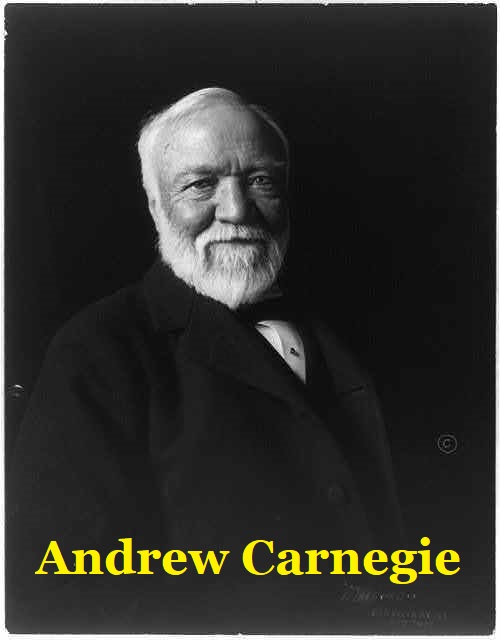
Andrew Carnegie became the wealthiest man in the world when he sold Carnegie Steele to J. P. Morgan in 1901. With the sale, he surpassed John D. Rockefeller’s riches. Carnegie, the penniless Scotsman who came to America and became wealthy, is also known as the man who gave it all away.  In 1905, he put up $10 million to create retirement benefits for college professors. In today’s dollars that grant would be worth about $350 million.

The problem became developing a standard for identifying legitimate professors.

A 2015 paper from the Carnegie Foundation reported that in 1906:

“The Carnegie trustees concluded that college entrance requirements should be ‘designated in terms of units, a unit being a course of five periods weekly throughout an academic year of the preparatory school.’ Fourteen such units constituted ‘the minimum amount of preparation’ for students heading for college. And colleges that required fourteen units for admission would, if they met the Foundation’s other requirements, qualify for the pension fund.” (Page 8)

The Carnegie Unit, which developed from this decision, measures student progress. For example, a student attending class meetings one hour a day 3 times a week, for 40 weeks, plus passing the course work and testing involved earns one “unit” of high school credit, for the 120 hours in class. The “unit” is a minimum requirement creating a nationwide agreed-upon structure. It does not control pedagogy nor assessments but insures a minimum amount of time on task.

The 2015 Carnegie paper also stated:

“It provides a common currency that makes possible innumerable exchanges and interconnections among institutions. And it continues to provide a valuable opportunity-to-learn standard for students in both higher education and K-12 education, where inequitable resources and variable quality are more the rule than the exception.” (Page 5)

The Carnegie Unit is a method for insuring a minimum amount of time is spent in class to earn a credit. Curriculum choices, assignments and testing are the province of classroom teachers and their schools. The number of credits required to graduate from a high school are set by state education departments and local school districts.

Changes Knowles and Others Want

Billionaire-financed propaganda rag, The 74, interviewed Tim Knowles in September. The sub-head stated, “From credits to seat time to school finance to student engagement, century-old unit of measurement is stifling real education reform and innovation.” Knowles’ first answer, explaining the Carnegie Unit is a lie:

“What it is, fundamentally, is the conflation of time and learning. It’s the suggestion that X number of minutes equals learning.”

It has never conflated time and learning.

Knowles, Savak and Jobs see the Carnegie Unit as a roadblock for their vision of a competency-based education (CBE) system, replacing units with proof of skills. Savak’s ETS promises to develop reliable mastery testing methods for providing a designation of competency, such as grades or badges. Jobs’ Amplify Education already has virtual courses that students can complete at their own speed. These fit nicely with Bill Gates’ old employee, Tom Vander Ark’s new Mastery Transcript Consortium.  

In September, The 74 obligingly published Credit Hours Are a Relic of the Past. How States Must Disrupt High School – Now.” The article is written by Russlynn Ali director of Laurene Powell Jobs’ XQ Institute and Timothy Knowles, blaming the Carnegie Unit for only half of high school graduates being ready for college, decline in economic mobility and NAEP scores falling after the pandemic. Ali and Knowles promise they “are intent on building a new educational architecture that shifts the sector to a truly competency-based system and away from time-bound conceptions of what knowledge is and how it is acquired.”

Not everyone is sanguine about their new “educational architecture.” Jal Mehta, professor of education at the Harvard Graduate School of Education, said in a published dialog:

“I’ve found myself increasingly wary each time another educational leader tells me how enthusiastic they are about this venture. For one thing, this year marked the 40th anniversary of ‘A Nation at Risk,’ which famously urged states to boost the number of Carnegie Units required for graduation. Given that many of those excited about ditching Carnegie sit in the same offices as those who, a generation ago, led the push to act on that report’s recommendation, it’s worth asking why savvy leaders once deemed mandating more math, science, English, and world-language requirements a promising path forward. The answer, of course, is that they thought it a crude but workable way to put a floor beneath student learning. In a time of sky-high graduation rates, rampant grade inflation, and plummeting student achievement, this is something that we shouldn’t lightly dismiss.”

“The case against changing the Carnegie Unit is essentially twofold. First, that it was never intended as a way of measuring learning, which is properly left to individual teachers, professors, departments, and schools. It offers a very rough view of what is a “course” – defined by time – and then leaves all the assessment questions to local actors. Yes, there is tremendous variability in how these actors define ‘quality learning.’ But it preserves their autonomy to do so, while at the same time creating some basic measures that allow some equity and comparability across institutions. The second case against changing it is that anything replacing it would be worse. As the author of The Allure of Order, I can certainly make a case that efforts to build massive systems of measurement and impose them across different contexts of learning have often gone poorly!”

Education writer, Derek Newton’s article for Forbes, opposed ending the Carnegie unit for a host of reasons but the major one is cheating:

“Cheating, academic misconduct as the insiders know it, is so pervasive and so easy that it makes a complete mockery of any effort to build an entire education system around testing.”

“The sellers use software to take remote control of a test-taker’s computer and have a ringer take the exam for them.”

“But because of the credit hour system, which is designed to measure classroom instruction time, it’s still relatively hard to cheat your way to a full college degree.”

Doomed to Bad Pedagogy

ETS and Carnegie Foundation partnered to create assessments for CBE, making the Orwellian-named “personalized-learning” viable for issuing digitally-earned certifications. This is one required ingredient for their plan to shift American education to a “competency-based system,” with a 50-year history of failure.

The 1970’s “mastery learning” was very unpopular and renamed “outcome-based education” in the 1990s, now it’s called “competency-based education.” CBE is a move to use “mastery leaning” techniques to create individualized certification paths. However it is still the same mind-numbing approach that the 1970s teachers began calling “seats and sheets.” This behaviorist approach to education leaves almost no room for students to construct knowledge and ignores the social component of education.

In A Wolf at the Schoolhouse Door, Jack Schneider and Jennifer Berkshire explain, “Because learning is deeply rooted in relationships, it can’t be farmed out to robots or time-saving devices.”

Final Observations

 The American education system has become more and more centrally controlled since 1983’s “Nation at Risk.” This has made it more vulnerable to hare-brained schemes that would upend it, like Tim Knowles new “educational architecture.”

Billions of dollars have been spent to convince people that public schools are failing. This is not true. We have the premier education system in the world. If most people are satisfied with their schools, corporations will be denied easy access to the $100’s of billions from annual education budgets. They want Tim Knowles’ new “educational architecture,” not that it is better but it is more profitable.

Knowles, Savak and leaders at Jobs’ XQ Institute have been all over the country this year, at corporate-sponsored education events, trying to convince people to get rid of the Carnegie Unit. They want to replace it with CBE, a failed-education approach accompanied by an unproven testing system.

This approach to education has the potential to end American democracy because the public education system is its pillar. It also ignores the important social component of education.

Upending public schools this way is folly.