By Thomas Ultican 1/15/2024
John Eaton (1829 – 1906) was a clergyman, soldier, philanthropist, journalist, educator, and statesman. He was born to a farmer in Sutton, New Hampshire and attended Vermont’s Thetford Academy . After graduating from Dartmouth College in 1854, he studied at Andover Theological Seminary and in 1862 was ordained to the Presbyterian ministry. Eaton also earned a Master of Arts and Legum Doctor from Rutgers University.
After Dartmouth, as a school principal in Cleveland, Ohio his success led to an appointment as superintendent of the public schools of Toledo, Ohio … a position he held from 1856-59.
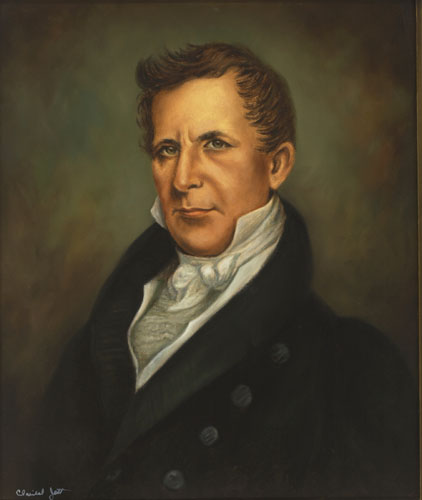
On August 15, 1861, he joined the 27th Ohio Volunteer Infantry as chaplain. In September 1862, Lincoln signed Proposition 95, soon known as the Emancipation Proclamation. The next month, Major General Ulysses S. Grant appointed Eaton superintendent of freedmen and made him supervisor of all military posts from Cairo, Georgia to Natchez, Mississippi and Fort Smith, Arkansas. On October 10, 1863, Grant made him colonel of the 63rd United States Colored Infantry.
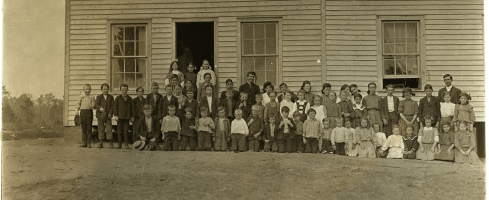
The following month, Eaton was tasked with Superintendent of Negro Affairs for the Department of the Tennessee (Grant’s Army). From 1863-64, he opened 74 schools, all black, in places like Memphis, Vicksburg, Natchez, Little Rock, Pine Bluff and others within the Union lines, with 13,320 pupils. (Page 296)
With this, the leading Christian denominations of the North commenced church schools, also supervised by General Eaton. As the Union army advanced, the few public schools for white children came under military control and were likewise put under his jurisdiction.
Professor Johann Neem shared, “Because of their political power and the way the tax burden fell largely upon them, slaveholding elites spread an antitax gospel to convince ordinary whites that taxes were a bad thing.” (Democracy’s Schools Page 92) Leading into the Civil War, there were no state-supported public schools in the south. Eaton’s efforts started the American common-school system in the South which, in succeeding years, led to revised constitutions in every reconstructed southern state, establishing publicly financed education.
Eaton was a force-of-nature endowed with a profound work ethic, natural ability at organizing and political acumen. He was confirmed brigadier general by the US Senate in 1866.
Post-Bellum National and International Education Leader
In 1867, he was selected superintendent of public instruction for the state of Tennessee and was instrumental in creating the state’s public education laws. This appointment allowed him to enforce them. The so-called “Eaton System” was not popular with the local population, yet for two years, he was able to establish a common-school system, servicing 185,000 Black and White students.
After he left Tennessee in 1869, the state legislature swept away the “Eaton System.” (Page 296) Eaton anticipated this outcome and in his final report to Tennessee’s Governor wrote:
“No state in the Union is now satisfied without an efficient system of free public schools. If this one, which has been inaugurated at such cost and with such care, is destroyed in Tennessee, it will necessarily be revived. It must be. Nothing can prevent it in any American state. ” (Page 297)
He was prescient. The system was temporarily checked but its essential features were soon re-adopted.
Author and clergyman A. D. Mayo (1823-1907) summed up the work of General Eaton:
“For more than twenty years, from 1862 to 1882, no man in the United States contributed more to the final establishment and increasing importance of the common-school system in the South than he. … Whatever may have come of his tremendous labors and those of his faithful assistants during these early years, working under a military supervision, it cannot be reasonably doubted that any competent reader of the educational literature thrown up in this period, with the commentary of subsequent events, will be forced to acknowledge that then and there was laid a permanent foundation for the new departure of a system of common schools in the South .” (Page 297)
General Eaton Goes to Washington
A new Department of education was created by Congress in 1867 with Dr. Henry Barnard as Commissioner. The public fear of dangerous centralization became so great that in 1870, the Senate changed it from a department to a bureau, attached to the Department of the Interior.

When U. S. Grant was inaugurated president (March 4, 1869), he discovered Commissioner Barnard wanted to leave. Grant decided to bring General Eaton to Washington and appointed him Commissioner of Education on March 16, 1870.
When Eaton arrived, appropriations for the National Bureau of Education had been reduced from $20,000 to $6,000 a year. He had a staff of two clerks, with the existence of a Bureau of Education threatened. (Page 298)
Employing phenomenal powers of organization, political acuity and work ethic, Eaton set out to build a National Bureau of Education, recognized favorably in the US and worldwide.
Dr. William T. Harris, who succeeded Eaton as Commissioner, stated:
“General Eaton was the true founder of this Bureau, in the sense that he established as the chief work of this Bureau, the annual collection of statistics by means of statistical schedules, which were sent to all institutions and all general officers to be filled out and returned to the Commissioner from year to year. In this way he trained educators to keep original records of their operations and made these records available for analysis and comparison.” (Page 299)
Eaton’s innovations in expanding public education included initiating kindergarten in the US, introducing domestic science, industrial and manual training, creating commercial, agricultural, art, and nurse-training schools, women in higher education, schools for the blind, for the learning-disabled, technical schools, free libraries, etc. (Page 300)
His influence went beyond the boundaries of the United States. He was tendered an honorary membership in the French “Ministry of Public Instruction,” which he declined because it was improper. The Department of Education of England also sought his advice. When the governments of Japan, South Africa, Egypt, Bulgaria, Brazil, Columbia, Peru, Chili, and Argentina awoke to the importance of educating the masses, General Eaton was solicited to map a suitable school system and expended great efforts to help these countries. (Page 301)
These labors undermined his health and in November 1886, against the wishes of the President, he felt compelled to resign his commission. In 1870, the Bureau had two clerks of low grade, 100 volumes in its library, $6,000 for maintenance and was considered a failure. By the time he left, the Bureau of Education had 38 paid clerks and 9,000 unpaid volunteer assistants in the United States and foreign lands collecting statistics. There were 18,000 volumes and 47,000 pamphlets in the library, the most extensive and complete pedagogic collection in existence at the time, with $102,284 for the maintenance of the Bureau. Its stellar global reputation was declared “the most influential educational office in the world.”
During the years from 1875 to 1886, General Eaton wielded a larger influence on educational affairs than any other person in America. (Page 301)
After Washington DC
From 1886 to 1891, Eaton was president of Marietta College. In 1895, he was appointed president of Sheldon Jackson College in Sitka, Alaska and in 1898, he became president of Westminster College in Salt Lake City. He also served as Councilor of the American Public Health Association, Vice-President of the American Association for the Advancement of Science and president of the Association of Social Science.
In 1899, owing to his experience organizing educational systems of several South American republics, the US Government called on him to reform the education system in Puerto Rico. General Eaton successfully replaced the Spanish system which profited certain privileged classes and abolished the “substitute system,” in which a person could draw the full salary of a teacher and employ a cheap substitute to do the teaching. The school curriculum was also reformed and the “fee system” eliminated, enabling children of poorer classes to attend school. He required educating girls as well as boys, changing an ancient, effete school culture into a modern one, founding the American school system in Puerto Rico.
General Eaton passed at home in Washington DC on 2-9-1906, survived by his wife Shirley, daughter Elsie Newton and two sons, Joseph Shirley Eaton and John Quincy Eaton.
His obituary in The Evening Star noted,
“In the death of Gen. Eaton the cause of public education meets with a severe loss, it is pointed out and his death will be regretted, not only by a host of friends in this city and elsewhere, but by many educational Institutions throughout the country.”

 tultican
Recent Comments