Tag Archives: Derek Newton

San Diego’s Edtech Lollapalooza

29 Apr

By Thomas Ultican 4/29/2025

Titans of the digital universe and their minions gathered at the ASU+GSV conference in San Diego April 6-9. There was a lot of self-promotion and proposals for creating new education paradigm based on personalized learning powered by artificial intelligence (AI) were everywhere. This year it is almost impossible to find any reporting from the event by “negative Nellies” like myself, on the other hand there are many positive references like Forbes calling it “the Davos of Education.”

MRCC advertises itself as having “25+ years of experience designing and deploying innovative eLearning solutions in collaboration with the brightest thinkers.” On April 21, their Senior Director, Learning Solutions, Kevin Schroeder, published Top Five EdTech Trends from ASU+GSV Summit 2025.” His list:

“1. AI Is a Fundamental Literacy”

“2. Equity in Educational Technology Must Be Intentional”

“3. The Shift to Skills-Based Credentialing”

“4. AI-Driven Storytelling Platforms Gaining Traction”

“5. Collaboration Drives Innovation”

Under point one, he says AI is “a basic literacy on a par with reading and math.” This is surprising to me. I did not realize math was a basic literacy and whatever makes AI a basic literacy is truly puzzling.

It seems like points 2, 4 and 5 were just thrown in with little purpose. I agree edtech should strive for equity but wealthy people are not likely to want their children burdened with it. AI is known for plagiarism so I guess it makes a small amount of sense as a storytelling platform. As far as point 5 goes, if they can get students, teachers and parents to collaborate, it will drive sales.

Point 3 is particularly concerning. Schroeder states:

“Traditional academic transcripts are being replaced and/or supplemented by digital credentials that recognize hands-on skills and real-world experience. Apprenticeships, internships, and project-based learning are now key markers of learner growth.”

At the 2023 ASU+GSV conference, Carnegie and ETS announced a new partnership to create functional testing for competency based education (CBE). The Wellspring Project is one of the entities angling to profit off this scheme.

A Cision PRWeb report states,

“The first phase of the Wellspring Project, led by IMS and funded by the Charles Koch Foundation, explored the feasibility of dynamic, shared competency frameworks for curriculum aligned to workforce needs. … Using learning tools that leverage the IMS Competencies and Academic Standards Exchange® (CASE®) standard, the cohorts mapped co-developed frameworks, digitally linking the data to connect educational program offerings with employer talent needs.”

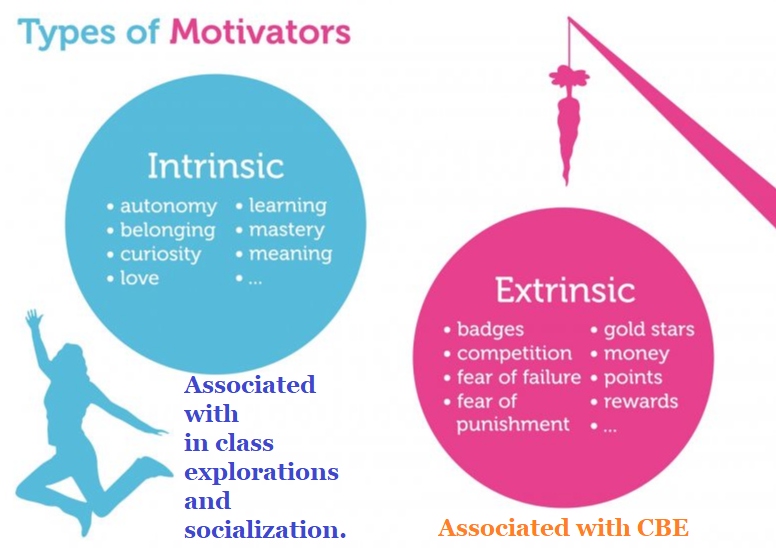
Because of the limitations put on learning by digital screens, the only reasonable approach possible is CBE. Unfortunately there is a long negative history associated with CBE. The 1970’s “mastery learning” was detested and renamed “outcome based education” in the 1990s. It is now called “competency based education” (CBE). The name changes are due to a five-decade long record of failure. It is still the same mind-numbing approach that 1970s teachers began calling “seats and sheets.”

CBE has the potential to increase edtech profits and reduce education costs by eliminating many teacher salaries. Unfortunately, it remains awful education and children hate it.

One justification for CBE based education is a belief that the purpose of education is employment readiness. Philosophy, literature, art etc. are for children of the wealthy. It is a push toward skills based education which wastes no time on “useless” frills. Children study in isolation at digital screens earning badges as they move through the menu driven learning units.

In 1906, Carnegie foundation developed the Carnegie unit as a measure of student progress. It is based on a credit hour system that requires a minimum time in class. Schools all over America pay attention to the total number of instructional minutes scheduled. A 2015 Carnegie study concluded, “The Carnegie Unit continues to play a vital administrative function in education, organizing the work of students and faculty in a vast array of schools or colleges.” Now, Carnegie Foundation President, Tim Knowles, is calling for CBE to replace the Carnegie unit.

Education writer Derek Newton writing for Forbes opposed the Carnegie-EST turn to CBE for many reasons but the major one is cheating. It is easy to cheat with digital systems. Newton observed, “But because of the credit hour system, which is designed to measure classroom instruction time, it’s still relatively hard to cheat your way to a full college degree.”

The Conference and People

ASU is Arizona State University and GSV is the private equity firm, Global Silicon Valley. GSV advertises itself as “The sector’s preeminent collection of talent & experience—uniquely qualified to partner with, and to elevate, EdTech’s most important companies.” Under their joint leadership, the ASU+GSV annual event has become the world’s premier edtech sales gathering. Sadly, privatizing public education is espoused by many presenters at the conference.

The involvement of ASU marks a big change in direction for the institution. It was not that long ago that David C. Berliner a renowned education psychologist was the dean of the Mary Lou Fulton Teachers College at ASU. At the same time, his colleague and collaborator, Gene V. Glass a Professor emeritus in both Psychology in Education and Education Leadership and Policy Studies was working with him to stop the destruction of public education. Glass is the researcher who coined the term “meta-analysis.” Their spirit has completely disappeared.

Recently the Center for Reinventing Public Education relocated from their University of Washington home to ASU.  

There were over 1,000 speakers listed for this shindig. They were listed in twelve categories. The “startup” group was the largest with 188 speakers. The “Corporate Enterprise” cohort had 136 speakers listed. Microsoft, Google, Pearson, Amazon, Curriculum Associates and many more had speakers listed under Corporate Enterprise.

Scheduled speakers included Pedro Martinez from Chicago Public Schools, Randi Weingarten from the American Federation of Teachers and Arne Duncan representing the Emerson Collective. Of note, the list of speakers included:

  • Michael Cordona – former US Secretary of Education
  • Glen Youngkin – Governor of Virginia
  • Angélica Infante Green – Rhode Island Commissioner of Education
  • Robin Lake – Director of Center for Reinventing Public Education
  • David Steiner – Executive Director John Hopkins Institute of Education Policy
  • Ted Mitchell – President American Council on Education
  • Timothy Knowles – President Carnegie Foundation
  • Sal Khan – Founder Khan Academy
  • Derrick Johnson – President and CEO of NAACP

Secretary of Education, Linda McMahon, spoke at the summit. Besides confusing AI for A1 several times including when saying we are going to start making sure that first graders, or even pre-Ks, have “A1” teaching every year. She also slandered public schools claiming the nation’s low literacy and math scores show it has “gotten to a point that we just can’t keep going along doing what we’re doing.” She is so out of touch with education practices that she believes putting babies at screens is a good idea and does not know that America’s students were set back by COVID but are actually well on their way to recovery.

Opinion

The amount of money and political power at the annual ASU+GSV event is staggering. It has now gotten to the point that there is almost no push back heard. The voices of astute professional educators are completely drowned out.

I have met Randi Weingarten on a few occasions and been in the audience for a speech by Derrick Johnson. I really do like and respect these people but I find their participation in San Diego unwise. Having progressive voices speaking at this conference gives cover to the billionaires who are destroying public education.


AI in School is the Latest Edtech Scam

30 Mar

By Thomas Ultican 3/30/2025

For more than thirty years, technology companies have looked to score big in the education sector. Instead of providing useful tools, they have schemed to take control of public education. At the onset of the twenty-first century, technologists claimed putting kids at computers was a game changer that would fix everything. They followed that up by promoting tablets with algorithmic lessons replacing teachers and claiming they provide better education. Today’s hoax is that artificial intelligence (AI) will make all these failed efforts work. What it actually does is undermine authentic learning. 

The release of ChatGPT in November 2022 is responsible for the Edtech sales-forces switching their sales pitches from personalized learning to AI. However, AI has always been at the root of personalized learning. It just did not have the advantage of large language models (LLM) that emulate writing in English. However, AI expert Yann LeCun notes:

“LLMs are really good at retrieval. They’re not good at solving new problems, [or] finding new solutions to new problems.”

Artificial Intelligence is a misnomer. There is no intelligence; just algorithms. The term, “Artificial Intelligence”, was first coined by Professor John McCarthy at a Dartmouth College conference in 1956. That same year AI became an academic discipline.

Machine-learning has been part of AI since its 1950s beginning. Algorithms are created to allow a machine to automatically improve its performance on a given task. For almost two decades, Netflix has used machine-learning to create personalized recommendations, based on a customer’s previous viewing history. Deep-learning is an advancement in machine-learning. It layers algorithms into computer units ridiculously referred to as neurons. Google Translate uses it for translation from one language to another.

With the advent of LLMs, the energy use associated with AI has risen dramatically. Professor Jonathan Koomey, who founded the End-Use Forecasting group at Lawrence Berkley National Laboratory, worked on a report funded by the US Department of Energy. He estimated that data centers currently use 176 TWh of our country’s electricity which is about 4.4% of it. Koomey forecasts that this consumption might double or even triple by 2028 to between 7% and 12% of our electricity usage.

Selling to Schools

For serious educators, AI is a set of computer algorithms, making cheating easy. It is another tool for creating an easier to control and more profitable education system. Billionaire Laurene Powell Jobs is a leader in the AI-revolution in education. Her Amplify digital lessons liberally apply AI and her XQ Institute is working to integrate AI into classrooms. Edward Montalvo, XQ institute’s senior education writer has claimed:

‘“The future of AI in education is not just about adopting new technologies; it’s about reshaping our approach to teaching and learning in a way that is as dynamic and diverse as the students we serve,’ XQ Institute Senior Advisor Laurence Holt said. … Through AI, we can also transcend the limitations of the Carnegie Unit — a century-old system in which a high school diploma is based on how much time students spend in specific subject classes.

“Changing that rigid system is our mission at XQ.”

The advocates of computer learning in K-12 classrooms need to get rid on the Carnegie Unit to maximize profits. The “unit” is a minimum requirement creating a nationwide agreed-upon structure. It does not control pedagogy or assessments but insures a minimum amount of time on task.

Education writer, Derek Newton’s article for Forbes, opposed ending the Carnegie unit for a host of reasons but the major one is cheating:

“Cheating, academic misconduct as the insiders know it, is so pervasive and so easy that it makes a complete mockery of any effort to build an entire education system around testing.” (See here)

“But because of the credit hour system, which is designed to measure classroom instruction time, it’s still relatively hard to cheat your way to a full college degree.”

The system XQ is trumpeting has students doing online lessons and then testing to receive a credit. It eliminates class levels and also undermines student socialization.

In a recent interview Kristen DiCerbo, Khan Academy’s chief leaning officer, mentioned that when ChatGPT was seeking more funding, they needed the Academy’s help. Bill Gates wanted improved performance as a condition for his support. Khan Academy helped train the new startup to pass the AP Biology exam which was a Gates requirement. This probably means that Khan gave ChatGPT access to his data base so they could feed the information into their LLM.

Earlier this year, an American Psychological Association (APA) magazine article claimed, “Much of the conversation so far about AI in education centers around how to prevent cheating—and ensure learning is actually happening—now that so many students are turning to ChatGPT for help.” The big downsides to AI includes students not thanking through problems and rampant cheating. In the AP physics classroom, I started seeing students turning in perfectly done assignments while being unable to solve the problems on an exam.

The APA article noted that for several years AI was powering learning management tools, such as Google Classroom, Canvas, and Turnitin. I experimented with Canvas for a few years and found two downsides and no upside. The front end of Canvas was terrible and they claimed ownership of all my work posted to Canvas. APA sees it as a positive that “educators are increasingly relying on AI products such as Curipod, Gradescope, and Twee to automate certain tasks and lighten their workload.”

Curipod is an AI edtech product from Norway focused on test prep.

Gradescope is an AI grading tool from Turnitin LLC.

Twee is an English language arts AI application that aids with lesson development and assessment.

These products are selling the fact that they use AI. However, they appear to be a waste of time that may marginally help a first or second year teacher.

Benjamin Riley is a uniquely free thinker. He spent five years as policy director at NewSchool Venture Fund and founded Deans for Impact. His new effort is Cognitive Resonance which recently published Education Hazards of Generative AI.” With his background, I was surprised to learn he does not parrot the party line. In an article this month Riley states:

“Using AI chatbots to tutor children is a terrible idea—yet here’s NewSchool Venture Fund and the Gates Foundation choosing to light their money on fire. There are education hazards of AI anywhere and everywhere you might choose to look—yet organization after organization within the Philanthro-Edu Industrial Complex continue to ignore or diminish this very present reality in favor of AI’s alleged “transformative potential” in the future. The notion that AI “democratizes” expertise is laughable as a technological proposition and offensive as a political aspiration, given the current neo-fascist activities of the American tech oligarchs—yet here’s John Bailey and friends still fighting to personalize learning using AI as rocket fuel.”

John Bailey is American Enterprise Institute’s AI guy. He has worked under Virginia Governor Glenn Youngkin, done some White House stints, was vice president of policy at Jeb Bush’s Foundation for Excellence in Education and is a member of the Aspen Global Leadership Network. In other words, he and his friends disdain public education and are true believers in big-tech.

Every time big-tech claims its new technology will be a game changer for public education they have either lied or are deluded by their own rhetoric. According to technology writer, Audrey Watters, generative AI is built on plagiarism. Besides being unethical, AI is also unhealthy. A new joint study by Open AI and MIT found that the more students ask questions of ChatGPT the more likely they are to become emotionally dependent on it.

The way AI is presently being marketed to schools obscures the reality it is another big-tech product that is both unhealthy and retards learning.

Carnegie vs Carnegie Unit

9 Dec

By Thomas Ultican 12/9/2023

Current president of Carnegie Foundation, Tim Knowles, from the University of Chicago and founding director of Teach for America, is vigorously trying to upend the Carnegie Unit. Joining in this crusade are CEO of Education Testing Services (ETS), Amit Savak, and billionaire Laurene Powell Jobs’ XQ Institute.

What is it and Where Did it Come From?

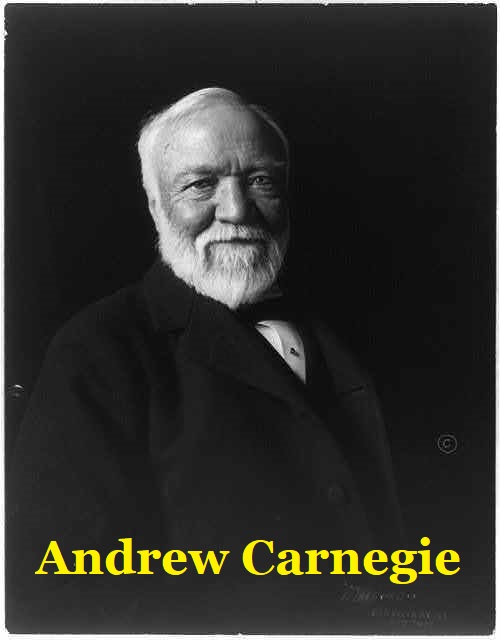
Andrew Carnegie became the wealthiest man in the world when he sold Carnegie Steele to J. P. Morgan in 1901. With the sale, he surpassed John D. Rockefeller’s riches. Carnegie, the penniless Scotsman who came to America and became wealthy, is also known as the man who gave it all away.  In 1905, he put up $10 million to create retirement benefits for college professors. In today’s dollars that grant would be worth about $350 million.

The problem became developing a standard for identifying legitimate professors.

A 2015 paper from the Carnegie Foundation reported that in 1906:

“The Carnegie trustees concluded that college entrance requirements should be ‘designated in terms of units, a unit being a course of five periods weekly throughout an academic year of the preparatory school.’ Fourteen such units constituted ‘the minimum amount of preparation’ for students heading for college. And colleges that required fourteen units for admission would, if they met the Foundation’s other requirements, qualify for the pension fund.” (Page 8)

The Carnegie Unit, which developed from this decision, measures student progress. For example, a student attending class meetings one hour a day 3 times a week, for 40 weeks, plus passing the course work and testing involved earns one “unit” of high school credit, for the 120 hours in class. The “unit” is a minimum requirement creating a nationwide agreed-upon structure. It does not control pedagogy nor assessments but insures a minimum amount of time on task.

The 2015 Carnegie paper also stated:

“It provides a common currency that makes possible innumerable exchanges and interconnections among institutions. And it continues to provide a valuable opportunity-to-learn standard for students in both higher education and K-12 education, where inequitable resources and variable quality are more the rule than the exception.” (Page 5)

The Carnegie Unit is a method for insuring a minimum amount of time is spent in class to earn a credit. Curriculum choices, assignments and testing are the province of classroom teachers and their schools. The number of credits required to graduate from a high school are set by state education departments and local school districts.

Changes Knowles and Others Want

Billionaire-financed propaganda rag, The 74, interviewed Tim Knowles in September. The sub-head stated, “From credits to seat time to school finance to student engagement, century-old unit of measurement is stifling real education reform and innovation.” Knowles’ first answer, explaining the Carnegie Unit is a lie:

“What it is, fundamentally, is the conflation of time and learning. It’s the suggestion that X number of minutes equals learning.”

It has never conflated time and learning.

Knowles, Savak and Jobs see the Carnegie Unit as a roadblock for their vision of a competency-based education (CBE) system, replacing units with proof of skills. Savak’s ETS promises to develop reliable mastery testing methods for providing a designation of competency, such as grades or badges. Jobs’ Amplify Education already has virtual courses that students can complete at their own speed. These fit nicely with Bill Gates’ old employee, Tom Vander Ark’s new Mastery Transcript Consortium.  

In September, The 74 obligingly published Credit Hours Are a Relic of the Past. How States Must Disrupt High School – Now.” The article is written by Russlynn Ali director of Laurene Powell Jobs’ XQ Institute and Timothy Knowles, blaming the Carnegie Unit for only half of high school graduates being ready for college, decline in economic mobility and NAEP scores falling after the pandemic. Ali and Knowles promise they “are intent on building a new educational architecture that shifts the sector to a truly competency-based system and away from time-bound conceptions of what knowledge is and how it is acquired.”

Not everyone is sanguine about their new “educational architecture.” Jal Mehta, professor of education at the Harvard Graduate School of Education, said in a published dialog:

“I’ve found myself increasingly wary each time another educational leader tells me how enthusiastic they are about this venture. For one thing, this year marked the 40th anniversary of ‘A Nation at Risk,’ which famously urged states to boost the number of Carnegie Units required for graduation. Given that many of those excited about ditching Carnegie sit in the same offices as those who, a generation ago, led the push to act on that report’s recommendation, it’s worth asking why savvy leaders once deemed mandating more math, science, English, and world-language requirements a promising path forward. The answer, of course, is that they thought it a crude but workable way to put a floor beneath student learning. In a time of sky-high graduation rates, rampant grade inflation, and plummeting student achievement, this is something that we shouldn’t lightly dismiss.”

“The case against changing the Carnegie Unit is essentially twofold. First, that it was never intended as a way of measuring learning, which is properly left to individual teachers, professors, departments, and schools. It offers a very rough view of what is a “course” – defined by time – and then leaves all the assessment questions to local actors. Yes, there is tremendous variability in how these actors define ‘quality learning.’ But it preserves their autonomy to do so, while at the same time creating some basic measures that allow some equity and comparability across institutions. The second case against changing it is that anything replacing it would be worse. As the author of The Allure of Order, I can certainly make a case that efforts to build massive systems of measurement and impose them across different contexts of learning have often gone poorly!”

Education writer, Derek Newton’s article for Forbes, opposed ending the Carnegie unit for a host of reasons but the major one is cheating:

“Cheating, academic misconduct as the insiders know it, is so pervasive and so easy that it makes a complete mockery of any effort to build an entire education system around testing.”

“The sellers use software to take remote control of a test-taker’s computer and have a ringer take the exam for them.”

“But because of the credit hour system, which is designed to measure classroom instruction time, it’s still relatively hard to cheat your way to a full college degree.”

Doomed to Bad Pedagogy

ETS and Carnegie Foundation partnered to create assessments for CBE, making the Orwellian-named “personalized-learning” viable for issuing digitally-earned certifications. This is one required ingredient for their plan to shift American education to a “competency-based system,” with a 50-year history of failure.

The 1970’s “mastery learning” was very unpopular and renamed “outcome-based education” in the 1990s, now it’s called “competency-based education.” CBE is a move to use “mastery leaning” techniques to create individualized certification paths. However it is still the same mind-numbing approach that the 1970s teachers began calling “seats and sheets.” This behaviorist approach to education leaves almost no room for students to construct knowledge and ignores the social component of education.

In A Wolf at the Schoolhouse Door, Jack Schneider and Jennifer Berkshire explain, “Because learning is deeply rooted in relationships, it can’t be farmed out to robots or time-saving devices.”

Final Observations

 The American education system has become more and more centrally controlled since 1983’s “Nation at Risk.” This has made it more vulnerable to hare-brained schemes that would upend it, like Tim Knowles new “educational architecture.”

Billions of dollars have been spent to convince people that public schools are failing. This is not true. We have the premier education system in the world. If most people are satisfied with their schools, corporations will be denied easy access to the $100’s of billions from annual education budgets. They want Tim Knowles’ new “educational architecture,” not that it is better but it is more profitable.

Knowles, Savak and leaders at Jobs’ XQ Institute have been all over the country this year, at corporate-sponsored education events, trying to convince people to get rid of the Carnegie Unit. They want to replace it with CBE, a failed-education approach accompanied by an unproven testing system.

This approach to education has the potential to end American democracy because the public education system is its pillar. It also ignores the important social component of education.

Upending public schools this way is folly.