Archive | April, 2025

San Diego’s Edtech Lollapalooza

29 Apr

By Thomas Ultican 4/29/2025

Titans of the digital universe and their minions gathered at the ASU+GSV conference in San Diego April 6-9. There was a lot of self-promotion and proposals for creating new education paradigm based on personalized learning powered by artificial intelligence (AI) were everywhere. This year it is almost impossible to find any reporting from the event by “negative Nellies” like myself, on the other hand there are many positive references like Forbes calling it “the Davos of Education.”

MRCC advertises itself as having “25+ years of experience designing and deploying innovative eLearning solutions in collaboration with the brightest thinkers.” On April 21, their Senior Director, Learning Solutions, Kevin Schroeder, published Top Five EdTech Trends from ASU+GSV Summit 2025.” His list:

“1. AI Is a Fundamental Literacy”

“2. Equity in Educational Technology Must Be Intentional”

“3. The Shift to Skills-Based Credentialing”

“4. AI-Driven Storytelling Platforms Gaining Traction”

“5. Collaboration Drives Innovation”

Under point one, he says AI is “a basic literacy on a par with reading and math.” This is surprising to me. I did not realize math was a basic literacy and whatever makes AI a basic literacy is truly puzzling.

It seems like points 2, 4 and 5 were just thrown in with little purpose. I agree edtech should strive for equity but wealthy people are not likely to want their children burdened with it. AI is known for plagiarism so I guess it makes a small amount of sense as a storytelling platform. As far as point 5 goes, if they can get students, teachers and parents to collaborate, it will drive sales.

Point 3 is particularly concerning. Schroeder states:

“Traditional academic transcripts are being replaced and/or supplemented by digital credentials that recognize hands-on skills and real-world experience. Apprenticeships, internships, and project-based learning are now key markers of learner growth.”

At the 2023 ASU+GSV conference, Carnegie and ETS announced a new partnership to create functional testing for competency based education (CBE). The Wellspring Project is one of the entities angling to profit off this scheme.

A Cision PRWeb report states,

“The first phase of the Wellspring Project, led by IMS and funded by the Charles Koch Foundation, explored the feasibility of dynamic, shared competency frameworks for curriculum aligned to workforce needs. … Using learning tools that leverage the IMS Competencies and Academic Standards Exchange® (CASE®) standard, the cohorts mapped co-developed frameworks, digitally linking the data to connect educational program offerings with employer talent needs.”

Because of the limitations put on learning by digital screens, the only reasonable approach possible is CBE. Unfortunately there is a long negative history associated with CBE. The 1970’s “mastery learning” was detested and renamed “outcome based education” in the 1990s. It is now called “competency based education” (CBE). The name changes are due to a five-decade long record of failure. It is still the same mind-numbing approach that 1970s teachers began calling “seats and sheets.”

CBE has the potential to increase edtech profits and reduce education costs by eliminating many teacher salaries. Unfortunately, it remains awful education and children hate it.

One justification for CBE based education is a belief that the purpose of education is employment readiness. Philosophy, literature, art etc. are for children of the wealthy. It is a push toward skills based education which wastes no time on “useless” frills. Children study in isolation at digital screens earning badges as they move through the menu driven learning units.

In 1906, Carnegie foundation developed the Carnegie unit as a measure of student progress. It is based on a credit hour system that requires a minimum time in class. Schools all over America pay attention to the total number of instructional minutes scheduled. A 2015 Carnegie study concluded, “The Carnegie Unit continues to play a vital administrative function in education, organizing the work of students and faculty in a vast array of schools or colleges.” Now, Carnegie Foundation President, Tim Knowles, is calling for CBE to replace the Carnegie unit.

Education writer Derek Newton writing for Forbes opposed the Carnegie-EST turn to CBE for many reasons but the major one is cheating. It is easy to cheat with digital systems. Newton observed, “But because of the credit hour system, which is designed to measure classroom instruction time, it’s still relatively hard to cheat your way to a full college degree.”

The Conference and People

ASU is Arizona State University and GSV is the private equity firm, Global Silicon Valley. GSV advertises itself as “The sector’s preeminent collection of talent & experience—uniquely qualified to partner with, and to elevate, EdTech’s most important companies.” Under their joint leadership, the ASU+GSV annual event has become the world’s premier edtech sales gathering. Sadly, privatizing public education is espoused by many presenters at the conference.

The involvement of ASU marks a big change in direction for the institution. It was not that long ago that David C. Berliner a renowned education psychologist was the dean of the Mary Lou Fulton Teachers College at ASU. At the same time, his colleague and collaborator, Gene V. Glass a Professor emeritus in both Psychology in Education and Education Leadership and Policy Studies was working with him to stop the destruction of public education. Glass is the researcher who coined the term “meta-analysis.” Their spirit has completely disappeared.

Recently the Center for Reinventing Public Education relocated from their University of Washington home to ASU.  

There were over 1,000 speakers listed for this shindig. They were listed in twelve categories. The “startup” group was the largest with 188 speakers. The “Corporate Enterprise” cohort had 136 speakers listed. Microsoft, Google, Pearson, Amazon, Curriculum Associates and many more had speakers listed under Corporate Enterprise.

Scheduled speakers included Pedro Martinez from Chicago Public Schools, Randi Weingarten from the American Federation of Teachers and Arne Duncan representing the Emerson Collective. Of note, the list of speakers included:

  • Michael Cordona – former US Secretary of Education
  • Glen Youngkin – Governor of Virginia
  • Angélica Infante Green – Rhode Island Commissioner of Education
  • Robin Lake – Director of Center for Reinventing Public Education
  • David Steiner – Executive Director John Hopkins Institute of Education Policy
  • Ted Mitchell – President American Council on Education
  • Timothy Knowles – President Carnegie Foundation
  • Sal Khan – Founder Khan Academy
  • Derrick Johnson – President and CEO of NAACP

Secretary of Education, Linda McMahon, spoke at the summit. Besides confusing AI for A1 several times including when saying we are going to start making sure that first graders, or even pre-Ks, have “A1” teaching every year. She also slandered public schools claiming the nation’s low literacy and math scores show it has “gotten to a point that we just can’t keep going along doing what we’re doing.” She is so out of touch with education practices that she believes putting babies at screens is a good idea and does not know that America’s students were set back by COVID but are actually well on their way to recovery.

Opinion

The amount of money and political power at the annual ASU+GSV event is staggering. It has now gotten to the point that there is almost no push back heard. The voices of astute professional educators are completely drowned out.

I have met Randi Weingarten on a few occasions and been in the audience for a speech by Derrick Johnson. I really do like and respect these people but I find their participation in San Diego unwise. Having progressive voices speaking at this conference gives cover to the billionaires who are destroying public education.


Student Outcome Focused Governance is Impuissant

21 Apr

By Thomas Ultican 4/21/2025

The night NPE2025 in Columbus ended; I ate dinner with two ladies from Pittsburgh. They informed me about Student Outcome Focused Governance (SOFG) which I had ignored but they were right to be concerned. It is one of those things like No Child Left Behind or Race to the Top that sounds so good but is really bad. Similar to these schemes, it uses standardized testing to undermine democratic control.

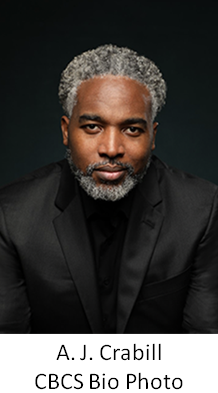
SOFG was created by The Council of the Great City Schools. Specifically, it was the brainchild of their director of Governance A. J. Crabill. Harvard University has created a training course to teach board members how to implement it.

The SOFG idea is school boards should be solely focused on student outcomes. They are supposed to create 3 to 5 SMART goals for improving student outcomes. SMART is an acronym that has been around in education circles for a few decades meaning specific, measurable, attainable, results-focused and time-bound. The measurable part of this is normally based on testing.

Here is an SOFG framework example SMART goal, “The percentage of free and reduced lunch-eligible students in kindergarten through 2nd grade who are reading/writing on or above grade level on the school system’s summative assessment will increase from W% on X to Y% by Z.”

The superintendent is the professional in the school who is to run all things and deal with non-student outcome items like school safety, transportation, maintenance, discipline and more. He is also tasked with achieving the boards 3 to 5 SMART goals. If something is not strictly student outcome focused, the board should not waste their time on it. That is the superintendent’s job.

The former Senior Campaign Manager of Democracy for America, Robert Cruickshank, reported on how SOFG is working in Seattle. His 2023 article begins:

“Parents and students from Franklin High School in Southeast Seattle packed the Seattle Public Schools (SPS) board of directors meeting on Wednesday, June 21, urging the board and the district to save the school’s beloved mock trial program from budget cuts. A few weeks earlier, families from nearby Washington Middle School had filled the room to oppose cuts to the school’s jazz band. Both schools are majority BIPOC; nearly a third of their students are Black.

“The board did not vote to save either program. Instead, board directors deferred to administrators, referencing the Student Outcome Focused Governance (SOFG) model as part of their discussion.”

Amazingly, mock trial programs and jazz band are not viewed as having anything to do with student outcomes. Therefore, instead of being able to petition elected representative on the school board, the parent’s only recourse was the superintendent who had already decided to cut these two programs.

This past October, Uriah Ward, a school board member from Saint Paul, Minnesota, went to SOFG training in Texas.  Writing in Medium he noted, “SOFG is anti-democratic.” He went on to say:

“One of us asked if we could create a goal about making schools safer for students. We were told no, because school safety is not a student outcome.

“Under Monitoring & Accountability, boards are supposed to spend no less than 50% of their time monitoring student outcomes, and are only allowed to evaluate the performance of the superintendent based on whether or not they have met the student outcomes goals.

“School safety isn’t a student outcome. Culturally-welcoming schools aren’t a student outcome. Small class sizes aren’t a student outcome. Healthy school lunches aren’t a student outcome. So many things that our community will ask us for are not considered student outcomes.

“The unelected district employees are the ultimate authority on all things outside of the 3–5 student outcomes goals. Even then, administrators are given complete autonomy to figure out how to meet those goals, with school board input or direction being banned.”

School Board in Action

The Genesis of the SOFG Model

The Council of the Great City Schools has tremendous influence with America’s urban school districts. Since its founding in 1956, the Council has grown from ten urban school districts to 78. It is a 501 C3 non-profit [TIN: 36-2481232] that has an unusual structure. Most non-profits have between 5 and 20 members on their boards; Great City Schools has 153 on its board. The member urban schools districts typically have a least two voting members on the board.

A. J. Crabill, The Council of the Great City Schools director of governance, is credited with developing the SOFG scheme. He also travels extensively training school boards to use it.

Interestingly, Crabill does not have a college education. Born in Kansas City, Missouri in 1979, Crabill spent time in and out of foster care.

In 2008, he won a seat on the Kansas City school board. The schools were in danger of losing accreditation and needed a superintendent. In 2009, Crabill and his board hired new Broad Superintendents Academy graduate John Covington to run the schools. During the first year of leadership by Covington and Crabill, they solved a looming budget deficit by closing 29 schools and laying-off 285 teachers.

In 2011, Covington resigned and the Kansas City School District lost its accreditation. He went to Detroit while many people in Kansas City blamed Crabill for Covington leaving. They claimed he had been too involved in district operations. It was not until 2016 that the Kansas City Star reported Covington did not want to leave Kansas City but Eli Broad called saying, “John, I need you to go to Detroit.” Two days later, on Aug. 26, 2011, Covington was introduced as the first superintendent of Michigan’s new Education Achievement Authority.

While serving on the school board, Crabill’s name was Airick Leonard West but in 2016 he changed it to Airick Journey Crabill. The new surname came from his childhood foster parents.  

That same year, Crabill left Kansas City to work for Mike Morath and the Texas Education Agency (TEA) as a deputy commissioner. When the Austin ISD needed help understanding the new Lone Star Governance (LSG) system they hired Ashley Paz. The Austin Chronicle reports:

“Paz was trained by one of the people most involved in the formation of LSG – a former TEA deputy commissioner, A.J. Crabill. The agency’s boss, Mike Morath, hired Crabill in 2016 to help create and administer Lone Star Governance. He was an LSG coach for years, and in 2020 he became a conservator sent by the TEA to deal with the DeSoto school district, south of Dallas.”

Crabill states on his website, “School systems do not exist to have great buildings, have happy parents, have balanced budgets, have satisfied teachers, provide student lunches, provide employment in the county/city, or anything else.” It seems to me that great schools need all those things.

Crabill recently suggested there ought to be “automatic recalls if student scores drop dramatically.” He is pushing the NCLB test and punish scheme. The big difference, it is delivered by a private institution and not a government entity.

Of course there is a billionaire behind The Council of the Great City Schools and A.J. Crabill. Bill Gates [TIN 56-2618866] has sent them more than $3 million in 2021 – 2023. This is almost half their recent grant dollars.

Opinion

In many ways, America’s school boards are the training ground and foundation for democratic ideals. Student Outcome Focused Governance is an anti-democratic attack on that structure. I recently checked the San Diego Unified School Districts web site and found to my dismay that they are supporting SOFG.  

Please join me in opposing this outrageously bad public policy.

The South’s Long War on Black Literacy

14 Apr

By Thomas Ultican 4/14/2025

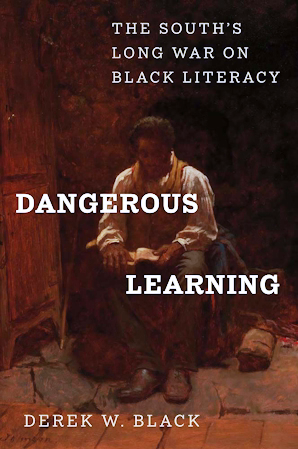
Derek Black’s masterpiece of research, Dangerous Learning, reveals the centuries of struggle for Black Americans to become educated. When I arrived at the Network for Public Education conference April 4, I ran into Professor Black (University of South Carolina Law School) and mentioned to him I almost finished reading his book on the airplane. He absurdly wanted to know how boring I found it. The truth is that this beautifully written book is extremely engaging.

Denmark Vesey

Growing up in Idaho, my knowledge of American slavery is quite lacking. I had never heard of Denmark Vesey, who played a major role in the suppression of education for slaves.

Joseph Vesey was a slave trader who brought 390 enslaved people including Demark to St. Thomas and Saint-Domingue (now known as Haiti) in 1781. Joseph’s slave ship brings the first record of the approximately 14-year-old Denmark. He was sold in Haiti along with the other 390 people but it seems he feigned epilepsy and Joseph was forced to take him back. Soon after, Denmark became Captain Vesey’s trusted assistant.

Black tells this story in about 20 pages in the book. I will cut it down a little.

Denmark learned to read and in 1799 he won the lottery ($1500). He paid Joseph $600 for his freedom and through various means; Denmark became highly educated. He was also inspired by the slave revolution in Haiti. Denmark became an authority on the Bible being known in the community as “a man of the book”. (Page 16) He taught classes at the African Church which became the famous African Methodist Episcopal Zion Church also known as the AME Church. Denmark was obsessed with learning and read widely including classical literature.

In the Old Testament, Vesey found the story of the Israelites’ path from slavery. He taught his friends how the children of Israel were delivered from bondage in Egypt. Professor Black explains:

“In it [the Old Testament], Vesey found a God who stood on the side of the oppressed, not the oppressor, and who intervened in the world not to reinforce slavery but to free the Israelites from it. God consistently assured the Israelites that He would deliver their enemies into their hands if they would follow His will. And following His will did not mean turning the other cheek, fleeing from conflict, or suffering in silence. It often meant smiting those who stood against them, including women and children.”   (Page 20)

In 1822, Vesey having been deeply and fundamentally changed by his literacy planned a slave rebellion. He chose July 14th for the liberation of Black people in Charleston.  The plan was workable but an enslaved man came forward on May 30th claiming he had been recruited to participate in a slave revolt. After that, Vesey’s plans fell apart and he along with his co-conspirators were put to death. Black noted, “When Frederick Douglass implored crowds of Black men to join the Union Army in 1863, he offered a simple message: ‘Remember Denmark Vesey of Charleston.’” (Page 35)

Unfortunately, it was remembering Denmark Vesey that pushed southerners into an all out suppression of Black literacy that lasted well into the twentieth century.

Suppressing Education

The last open debate on slavery in the South was conducted by the Virginia legislature in 1832. William M. Rivas, a lawyer and member of a wealthy colonial family claimed that elite planters had “held the state’s democratic process in a death grip for decades.” (Page 107) He said they had intentionally limited education not just for slaves but for poor and middle-class White people as well.

While the North was engaged in developing a state supported public education system, the South, under the influence of wealthy elites, absolutely opposed state funding for education.

It was a shock for me to discover that Thomas Jefferson was a white supremacist. In Notes on the State of Virginia he wrote that Black people were “inferior to whites in the endowments of both of body and mind.” (Page 65) He said that this reality posed a powerful obstacle to emancipation.

After the 1832 debate, censorship and anti-literacy in the South took on a life of their own. The South became more and more isolated and intolerant.

For the slaves, seeking literacy was hidden and secretive. Finding the time to study was difficult and a flickering candle could draw attention and suspicion. It is reported that enslaved people would study in caves or in holes they created in the woods.

“In Mississippi, people told of holes large enough to accommodate a group. They called them ‘pit schools.’” (Page 188)

After the Civil War, former slaves were able to openly attend school and the Reconstruction Act of 1867 attempted to force states to pay for it. The Act created three requirements for states to be readmitted to the Union: extend the vote to black men, ratify the 14th Amendment and guarantee a republican form of government. Black noted, “A republican form of government meant, among other things, ensuring public education.” (Page 244)

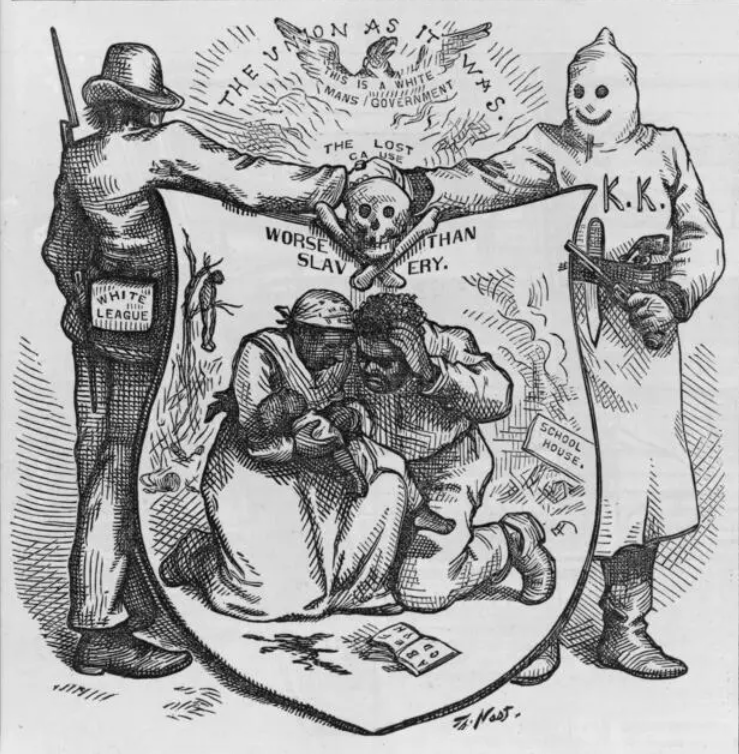
However the citizens of the south were not going to accept Black people having equal rights. Terrorist groups attacked schools and teachers. The more Union troops were drawn down, the greater the violence became.

1874 Harper’s Political Cartoon by Thomas Nast

During Reconstruction, 631 attacks on black schools have been documented. White citizens of Tennessee under the leadership of the KKK destroyed 76 Black schools. (Page 261)

In order to secure victory in the 1877 Presidential race, Rutherford B. Hayes agreed to a compromise between southern Democrats and pro-business Republicans to end Reconstruction. Soon after, southern states started rewriting the required constitutions they needed to rejoin the Union. There was a two pronged agenda: “disenfranchise Black voters, and segregate and underfund Black education.” (Page 168) Jim Crow laws became enshrined in the new southern state constitutions.

In 1896, the Plessy v. Ferguson case held up the bogus concept of separate but equal facilities. That same year saw a new Louisiana law that took Black male voter registration from 95.6% of the population to 1.1% by 1904. In 1902, Nicolas Bauer, a man that would become superintendent of public schools in New Orleans, wrote:

“I realize from my limited observation that to teach the negro (sic) is a different problem. His natural ability is of a low character and it is possible to bring him to a certain level beyond which it is impossible to carry him. That point is reached in the fifth grade of our schools.”

The lack of justice and abundance of ignorance is what the Supreme Court tried to rectify with Brown v. Board of Education.

The fact is these two centuries of hostility toward educating all American citizens is still causing harm. Derek Black’s Dangerous Learning is a must read for anyone that cares about justice.

NPE2025 Columbus Impressions

8 Apr

By Thomas Ultican 4/8/2025

Last weekend, it was a rainy sad environment greeting the 2025 Network for Public Education (NPE) conference but inside the Columbus Hyatt it was blue-skies. When I left Ohio Monday morning, the local environment matched the hope and determination generated for three days.

The first conference event was a Friday evening session with Diane Ravitch and Professor Josh Cowen discussing vouchers. They made three things abundantly clear. As Cowen noted, “By every standard of the policy debate, vouchers have failed.” They always get defeated by voters at the poles and have become welfare for the wealthy. Funding for vouchers is wrecking state budgets.

As people were exiting the room, I got Diane and Pastor Charles Foster to pose for a picture. This created a wonderful example of tolerance and communication needed today. Ravitch is a Jew from New York City, Charles is a devout Baptist from Texas and I am a Nichiren Buddhist from California; yet we are all three genuine friends.

Charles and Diane

Day 2, Saturday

It was a marathon of sharing. At 8 AM, participants gathered in a large room for breakfast and speeches. Ravitch shared that “The Department of Education was not created to raise test scores but to raise equity.” She noted that America is a diverse country and that we must live with diversity and not deny it.

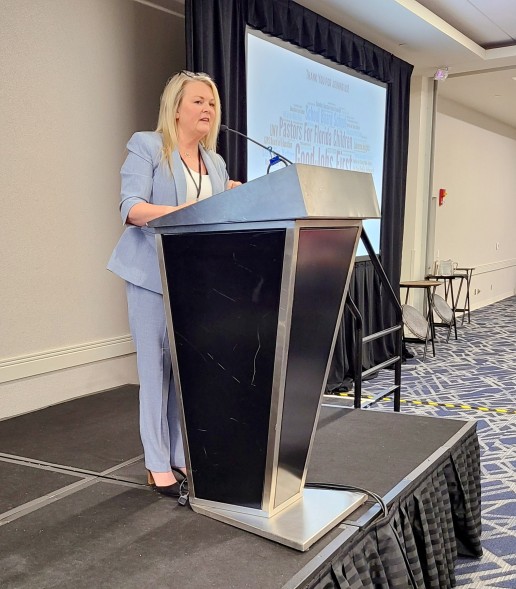
Jesse Piper, an NPE board member from rural Missouri, passionately ended the breakfast meeting claiming that when you start defunding schools, the community goes next. Jesse used the demise of her on small town as an example. Piper also stated, “Christian nationalism is teaching women to be submissive to their husbands and husbands to be submissive to their bosses.” She concluded by asserting to this large room full of public school educators, “You’re not indoctrinating students, that is what religious and private schools do.”

Jesse Piper

From there we broke into sessions in several rooms. Unfortunately, wonderful sessions were occurring at the same time making it hard to pick which one to attend. I presented on Science of Reading (SoR) in the first breakout presentations of the day. Nancy Bailey and Elena Aydarova PhD joined in the sharing. We had a large audience and people kindly told us they liked the presentations. (I am willing to share the Power Point file I used.)

Nancy Bailey

After lunch and a wonderful speech by John H. Jackson president of the Schott Foundation, I went to learn about Lifewise. I had no idea how fast that organization is growing. It was founded in 2018 in Ohio. There are now organizations in 26 states including California. Lifewise promotes RTRI (Release Time for Religious Instruction). Schools that participate must release children during the school day for a bus trip to the Lifewise facility where they learn a benighted form of Christianity based on the ancient Nicene Creed.

There are two types of states that authorize Lifewise, may-states and shall-states. Ohio just became a shall-state that mandates schools to participate if it is offered.

Lifewise wants kids younger than 14 because they are more successfully indoctrinated. When the kids come back to class, they show their presents and tell stories of ice cream parties. Kids that are at Lifewise often miss out on important learning. An Ohio science teacher showed pictures of his kids getting ready for the total eclipse that the Lifewise students missed.

That evening, we enjoyed a speech by the 2022 national teacher of the year, Kurt Russell. Russell says he no longer thinks of public education as important. Rather because it is the foundation of our democracy, it is vital, it is essential and “it is bigger than that; it is life.” Usually I am not impressed by someone being named teacher year whether it is of the school, district, county, state or the country. In this instance, he seemed totally deserving of the accolade.

Kurt Russell

Day 3, Sunday

I was really moved by the New Orleans presentation. We heard from a former charter school student and a brilliant mom. They made it clear that control is the byword in the district’s charter schools. The young man, a former charter school student, described a hair-raising ordeal which sounded like child abuse designed to keep the black community in its place.

Last year, when a charter school failed the superintendent replaced it with the first New Orleans public school since 2017. She was fired, but that is what the mom speaking to us claimed parents want. She said they desire that every time a charter school fails it is replaced by a more stable public school. Charter schools have become a revolving door with a large percentage of schools going out of business every year. Unfortunately, those in power want to maintain their portfolio model school district that does not include public schools.

She also said that charters in New Orleans are being sued regularly for some of their practices with children. However, there is almost no reporting about the suits because the settlements always include a non-disclosure agreement (NDA). She told the story of asking a KIPP administrator how many NDA’s they had created. He said none but when she retorted that she was in court just the week before and saw a KIPP NDA created, he backed off and promised to get back to her. She is not holding her breath.

The New Orleans Panel

The brunch time speaker was state representative from Texas, Gina Hinojosa, who has been in an all out battle with Texas Governor Greg Abbott to stop his universal voucher scheme. She says private equity is the plan that is causing billionaires Dunn, Wilks, Yass, Musk and others to finance vouchers in Texas. Hinajosa stresses that the most sinister aspect of the voucher plan is profiting through finance. She reports that a Texas Catholic Credit Union has already been established.

Gina Hinohosa

The last event on Sunday afternoon was special. American Federation of Teachers President, Randi Weingarten, presented us with a fiery speech when she introduced the final keynote speaker of the conference, Governor Tim Waltz of Minnesota.

Waltz was definitely not a disappointment. He made many vintage Waltz type statements:

“I know in this room I’m preaching to the choir. The choir needs to sing louder.”

“Some people say ‘I’m just not into politics.’ Well too damn bad, politics is into you.”

“We should not call them oligarchs, we should call them what they are greedy bastards.”

He was proud of the fact of being cited as the least wealthy person ever to run for Vice-President of the United States.

Waltz asserted that the middle class was built by public education and labor unions. As for what we are going through now, he speculates that it will get worse; so be ready for it.

Governor Waltz surprised us by staying in the room and taking picture with hundreds of us.

Tom and Tim

My impression was that this was the best NPE event to date. The breakout sessions that I attended were amazing and I did not hear of any disappointments. The keynote speakers were excellent and finishing with Governor Waltz was the cherry on top.