Archive | June, 2024

Inspire Charter School Legacy

28 Jun

By Thomas Ultican 6/28/2024

Inspire Charter Schools looked like the next district attorney target when Sean McManus and his A3 charter empire were officially charged with “Theft of Public Funds.” The San Diego Union’s Kristen Taketa reported October 9, 2019 that Inspire was subject to a new state audit. She focused on it with several articles over the next year. The only reason Inspire did not lead to sensational stories of greed, unethical practices and fraud was no DA pursued them.

Former Los Angeles Unified teacher, Herbert “Nick” Nichols, created Inspire schools through his corporation, Provenance, originally called Inspire Charter Schools. Adhering to the use-small-school-districts strategy, his first school was authorized by the Acton-Agua Dulce Unified school district (Los Angeles County) July 1, 2014. It grew from 151 students in the 2014-15 school year to 4,321 students in  2018-19 and then closed up shop on June 30, 2019.

Why?

Taketa reported:

“Nichols’ annual salary is $380,000, Inspire’s spokesman Chris Bertelli said. In 2016, Nichols was paid $514,197.”

A deeper look at tax records revealed Nichols compensation was in 2015 ($120,305), 2016 ($514,197), 2017 (missing), 2018 ($614,391) and 2019 ($442,136). During that missing year, Inspire Charter Schools charter management organization (CMO), called Inspire District Office (EIN: 46-4743375), became Provenance (EIN: 82-1672890) and compensations were apparently not reported to the IRS.

Things imploded rapidly. In early October, 2019, seven county education superintendents called for the Fiscal Crisis Management and Assistance Team (FCMAT) to audit all Inspire schools. That followed the California Charter Schools Association rescinding Inspires membership. Nick Nichols took a leave of absence in September and resigned as CEO in October, 2019.

Nichols helped create all of the Inspire schools, effectively controlled by his corporation, Provenance. As CEO, he became sole statutory member of Inspire schools, with the only vote for selecting school boards and changing operations. He selected charter school board members, who then voted to hire Provenance to guide their schools. Only Nichols could sign checks for the various charter schools. It was a nasty and illegal arrangement.

In 2019, Taketa reported:

“The Union-Tribune emailed questions to Inspire about it being the sole statutory member on July 16. Within five days, the Inspire school boards changed their bylaws to remove Inspire Charter Schools as the sole statutory member, according to their board agendas.”

Before these questions, Inspire seemed to be full speed ahead. State records show them opening five home-school or primarily virtual charters on July 1, 2019. All are still in business.

Remnants are Profiting

On November 20, 2023, FCMAT finally submitted their report. Auditors were not able to conclude whether fraud occurred, largely because Inspire’s records were in such poor condition. The report stated:

“On October 11, 2019, Nichols and the CMO signed a separation and release agreement removing Nichols from his duties over the Inspire network. The agreement includes the following:

“Nichols has been on unpaid administrative leave since September 20, 2019.

“Must repay outstanding payroll advances totaling $1,055,834; however, $195,910.89 has been repaid, leaving an outstanding balance of $859,923.11.”

“This was the beginning of the Inspire network’s eventual end, with each Inspire Charter School rebranding itself and becoming its own independent charter school under its own nonprofit public benefit corporation as presently established as of this report.”

On September 20, 2020, Granite Mountain Charter School sued Provenance (aka Inspire Charter Schools, aka Inspire District Office) for breach of contract, breach of fiduciary duty and constructive fraud, unfair business practices and more. They claimed Provenance, which controlled their bank account, had moved more than $70,000,000 in and out of it. Granite Mountain believes Provenance purloined between $5 million and $10 million.

Provenance also registered Granite Mountain’s domain name and claimed ownership of their logo. They offered to sell them back for $200,000. The suit, filed in a Los Angeles County Court, seeks the return of the domain and at least $5 million.

In May, 2022, Granite Mountain filed a suit against Yosemite Valley Charter School and Director Laurie Goodman in Fresno County. A Fresno judge ruled since the money involved was related to the LA trial, that case had first jurisdiction. The main point here is one charter school suing another charter school was caused by Provenance commingling money.

Granite Mountain’s charter petition was approved by Lucerne Valley School District January 10, 2019. Nichols was the only person that could use their checking account. In August, Granite Mountain school board voted to remove Nichols from the account and replace him with its treasurer and Provenance Chief Financial Officer, Chris Williams, as check signer.

The law suit claims this did not happen.

All about the Money

Since each school is a non-profit public benefit corporation, they must file IRS 990 tax forms. Granite Mountain Charter School (EIN 83-3660999), Monarch River Academy (EIN 83-4510641) and Yosemite Valley Charter School (EIN 84-2358972) were reviewed.

Two items stood out: they are profitable and salaries are amazing.

These people live in relatively low cost areas of the state. The salaries would be big in San Diego or Los Angeles but are giant in Fresno and surrounding areas where the cost of living is much less.

Though these charters are all mostly virtual schools, by California Law they must hire credentialed teachers. What became clear when interviewing teachers is that quality of education was not the first priority. Keeping parents happy was paramount. Keeping average daily attendance money arriving is the main goal.

Teachers at these organizations have no unions and receive almost no support when parents complain. I heard stories of educators being pushed out when one Christian mom did not like their openness to gay students. Another episode involved a teacher getting complaints for pushing too hard to cover state standards and was fired. The school did not care about meeting state standards. They were only concerned with keeping parents happy.

When asked about changes that have come since the demise of Inspire, one teacher said, “Now we have multiple Inspires with each school being a location where families and friends are being hired into high paying jobs that they are not qualified to hold.” Another described the utter incompetence of an administrator holding professional development training on material the admin did not understand.

Inspire charter schools has transitioned from being a fraudulent entity setup to scam money from the state of California into a hook-up club of admin-heavy schools. In both cases, the education product has been horrible with terrible academic results.

This is more evidence for shutting down cyber charter schools. County education agencies provide cyber services and maintain education integrity. The incentives for this type of school are all wrong for quality education provided by private business.
Education Trail Blazers

15 Jun

By Thomas Ultican 6/15/2024

At the dawn of the 19th century, a need to educate the masses was becoming more apparent. Political leaders, Thomas Jefferson and John Adams, called for taxpayer-supported public education. However, real or important education was for boys only. There was some movement to educate girls but it was mostly directed toward domestic utility and female etiquette; not the more rigorous boys’ curriculum.

Jean Jacques Rousseau’s famous book, Emile, captured the attitude:

“The good constitution of children initially depends on that of their mothers. The first education of men depends on the care of women. Men’s morals, their passions, their tastes, their pleasures, their very happiness also depend on women. Thus the whole education of women ought to relate to men. To please men, to be useful to them, to make herself loved and honored by them, to raise them when young, to care for them when grown, to counsel them, to console them, to make their lives agreeable and sweet – these are the duties of women at all times, and they ought to be taught from childhood. So long as one does not return to this principle, one will deviate from the goal, and all the precepts taught to women will be of no use for their happiness or for ours.” (Page 365)

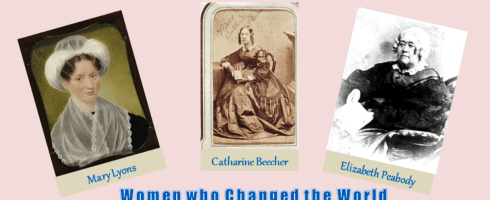
In this environment bereft of encouragement, several amazing women stood up and changed the world. They struggled to educate themselves and opened a path for their younger sisters.

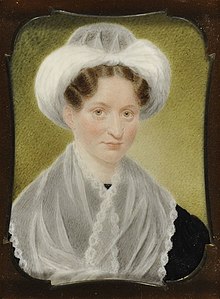
Mary Lyon

Mary was the sixth of eight children, born February 28, 1797, on a 100-acre farm near Buckland, Massachusetts to Aaron and Jemina (Shepard) Lyon. She was only five when her Revolutionary war veteran father died. After Mary turned 13 years old, her mother remarried and moved out of the home. Mary, now considered an adult, remained on the farm working for her brother, Aaron, making $1 a week maintaining the household.

At that time, many people believed educating girls was a waste. In most New England towns, the school year was typically ten months long, divided into winter and summer terms. In some places, girls were only allowed to attend summer sessions when boys were needed for farm work. Mary was fortunate that the school in Buckland allowed girls to attend year-round. She left at the age of thirteen but already had more education than most girls.

In 1814, when Mary was just seventeen, she was offered her first teaching job at a summer school in the nearby town of Shelburne Falls. Her teaching experience became the catalyst for Mary to advance her own education, no small task for a nineteenth century woman with little money. Besides this, the emphasis on “lady-like” curriculum at women’s schools was not attractive to her. She wanted a more rigorous program that included the study of Latin and the sciences.

In 1834, Laban Wheaton, a local politician, and his daughter-in-law, Eliza, called upon Mary for assistance in establishing the Wheaton Female Seminary in Norton, Massachusetts. For the Seminary, Mary created the first American curriculum with the goal to be equal in quality to men’s colleges.

It was renamed Wheaton College and just celebrated its 189th commencement.

1835 witnessed Mary developing Mount Holyoke Female Seminary. She wanted to create a rigorous college that made it possible for women who were not wealthy to attend. The yearly tuition was set at $60 and to control costs, required students to perform domestic tasks; Emily Dickinson, who attended the Seminary in 1847, was tasked with cleaning knives.

Mount Holyoke Female Seminary opened in 1837 with 80 girls, with an unheard of curriculum. She required seven courses in the sciences and mathematics for graduation and introduced women to performing laboratory experiments. Field trips were organized where students collected rocks, plants, specimens for lab work and inspected geological formations.

After 12 years leading Mount Holyoke, Mary tragically died. She contracted erysipelas, possibly from a student, and passed March 5, 1849. However the foundation of her school was sound and in 2024 Mount Holyoke held its 187th commencement.

Mary’s very deep religious beliefs, born a Baptist converting to Congregationalism, drove her hard work. Her grave on Holyoke campus bears Mary Lyons’ famous declaration: “There is nothing in the universe that I fear, but that I shall not know all my duty, or shall fail to do it.”

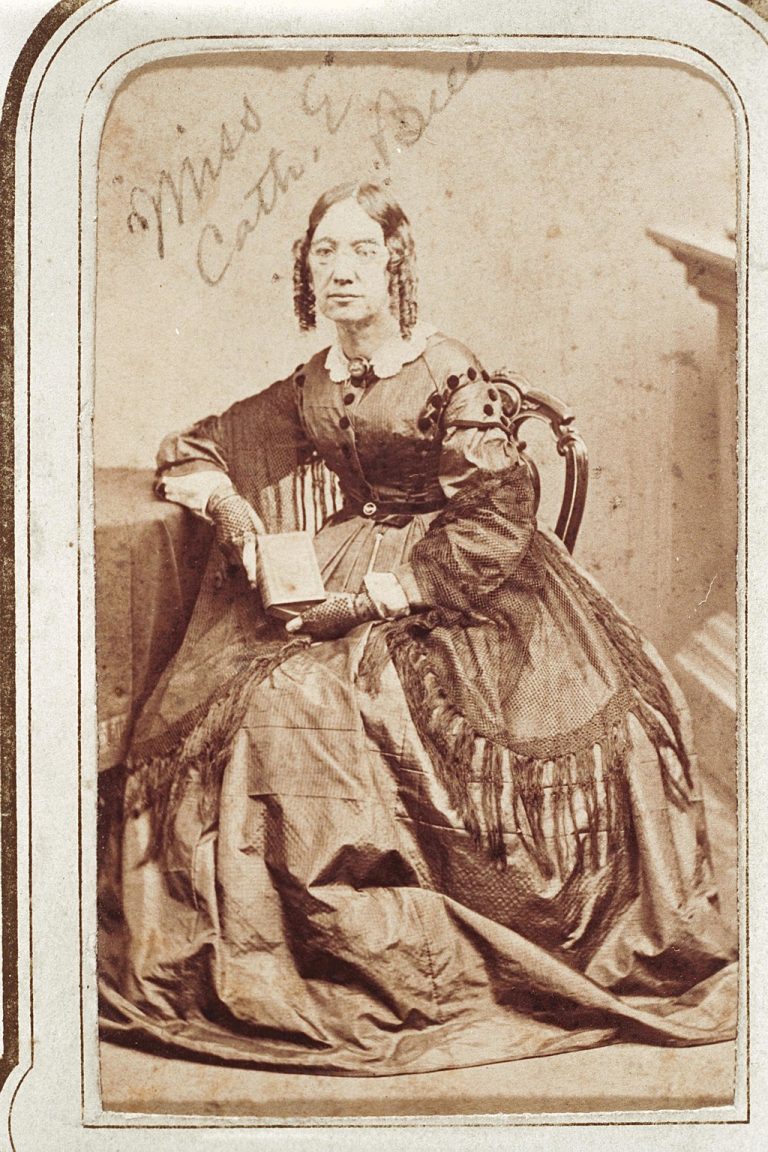
Catharine Beecher

Catharine, the eldest of nine children, was born to Lyman Beecher and his wife Roxana on September 6, 1800. In the home of this famous Presbyterian minister and evangelist, ideas about literature, religion, and reform were constantly under discussion. When nine years old, the family moved to Litchfield, Connecticut, where she attended Litchfield Female Academy. This was the only formal education she ever received.

By the time Catharine was 22 years old, she was engaged to Yale University professor Alexander Fisher. After he died in a shipwreck, Beecher never married and dedicated the rest of her life to education.

In 1823, Catharine founded the Hartford Female Seminary offering a full range of subjects instead of just fine arts and languages. She was an early pioneer of physical education for girls, defying the prevailing notions of women’s fragility and introduced calisthenics to improve women’s health. Unlike other women’s schools, Catherine’s seminary taught women to use their own judgment and become socially useful.

Her younger sister, Harriet, attended the school and also taught at it.

In 1831, the Beecher family moved west when Lyman became president of Lane Theological Seminary, a progressive Cincinnati institution on the Ohio frontier. There, Catharine opened the Western Female Institute, one of several educational institutions where she prepared women teachers in the American West. Harriet also worked at the institute.

In 1836, Harriet met and married Calvin Ellis Stowe, a clergyman and seminary professor, who encouraged her literary activity and was himself an eminent biblical scholar. Like her sister Catharine, Harriet strongly opposed slavery and eventually wrote Uncle Tom’s Cabin.

Catherine was also a writer and philosopher. Her essay on “Slavery and Abolitionism with Reference to the Duty of American Females” was published in 1837. It provided a peek into her conservative outlook, often isolating her from the major developments in the history of American reform. She held that all Christian women were abolitionists by definition but urged gradual rather than immediate emancipation. Meekness and tact were necessary in any criticism of slaveholders.

These same conservative views caused her to oppose voting by women.

After Catharine’s financially-troubled Cincinnati school closed, she worked on McGuffey Readers and spent the next decade touring the American West, setting up several female teaching academies. In 1841, she published A Treatise on Domestic Economy, followed by The Duty of American Women to Their Country (1845) and The Domestic Receipt Book (1846). She remained a genteel critic of slavery and foe of the franchise for women, believing that women’s true role as redeemers rested in domestic duties as mothers and wives.

Catharine Beecher died May 12, 1878 in Elmira, New York.

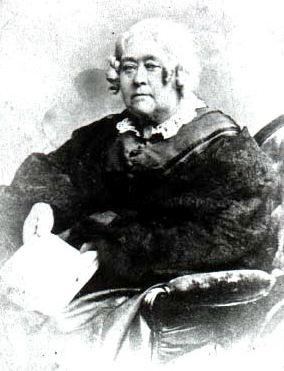
Elizabeth Palmer Peabody

This absolutely amazing woman, Elisabeth Palmer Peabody, was born in Billerica, Massachusetts on May 16, 1804. Her father, Nathaniel Peabody, was a dentist and her mother, Elizabeth Palmer, had a philosophy of life rooted in Unitarianism. Mrs. Peabody home-schooled her children and started her own small school where at age 16, Elizabeth began teaching. Her father taught her Latin and she went on to be a gifted linguist, familiar with more than ten languages.

There were five Peabody siblings, her brothers Nathaniel and George plus sisters, Sophia Amelia and Mary Tyler. Sophia married novelist Nathaniel Hawthorne while Mary married famed-education reformer, Horace Mann.

One of Elizabeth’s early mentors was Dr. William Ellery Channing, the “father of Unitarianism.” She claimed to be raised in the “bosom of Unitarianism.” She also was a member of the Transcendentalist community.

From 1834-1835 she worked with Bronson Alcott at his famous experimental Temple School in Boston. The school was forced to close when Alcott was accused of teaching sex education. Other Transcendentalist-inspired ideals used at the school were also strongly criticized. However their Socratic method of instruction is still popular today.

Elizabeth became America’s first female publisher and her book store, simply known as “13 West Street,” was a center for philosophical discussion. Both Ralph Waldo Emerson and Dr. Oliver Wendell Holmes Jr. gave lectures there and her publishing venture produced not only Channing’s Emancipation in 1840 but several of Nathaniel Hawthorne’s books. In 1849, she was first to publish Henry David Thoreau’s Civil Disobedience.

She opened the first publicly supported kindergarten in 1860 and wanted this Boston school “to awaken the feelings of harmony, beauty and conscience” in students. Doubts about the school’s effectiveness caused her to travel to Germany and observe the model practiced by disciples of kindergarten founder, Friedrich Froebel. Upon returning, she traveled across the country giving lectures and holding training classes. From 1873 to 1875 she published the Kindergarten Messenger.

In addition to her teaching, Elizabeth wrote grammar and history texts, touring America to promote the study of history. In 1865, she wrote the Chronological History of the United States.

Elizabeth championed the rights of Native Americans and edited Sarah Winnemucca’s autobiography, Life Among the Paiutes.

Elizabeth Peabody died on January 3, 1894, in Jamaica Plain and was buried at Concord’s Sleepy Hollow Cemetery. Abolitionist minister Theodore Parker praised her as “a woman of most astonishing powers … many-sidedness and largeness of soul … rare qualities of head and heart … A good analyst of character, a free spirit, kind, generous, noble.”

Three Remarkable Women!!!

All Charter District Opens Public School

9 Jun

By Thomas Ultican 6/9/2024

New Orleans Public Schools, aka Orleans Parish School District (OPSD), became America’s first and only all charter school district in 2017. After hurricane Katrina, the state took over all but five schools in the city. When management was transferred to charter organizations in 2017, OPSD officially became an all charter district. This August, the city will open district-operated Leah Chase K-8 School, ending the all charter legacy.

According to Superintendent Avis Williams, the infrastructure required for the district to run Leah Chase will make it easier to open future district-run schools. OPSD will become both a charter school authorizer and regular school district. There is hope that New Orleans, Louisiana (NOLA) is pulling out of an abyss and tending towards a healthy public school system.

All-Charter NOLA Doomed from the Beginning

Senator Joseph Bouie Jr. equated the NOLA school system to the “Tuskegee syphilis experiment.” Professor Bouie, former administrator of Southern University at New Orleans, had good reason for this analogy. At Tuskegee University, black men with syphilis were given no treatment even after penicillin was shown to be effective. Dozens of men died and their wives, children and untold number of others were infected. NOLA black residents had their community schools taken away and replaced by privatized schools, often miles away. This “experiment” stole their rights and bestowed the public schools to private actors.

The design of the privatized system was flawed. A 2018 study by Education Research Alliance found student’s average one-way school bus trip took 35 minutes and pickup times began at 5:30 AM.

Public investment in education is widely viewed as the key to America’s success. Since the 19th century, communities have developed around local public schools. This opportunity was taken from NOLA neighborhoods.

Rules for NOLA charter schools do not create the stability needed for establishing community schools. Louisiana set up the rules with ACT-91 when returning schools to the NOLA school board in 2014. Provisions concerning enrollment, funding and discipline are included in the act plus charter operators control staffing, curriculum and length of both school day and year. The OPSD Superintendent makes decisions on transferring charters to other operators, renewing or cancelling charters.

Louisiana’s state takeover law required schools scoring below average to be closed. If this were real, half of the schools in the state would be closed every year. Instead, arbitrary state performance scores based on testing data, attendance, dropout rates and graduation rates were established. Similar ratings are used to evaluate NOLA charter schools. The nature of privatized schools and testing results led to almost half of the charter schools created being closed.

The NOLA school enrollment system allows parents to research the 100 schools and apply for up to eight of them. The algorithm selects the school from one of the eight if space is available. It is not uncommon for students to ride a bus past schools within walking distance of their homes. This complicated system is driving segregation.

For many education professionals, this system looked like a sure failure from the beginning. Communities could not develop around their schools and the schools would not be stable; important aspects of quality public education.

Another problem coming out of the school privatization experiment is a large swath of the city, known as New Orleans East, has lots of students but few schools.

The All Charter District is a Failure

In 2021, Secretary of Education Miguel Cardona visited OPSD. He heard first-hand the growing disillusionment with the all charter system. Four of the six parents told him they wanted to go back to neighborhood schools. Parents complained about Teach for America, placing unqualified teachers in schools and the One App process for not offering school choice.

Senator Bouie wrote a two-page paper, A Moral Imperative and Case For Action”, stating: “After spending 6 Billion dollars of tax payers’ money to become the only all-Charter system in the State, a staggering 73% of our children are not functioning at grade level, compared to 63% in 2005, when the State took control of over 100 of our schools.”

He also shared:

“In other words, fellow citizens, this 15-year flawed experiment has yielded no best practices identified to improve student and school performance, no State protocol for Charter Law Compliance, and no student performance improvement. It has, however, yielded other devastating consequences for our children and our community.”

He mentioned the 26,000 students between the ages of 16 and 24 who went missing. The privatized charter school system was unable to account for them which is expected and natural for a public school district.

Bouie called for ending busing, “They are transported past a neighborhood school to attend a failing school across town” and eliminating the ineffective One App central enrollment system claiming, “It has created inequities by Race and Class and admissions by chance (lottery) and not choice.”

Raynard Sanders who has over forty years of experience in teaching, education administration and community development, said the charter experiment has “been a total disaster in every area.” He asserted NOLA had “the worst test scores since 2006, the lowest ACT scores, and the lowest NAEP (National Assessment of Educational Progress) scores.”

Based on a 2015 study by the Center for Popular Democracy, Sanders declared, “Charter schools have no accountability and, fiscally, charter schools in New Orleans have more fraud than existed in the OPSD (Orleans Parish School District).” The fraud claim was used by the state in 2003 against OPSD to begin taking schools.

Loyola University Law Professor Bill Quigley stated, “NOLA reforms have created a set of schools that are highly stratified by race, class, and educational advantage; this impacts the assignment to schools and discipline in the schools to which students are assigned.”

He contended, “There is also growing evidence that the reforms have come at the expense of the city’s most disadvantaged children, who often disappear from school entirely and, thus, are no longer included in the data.”

Professor of Economics, Doug Harris, and his team at Tulane University are contracted to study school performance in New Orleans. Harris claims schools have improved since Hurricane Katrina. However Professor Bruce Baker of Rutgers University disagrees. He noted that the school system is not only smaller but less impoverished. Many of the poorest families left and never returned. So the slightly improved testing results are not real evidence of school improvement.

The latest testing data from 2023 saw NOLA public schools receive failing grades but based on Louisiana’s new progress indicator, the district received a C, meaning an F for assessments and an A in growth.

In a letter to the editor, former OPSD superintendent, Barbara Ferguson, stated:

“The state took over 107 of New Orleans’ 120 public schools and turned them into charter schools. Last year, 56 of New Orleans’ 68 public schools had scores below the state average. Thus, after nearly 20 years, over 80% of New Orleans schools remain below the state average. This charter school experiment has been a failure.”

Final Words

In 2006, with the school board out of the road and RSD in charge, philanthropists Bill Gates, Eli Broad and others were ready to help.

Naomi Klien’s 2007 book, The Shock Doctrine, labeled these school reforms, a prime example of “disaster capitalism”, which she described as “orchestrated raids on the public sphere in the wake of catastrophic events, combined with the treatment of disasters as exciting market opportunities.” She also observed, “In sharp contrast to the glacial pace with which the levees were repaired and the electricity grid brought back online, the auctioning-off of New Orleans’ school system took place with military speed and precision.”

Desires of New Orleans residents were ignored. Neoliberal billionaires were in charge. In all the excitement, few noticed that these oligarchs had no understanding of how public education functions. They threw away 200 years of public school development and replaced it with an experiment. The mostly black residents in the city were stripped of their rights.

Thousands of experienced black educators were fired and replaced by mostly white Teach For America teachers with 5 weeks of training. Instead of stable public schools, people were forced into unstable charter schools. Instead of professional administration, market forces drove the bus!

Clearly, the all charter school system is a failure.

Sex Discrimination Education Law

2 Jun

By Thomas Ultican 6/2/2024

Joe Biden promised, when running for president, to undo the damage to Title IX implemented during the Trump and DeVos era. The 1972 amendment to the US education law enacted rules against sexual discrimination at all schools receiving federal dollars. This was a fix to the 1964 civil rights law which lacked protection in schools based on a students’ sex. During the three year process of developing new guidelines, the Education Department received over 300,000 comments. The rules were announced in April and will go into effect in August.

Under Trump’s rules, there was no protection for LGBTQ+ students. That will change.

Biden’s changes will replace a narrow definition of sex-based harassment with a wider range of conduct. They reverse a requirement that schools only investigate alleged incidents on their campus. Also ended are demands for in-person live hearings in courtroom-like settings where the person accused of sexual misconduct, or their lawyer, can question the accuser.

Betsy DeVos called Biden’s new rules a “radical rewrite” of the law. She claimed it was an “endeavor born entirely of progressive politics, not sound policy.” Kel O’Hara, a senior attorney at Equal Rights Advocates, had a much different take:

“The new regulations put an end to unfair and traumatic grievance procedures that favor harassers. No longer will student survivors be subjected to processes that prioritize the interests of their perpetrators over their own well being and safety.”

Genesis of Title IX 

Bernice Sandler, known as “The Godmother of Title IX”, earned a master’s degree in Clinical and School Psychology and in 1952 married Jerrold Sandler. The couple had two children. Bernice returned to school at the University of Maryland where she earned a Doctor of Education in Counseling and Personnel Services.

Sandler began teaching at Maryland part-time but her application for a full-time position was continually denied. When inquiring why, Bernice was told she “comes on too strong for a woman” and that she was “just a housewife who went back to school.”

This led Bernice to joining the Women’s Equity Action League (WEAL). While researching the strategies of African American civil rights activists, she discovered that in 1968, President Lyndon B. Johnson further amended the civil rights restrictions on companies receiving federal dollars from discriminating on the basis of race, color, religion and national origin, by adding gender.

Bernice realized that most universities had federal contracts and were illegally not hiring women. Between 1969 and 1971, she and WEAL filed sex discrimination charges against 250 schools, including the University of Wisconsin, Columbia University and the entire state university and college systems of California, New Jersey and Florida.

In 1970, she filed a class-action lawsuit against all universities in America.

In the same year, Edith Green was an education policy expert and Democratic Congresswoman from Oregon. The sudden flurry of enforcement requests piqued her interest and caused Green to begin hearings on sex discrimination at federally funded universities.

Persuaded by testimonies put forth during the hearings, Representative Patsy Mink of Hawaii joined Green in drafting legislation prohibiting sex discrimination in education.

In the Senate, Indiana Democrat, Birch Bayh, led the legislation. Bayh’s wife, the former Marvella Hern, was an outstanding student from Oklahoma. Marvella was drawn to the work of Thomas Jefferson, founder of the University of Virginia. She wanted to go to that college but her application was returned with a note saying, “Women need not apply.”

Bayh was a co-recipient of the NCAA Gerald R. Ford Award at the 2006 convention. In an interview he shared with NCAA News about Title IX:

“We spent 26½ years together with Marvella teaching me about what it was really like being a woman in a man’s world. Without her, I know I wouldn’t understand the importance of this legislation.”

When the legislation was formed, Senator Bayh wrote the 37 words that became Title IX:

“No person in the United States shall, on the basis of sex, be excluded from participation in, be denied the benefits of, or be subjected to discrimination under any education program or activity receiving Federal financial assistance.”

On Title IX’s 50th anniversary in 2022, The Harvard Gazette interviewed Jeannie Suk Gersen, Professor of Law, and Susan Ware PhD historian.

Gersen noted the motivation for the law, “Women faced blatant educational inequality, such as exclusion from certain colleges and universities or from certain programs and spaces within those schools, higher admissions standards than men, more frequent tenure denials than men, and myriad other imposed disadvantages relative to men.”

Ware shared her opinion on why the law made such dramatic and rapid change:

“Once you point out that the men’s crew team has its own boathouse and the women have to change in their van and they don’t have showers, anybody can see that’s not fair, and it’s not equal. So just making a list of things that need to be addressed and having Title IX to back you up was a very effective way to get change.

Those changes came quickly. By the early 1980s, women were receiving about 40% of the resources compared to men for collegiate sports programs. Title IX is often presented as a zero-sum game; “if women win, men lose.”

Ware shared one of her favorite quotes, “There’s men, there’s women, and there’s football.”

A Bipartisan Effort

June 23 1972, President Richard Nixon signed Title IX into law. One of the biggest supporters of the legislation was Alaskan Republican Senator, Ted Stevens. He believed young women should have equal opportunity to their male counterparts for participating in school athletics. His support gained him a reputation as “protector of Title IX.”

On March 1 1972, the Senate version of Title IX overwhelmingly passed (88-6). Ten days later, the House version passed (275-125). After the bill went through conference committee, the Senate agreed (63-15) and the House voted (218-180) to pass it into law.

This bill not only upended intercollegiate sports but also touched many other corners of the campus. It forced shifts in hiring, promotion, admissions, reckoning on sexual harassment and assault.

There has also been a dramatic change in college graduation rates. Pew research showed that in 1970, 8% of women and 14% of men graduated. In 2021, those college graduation numbers became 39% for women and 37% for men.  

Title IX opened a path of justice and equality in America.

Biden’s new rules have made the law more robust and fair.