Archive | December, 2023

Panic! Pandemic Learning Loss!

17 Dec

By Thomas Ultican 12/17/2023

Wal-Mart family’s propaganda rag, The 74, says those not hysterical over learning loss wear rose-colored glasses and damaged students are doomed, losing billions in future earnings, if nothing is done now. Their major recommendations are frequent testing, high-dose tutoring and tough grading. Unsurprisingly these lead to more corporate profits.

A gathering at the Aspen Institute asserted the dire situation.  Jens Ludwig,  University of Chicago economics professor, said, “We do not have our hair on fire the way it needs to be.” The other members of this panel were Nat Malkus of the American Enterprise Institute, T. Nakia Towns of Accelerate and Melissa Kearney of the Aspen Institute.

There was a strong smell of corporate education bias in the air. The Aspen Institute was the creation of corporate leaders and largely funded by foundations, such as, Carnegie Corporation, Rockefeller Brothers Fund, Gates Foundation, Lumina Foundation, and Ford Foundation. American Enterprise Institute is a center right research group that grew out of the American Enterprise Association which formed in 1938 to fight Roosevelt’s New Deal. Accelerate’s CEO is Michelle Rhee’s former husband, Kevin Huffman, also a founding partner at The City Fund. Listed funders of Accelerate are Gates Foundation, Arnold Ventures, Walton Family Foundation, Overdeck Family Foundation and Ken C. Griffin.

Testing Declines were Universal

The 74 claims:

“Parents expressed little concern about lasting damage from the pandemic and typically thought their children were doing well in school — a view that researchers say is belied by dismal state and national test scores.”

“The 2022 National Assessment of Educational Progress showed historic declines in math and flat performance in reading.” (Emphasis added.)

Plotted by NAEP from 2022 Testing Data

The 2022 8-point drop in mathematics scores was unusually large. In the spring of 2020, schools throughout America shut down and most of them did not reopen in class until fall 2021. If there were not a drop in testing scores, the NAEP assessment would have been meaningless.

The 74 further notes that a recent release of international scores shows U.S. students dropped 13 points in math between 2018 and 2022. Their linked article noted that many other countries had worse drops.

Because America does not filter students from the academic system before high school, the tested population does not score as well internationally. However, since 2010, in the yearly International Math Olympiad, the USA team has come in first four times and never finished lower than fourth … out of over 100 entrants.

The Organization for Economic Co-operation and Development (OECD) created and administers the Program for International Student Assessment (PISA). The table shown is from the 2022 math exam given to 15-year olds and score changes since the last administration in 2018. As normal, the US scored in the lower half of OECD countries but did improve one step from 2018.

Advocating More Standardized Testing

Fordham Institute has documented a growing discrepancy  between grade point averages and standardized test scores. TNTP produced a report showing an increase in B grades since the pandemic. The basic argument of corporate reformers is that parents should not trust public school grades and more standardized testing is required.

Policy Analysis for California Education (PACE) and California Office of Reform Education (CORE) sound like official governmental organizations but they are not. Billionaires created these institutions for the express purpose of undermining and controlling public schools. In 2019, PACE was determined to sell California on growth models to evaluate schools. University of Southern California (USC) Professor of Education Policy, Morgan Polikoff, produced a policy brief for PACE stating:

“Based on the existing literature and an examination of California’s own goals for the Dashboard and the continuous improvement system, the state should adopt a student-level growth model as soon as possible. Forty-eight states have already done so; there is no reason for California to hang back with Kansas while other states use growth data to improve their schools.”

Polikoff seems to be a sincere academic but growth models do not do well when scrutinized.  Jesse Rothstein, professor of public policy and economics at University of California, Berkeley, ran a verification test and found, “these models indicate large ‘effects’ of 5th grade teachers on 4th grade test score gains.” A verification test run at the University of California Davis, showed that teachers affect student height…??? “Using a common measure of effect size in standard deviation units, we find a 1σ increase in ‘value-added’ on the height of New York City 4th graders is about 0.22σ, or 0.65 inches.”

An article by Linda Hammond Darling notes the instability of VAM result: “A study examining data from five school districts found, for example, that of teachers who scored in the bottom 20% of rankings in one year, only 20% to 30% had similar ratings the next year, while 25% to 45% of these teachers moved to the top part of the distribution, scoring well above average.”

Standardized testing and growth models are as likely to be misleading as illuminating. On the other side of the coin, high school grades are more predictive of college success than standardized testing. Public school grades, though fraught with issues, are much more reflective of student progress and potential.

Dan Goldhaber, director of the CALDER Center at the American Institutes for Research, and Polikoff are among the “experts,” urging educators to make test score data a much larger focus of conversations with parents. Polikoff sees separation between parents and the nation’s education scholars as part of a larger anti-testing movement that started brewing long before the pandemic. The pandemic pause on state assessments and accountability sparked a renewed push to limit the number of tests and try different models.

“There’s just very close to zero constituencies advocating for tests or that they matter,” Polikoff said. Republicans “want only unfettered choice” while the left is not defending the usefulness of tests “to ensure educational quality or equity.” He says the backlash against testing has come “at the worst possible time given the damage that’s actually been done.”

Polikoff and his USC team recently published a report, based on interviews with 42 parents over the past two+ years:

“One of the clearest findings from our interviews is that caretakers, when making judgments about students’ performance, overwhelmingly rely less on standardized test scores than they do grades, other school-reported measures of student progress, and their own observations of their children’s work and work ethic.” (Page 15)

“A final insight our data provides into the parent-expert disconnect is that caretakers often, and very explicitly, noted that children are resilient.” (Page 20)

Observation and Conclusion

Noel Wilson’s famous 1997 peer-reviewed article, Educational Standards and the Problem of Error fundamentally states the error involved in educational testing is so great that validity is compromised. In other words, standardized tests are not refined enough to make more than great generalizations. They are bunk for measuring learning or teaching.

Clearly people like Professors Polikoff and Goldhaber believe in these tools. It is likely they embrace testing because they are good at math and strongly desire tools that provide clear, unbiased conclusions. Unfortunately, they have grabbed onto an illusion.

Parents are correct when they say “children are resilient.” What students and schools need now is to be left alone to do their job. The COVID pandemic was traumatic for us all and it may take two or even three years for student recovery. They will, unless we continue mindlessly over-testing and forcing some sort of academic acceleration.

Profiteers see this as a business opportunity. Protect the children and let kids be kids.

They will be fine!

Carnegie vs Carnegie Unit

9 Dec

By Thomas Ultican 12/9/2023

Current president of Carnegie Foundation, Tim Knowles, from the University of Chicago and founding director of Teach for America, is vigorously trying to upend the Carnegie Unit. Joining in this crusade are CEO of Education Testing Services (ETS), Amit Savak, and billionaire Laurene Powell Jobs’ XQ Institute.

What is it and Where Did it Come From?

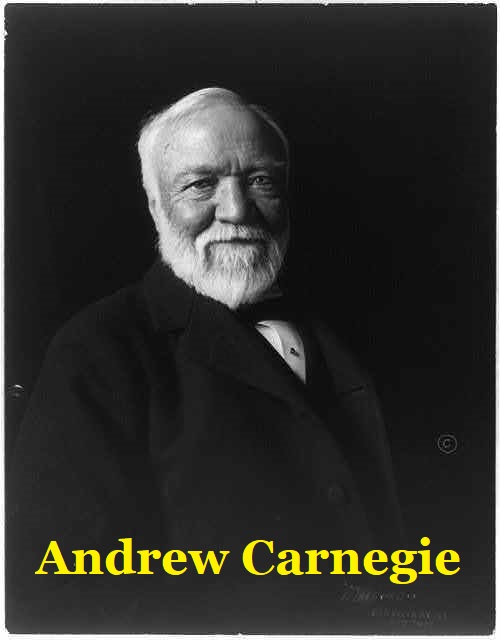
Andrew Carnegie became the wealthiest man in the world when he sold Carnegie Steele to J. P. Morgan in 1901. With the sale, he surpassed John D. Rockefeller’s riches. Carnegie, the penniless Scotsman who came to America and became wealthy, is also known as the man who gave it all away.  In 1905, he put up $10 million to create retirement benefits for college professors. In today’s dollars that grant would be worth about $350 million.

The problem became developing a standard for identifying legitimate professors.

A 2015 paper from the Carnegie Foundation reported that in 1906:

“The Carnegie trustees concluded that college entrance requirements should be ‘designated in terms of units, a unit being a course of five periods weekly throughout an academic year of the preparatory school.’ Fourteen such units constituted ‘the minimum amount of preparation’ for students heading for college. And colleges that required fourteen units for admission would, if they met the Foundation’s other requirements, qualify for the pension fund.” (Page 8)

The Carnegie Unit, which developed from this decision, measures student progress. For example, a student attending class meetings one hour a day 3 times a week, for 40 weeks, plus passing the course work and testing involved earns one “unit” of high school credit, for the 120 hours in class. The “unit” is a minimum requirement creating a nationwide agreed-upon structure. It does not control pedagogy nor assessments but insures a minimum amount of time on task.

The 2015 Carnegie paper also stated:

“It provides a common currency that makes possible innumerable exchanges and interconnections among institutions. And it continues to provide a valuable opportunity-to-learn standard for students in both higher education and K-12 education, where inequitable resources and variable quality are more the rule than the exception.” (Page 5)

The Carnegie Unit is a method for insuring a minimum amount of time is spent in class to earn a credit. Curriculum choices, assignments and testing are the province of classroom teachers and their schools. The number of credits required to graduate from a high school are set by state education departments and local school districts.

Changes Knowles and Others Want

Billionaire-financed propaganda rag, The 74, interviewed Tim Knowles in September. The sub-head stated, “From credits to seat time to school finance to student engagement, century-old unit of measurement is stifling real education reform and innovation.” Knowles’ first answer, explaining the Carnegie Unit is a lie:

“What it is, fundamentally, is the conflation of time and learning. It’s the suggestion that X number of minutes equals learning.”

It has never conflated time and learning.

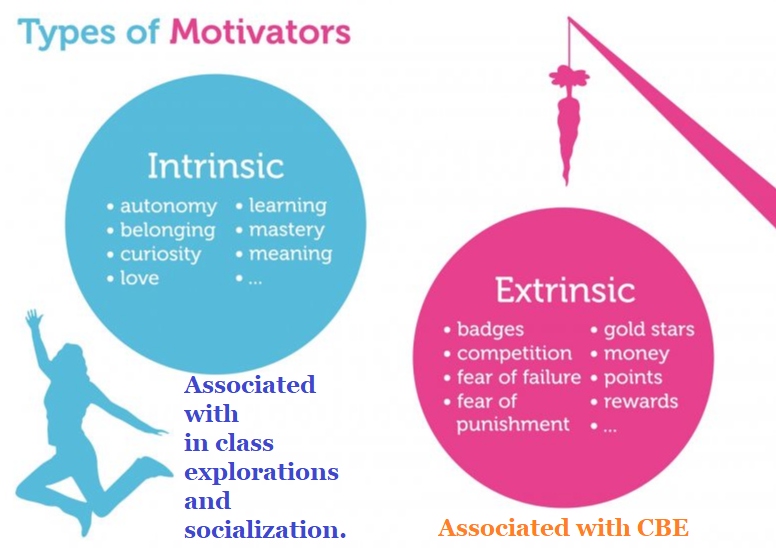
Knowles, Savak and Jobs see the Carnegie Unit as a roadblock for their vision of a competency-based education (CBE) system, replacing units with proof of skills. Savak’s ETS promises to develop reliable mastery testing methods for providing a designation of competency, such as grades or badges. Jobs’ Amplify Education already has virtual courses that students can complete at their own speed. These fit nicely with Bill Gates’ old employee, Tom Vander Ark’s new Mastery Transcript Consortium.  

In September, The 74 obligingly published Credit Hours Are a Relic of the Past. How States Must Disrupt High School – Now.” The article is written by Russlynn Ali director of Laurene Powell Jobs’ XQ Institute and Timothy Knowles, blaming the Carnegie Unit for only half of high school graduates being ready for college, decline in economic mobility and NAEP scores falling after the pandemic. Ali and Knowles promise they “are intent on building a new educational architecture that shifts the sector to a truly competency-based system and away from time-bound conceptions of what knowledge is and how it is acquired.”

Not everyone is sanguine about their new “educational architecture.” Jal Mehta, professor of education at the Harvard Graduate School of Education, said in a published dialog:

“I’ve found myself increasingly wary each time another educational leader tells me how enthusiastic they are about this venture. For one thing, this year marked the 40th anniversary of ‘A Nation at Risk,’ which famously urged states to boost the number of Carnegie Units required for graduation. Given that many of those excited about ditching Carnegie sit in the same offices as those who, a generation ago, led the push to act on that report’s recommendation, it’s worth asking why savvy leaders once deemed mandating more math, science, English, and world-language requirements a promising path forward. The answer, of course, is that they thought it a crude but workable way to put a floor beneath student learning. In a time of sky-high graduation rates, rampant grade inflation, and plummeting student achievement, this is something that we shouldn’t lightly dismiss.”

“The case against changing the Carnegie Unit is essentially twofold. First, that it was never intended as a way of measuring learning, which is properly left to individual teachers, professors, departments, and schools. It offers a very rough view of what is a “course” – defined by time – and then leaves all the assessment questions to local actors. Yes, there is tremendous variability in how these actors define ‘quality learning.’ But it preserves their autonomy to do so, while at the same time creating some basic measures that allow some equity and comparability across institutions. The second case against changing it is that anything replacing it would be worse. As the author of The Allure of Order, I can certainly make a case that efforts to build massive systems of measurement and impose them across different contexts of learning have often gone poorly!”

Education writer, Derek Newton’s article for Forbes, opposed ending the Carnegie unit for a host of reasons but the major one is cheating:

“Cheating, academic misconduct as the insiders know it, is so pervasive and so easy that it makes a complete mockery of any effort to build an entire education system around testing.”

“The sellers use software to take remote control of a test-taker’s computer and have a ringer take the exam for them.”

“But because of the credit hour system, which is designed to measure classroom instruction time, it’s still relatively hard to cheat your way to a full college degree.”

Doomed to Bad Pedagogy

ETS and Carnegie Foundation partnered to create assessments for CBE, making the Orwellian-named “personalized-learning” viable for issuing digitally-earned certifications. This is one required ingredient for their plan to shift American education to a “competency-based system,” with a 50-year history of failure.

The 1970’s “mastery learning” was very unpopular and renamed “outcome-based education” in the 1990s, now it’s called “competency-based education.” CBE is a move to use “mastery leaning” techniques to create individualized certification paths. However it is still the same mind-numbing approach that the 1970s teachers began calling “seats and sheets.” This behaviorist approach to education leaves almost no room for students to construct knowledge and ignores the social component of education.

In A Wolf at the Schoolhouse Door, Jack Schneider and Jennifer Berkshire explain, “Because learning is deeply rooted in relationships, it can’t be farmed out to robots or time-saving devices.”

Final Observations

 The American education system has become more and more centrally controlled since 1983’s “Nation at Risk.” This has made it more vulnerable to hare-brained schemes that would upend it, like Tim Knowles new “educational architecture.”

Billions of dollars have been spent to convince people that public schools are failing. This is not true. We have the premier education system in the world. If most people are satisfied with their schools, corporations will be denied easy access to the $100’s of billions from annual education budgets. They want Tim Knowles’ new “educational architecture,” not that it is better but it is more profitable.

Knowles, Savak and leaders at Jobs’ XQ Institute have been all over the country this year, at corporate-sponsored education events, trying to convince people to get rid of the Carnegie Unit. They want to replace it with CBE, a failed-education approach accompanied by an unproven testing system.

This approach to education has the potential to end American democracy because the public education system is its pillar. It also ignores the important social component of education.

Upending public schools this way is folly.

California Virtual Academies Spotlighted Again!

3 Dec

By Thomas Ultican 12/3/2023

California Virtual Academies (CAVA) received an unfair labor practices complaint from their teachers union. As part of contract negotiations, the union requested a “K12 product list with prices for our school for both the 2021-2022 and 2022-2023 school years.” CAVA lawyers declined, saying it was “confidential, proprietary information.” On 11/2/2023, union lawyers responded with a legal action, claiming the information was their legal right.

Kristen Taketa, reporting for the San Diego Union, noted the concern of teachers over how money is being spent and wrote they “echo more wide-ranging questions about CAVA’s finances and use of public dollars that have dogged the network for more than a decade.”    

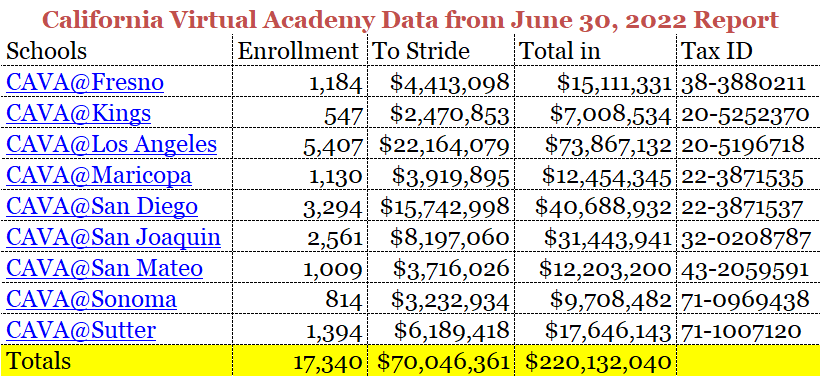
Financial records show Stride (formally known as K12) took in over $70 million from all nine CAVA schools in the 2021/22 school year. High costs, charged by Stride, kept the schools running deficits.

Who is CAVA

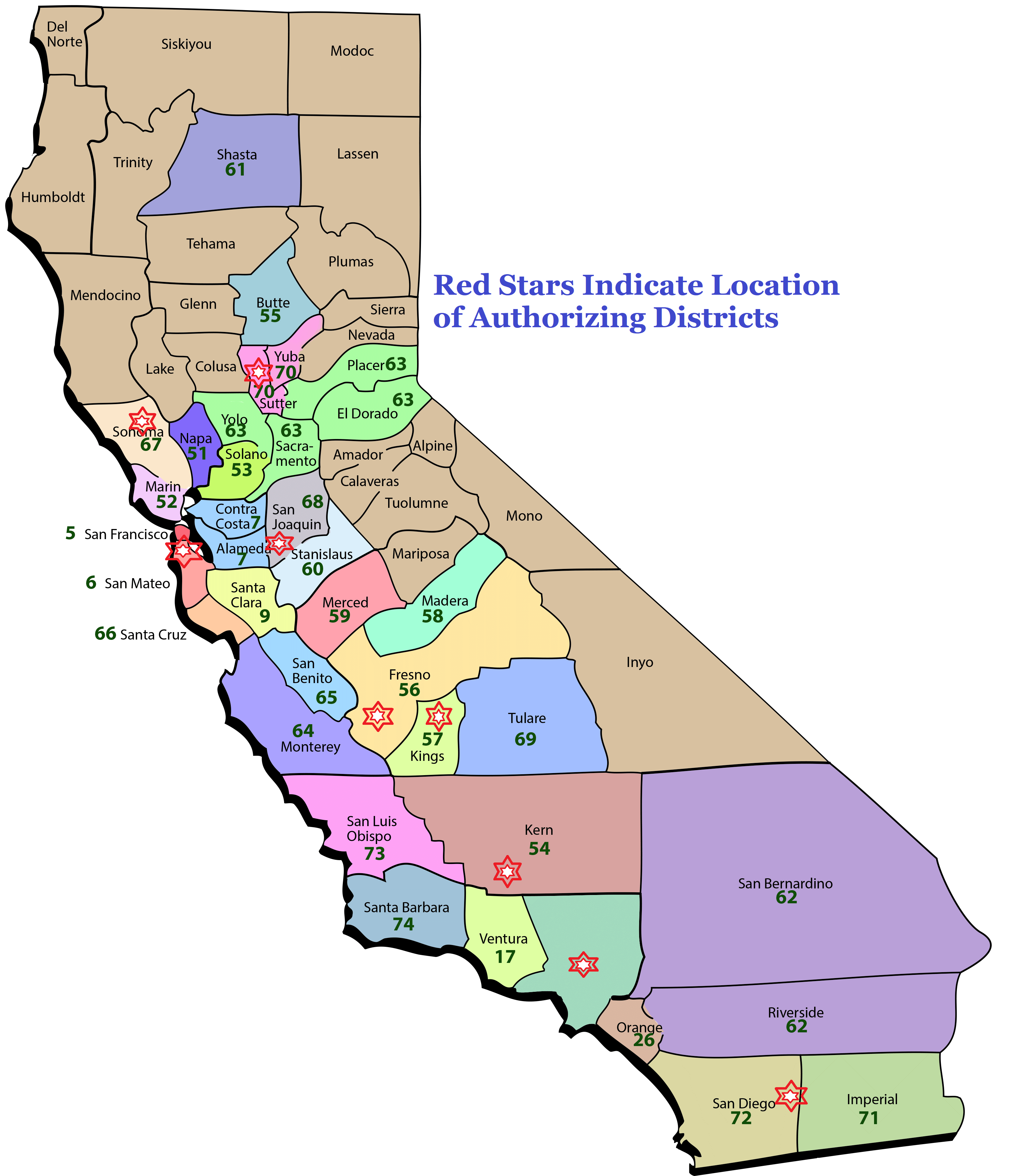
K12/Stride set up the CAVA network in 2002 that grew to nine charter schools, authorized by small districts. None of them had more than 15,000 students and four had less than 2,000. This means small cash-strapped districts get 1 to 2 percent of CAVA state funding to monitor the schools, with insufficient resources to do more than review some submitted paperwork.

Red stars on the California county map indicate authorizing district locations. This is important because, under California law, a cyber charters can only service its authorizing county and the bordering counties. The map shows CAVA services almost all population centers in the state.

The nine CAVA schools are organized as non-profits with their own boards. California law says only non-profit organizations may operate charter schools.

A Wikipedia entry says, “California Virtual Academies follow the educational principles of E.D. Hirsch Jr.” In the debate between behaviorism and “constuctivism”, Hirch came down squarely on the side of behaviorism. Education writer, Alfie Kohn said, “E. D. Hirsch Jr.’s Dictionary of Cultural Literacy, which popularized what we might call the ‘bunch o’ facts’ approach to education, was enthusiastically endorsed in Phyllis Schlafly’s Eagle Forum newsletter.” (Page 11) In other words, the CAVA foundational philosophy of education is not widely embraced.

K12 was founded by former McKinsey & Co. consultant and banker, Ronald J. Packard. Discussions toward its founding began in 1999 and the company opened its doors in 2000, focusing on the homeschooling market. Original investors included “junk-bond king” and felon, Michael Milken, his brother Lowell, Andrew Tisch, Larry Ellison and others. Ronald Reagan’s Secretary of Education, William Bennett, was hired as the company’s first chairman of the board.

Legal and Labor Issues

Because of the close ties between K12 and CAVA, a loud objection was raised by activists, claiming the schools were little more than a front of the for-profit company. It was noted that K12 created the schools, chose the boards and holds exclusive no-bid contracts with CAVA. 

In early 2016, Jessica Calefati of San Jose’s The Mercury News reported, “Accountants and financial analysts interviewed by this newspaper, including several who specialize in school finance, say they’ve never seen anything quite like the arrangement between K12 and the public online academies.”

Many profit-minded companies in California have tried to sidestep the laws, requiring charters to be run by non-profits. LA Times reporter Howard Blume wrote:

“K12’s strategy allegedly involved driving the opening of nonprofit charters up and down the state. These schools then contracted with K12 for “substantially all of the management, technology and academic support services in addition to curriculum, learning systems and instructional services,” according to a state complaint filed last week.

“The CAVA nonprofits became shells for the activities of the for-profit corporation, according to allegations in a second, separate complaint, which was filed under the authority of the state in conjunction with whistleblower Susie Kaplar, a former CAVA teacher.”

In the same 2016 article, Blume quoted then California Attorney General, Kamala Harris, saying, “K12 and its schools misled parents and the state of California by claiming taxpayer dollars for questionable student attendance, misstating student success and parent satisfaction, and loading nonprofit charities with debt.” The non-profit charities referenced were the nine CAVA schools.

Later in July of 2016, Attorney General Harris reported:

“As part of the settlement, which is subject to court approval, K12 will provide approximately $160 million in debt relief to the non-profit schools it manages—“balanced budget credits” that were accrued by the schools as a result of the fee structure K12 used in its contracts—and will pay $8.5 million in settlement of all claims.  In addition, K12 has agreed to implement significant reforms of its contracts with the CAVA Schools, undergo independent reviews of its services for students with disabilities, ensure accuracy of all advertisements, provide teachers with sufficient information and training to prevent improper claiming of attendance dollars, and change policies and practices to prevent the kinds of conduct that led to this investigation and agreement.”

Rachel Cohen reporting in Atlantic magazine shared:

“K12 emphasized it had admitted no wrongdoing, and said the attorney general ‘grossly mischaracterized the value of the settlement just as it did with regard to the issues it investigated.’ In an email to The Atlantic, the K12 spokesperson Michael Kraft disputed the AG’s characterization of the schools as indebted.”

At the same time, the CAVA network and K12 were also developing growing dissatisfaction amongst their teacher ranks. Brianna Carroll, a fourth-year CAVA teacher, claimed, “Teachers were concerned about the instability their students were experiencing.” She said they began discussing the reality of low salaries and substandard working conditions, making it hard for CAVA to retain teachers and creating “an unstable environment for students.”

Sarah Vigrass, a 10-year CAVA teacher, observed:

“Changes in management at K12 and an increased emphasis on profits had led to changes at CAVA that shortchanged students. When I started teaching there, families would start the year getting these great boxes of art supplies, textbooks and curriculum, and teachers had time to build relationships with students and families. A lot of that went away.”

In 2013, CAVA teachers reached out to the California Teachers Association (CTA), an affiliate of the National Education Association, for help. With more than 700 teachers, working at nine campuses, spread out across California, bargaining with an anti-union K12 was tough. In 2014, despite management opposition, teachers voted overwhelmingly to be represented by California Virtual Educators United (CVEU)/CTA.

A 17-month legal battle followed, with CAVA claiming that each one of their campuses was a separate school and therefore, a separate bargaining unit. In October 2015, the Public Employment Relations Board (PERB) rejected CAVA’s arguments, granting CVEU exclusive recognition. CAVA again appealed but was rebuffed by PERB in June 2016. In September of that year, CVEU and CAVA began negotiations for their first contract. In April 2018, CVEU members voted by a 98 percent margin to ratify a contract agreement with CAVA.

One of the big concerns of teachers was the poor performance of their students. In a two-part investigationThe Mercury News reported that fewer than half of CAVA students graduate and “almost none” pass the courses required for admission to the California State University and the University of California.

John Fensterwald reporting for EdSource said:

“A study of online charters in California by the Center for Research on Education Outcomes, or CREDO, at Stanford University found that online students were far behind their classroom-based peers. Based on test scores, CAVA students on average fell a third of a year behind their peers in math.”

Even the California Charter Schools Association (CCSA) criticized K12, stating:

“CCSA condemns the predatory and dishonest practices employed by K12 Inc. to dupe parents using misleading marketing schemes, siphon taxpayer dollars with inflated student attendance data, and coerce CAVA School nonprofit employees into dubious contracting arrangements,”

Conclusion

Under a new name, Stride, K12 still profits wildly from California taxpayers. CAVA schools are the only cyber schools in America running deficits. They get full per-student money from the state, maintain and operate no buildings … why are they financially strapped???

The unfair labor practices claim filed by CVEU has potential to reveal Stride’s enormous greed and malfeasance.

California cyber charters ought to be run by large school districts with elected boards and not for-profit companies, located on the east coast.